Referência original: Andre F (1939) A synopsis of the American species of Chirothrips Haliday (Thysanoptera). Proceedings of the Entomological Society of Washington 41: 192–204.
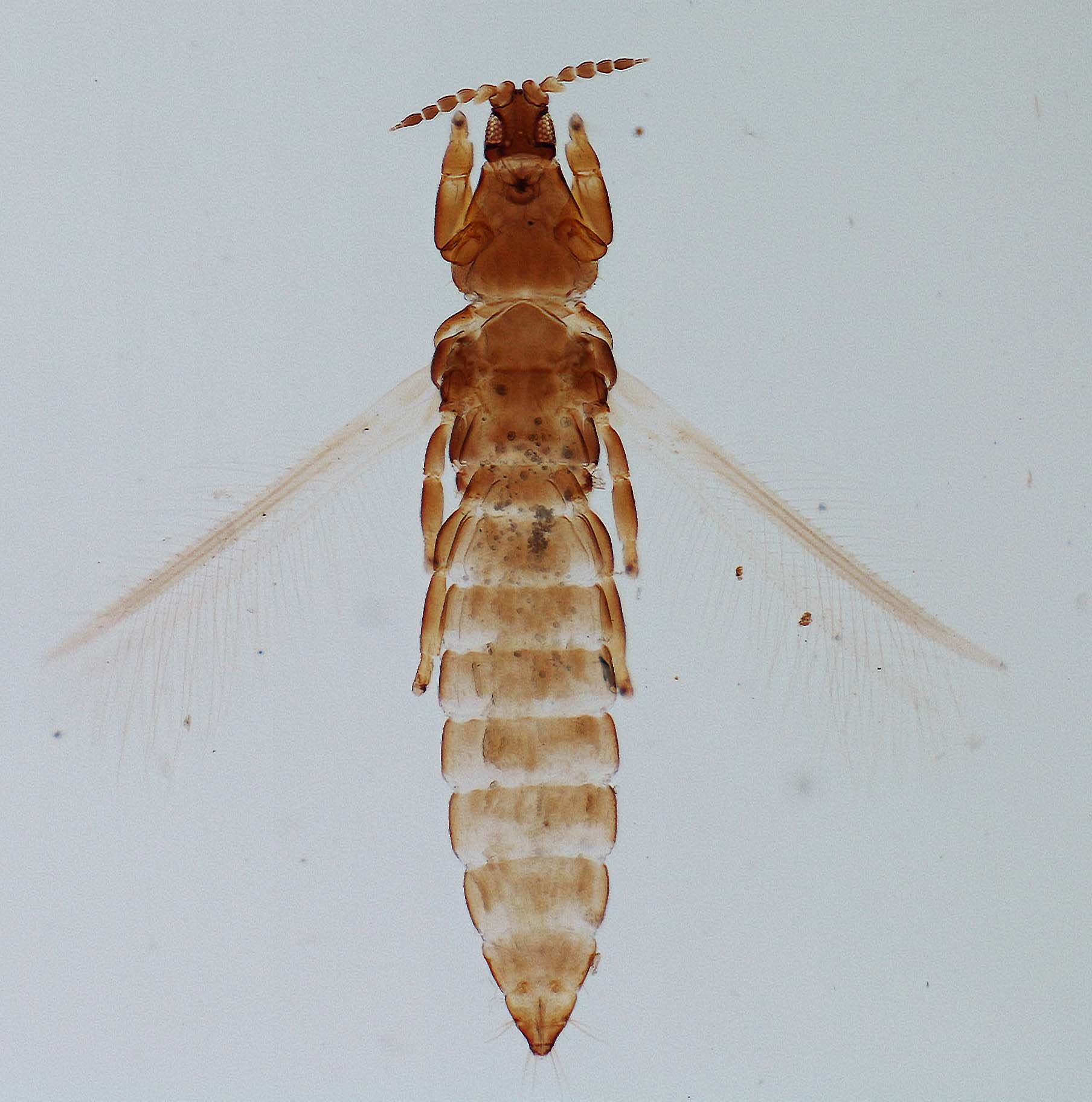
Corpo castanho escuro, abdômen mais claro; cabeça, antena, tórax e pernas castanhas; asas anteriores uniformemente escurecidas. Cabeça sem esculturação forte, projetada à frente dos olhos; vértex com cerca de 30 pares de cerdas. Antena com 8 segmentos, III & IV com cones sensoriais simples; segmento antenal I alargado, II assimétrico com a margem lateral externa fortemente projetada. Pronoto trapezoidal; sem reticulações mas coberto com numerosas cerdas curtas e conspícuas; dois pares de cerdas posteroangulares curtas presentes; cerdas na margem anterior não distintamente maiores que as cerdas discais. Endofurcas meso e metatorácica fracamente desenvolvidas, sem espínula; meso e metatórax cobertos com muitas cerdas pequenas; metanoto com sensilas campaniformes. Ferna e superfície ventral do meso e metatórax com muitas cerdas pequenas e conspícuas. Coxas anteriores robustas, tarsos com dois segmentos. Primeira e segunda fileira de cerdas nas asas anteriores com poucas cerdas, espaçadas entre si. Tergitos e esternitos abdominais fracamente reticulados, com muitas cerdas curtas e conspícuas. Ovipositor pequeno. Fêmea macróptera e macho áptero.
Machos mais claros que as fêmeas e não tão bicoloridos; ocelos ausentes; metanoto retangular; esternitos abdominais III–VII com grandes placas porosas ovais.
Variação intraespecífica
Coloração do abdômen varia de amarelo a castanho claro.
Informações do gênero e espécies similares
O gênero Arorathrips é originado do Novo Mundo e inclui cerca de 15 espécies, todas com segmento antenal II fortemente assimétrico, e segmentos III & IV com cones sensoriais simples. É intimamente relacionado com o gênero Chirothrips, mas difere por possuir a endofurca mesotorácica reduzida. Arorathrips texanus pode ser distinguida das outras espécies de Arorathrips pela grande quantidade de pares de cerdas curtas e conspícuas que recobre as superfícies dorsal e ventral do corpo.
Distribuição no mundo
Descrita dos Estados Unidos, também é registrada no Brasil, Haiti, México e Paraguai.
Mound LA & Marullo R (1996) The Thrips of Central and South America: An Introduction. Memoirs on Entomology, International 6: 1–488.
Nakahara S & Foottit RG (2012) Review of Chirothrips and related genera (Thysanoptera: Thripidae) of the Americas, with descriptions of one new genus and four new species. Zootaxa 3251: 1–29.