Elaphrothrips costalimai Hood, 1955: 57.
Original reference: Hood JD (1955) Brasilian Thysanoptera VI. Revista Brasileira de Entomologia 4: 51–160.
Family
Phlaeothripidae, Idolothripinae
Nomenclatural information
https://thrips.info/wiki/Elaphrothrips_costalimai
Diagnosis
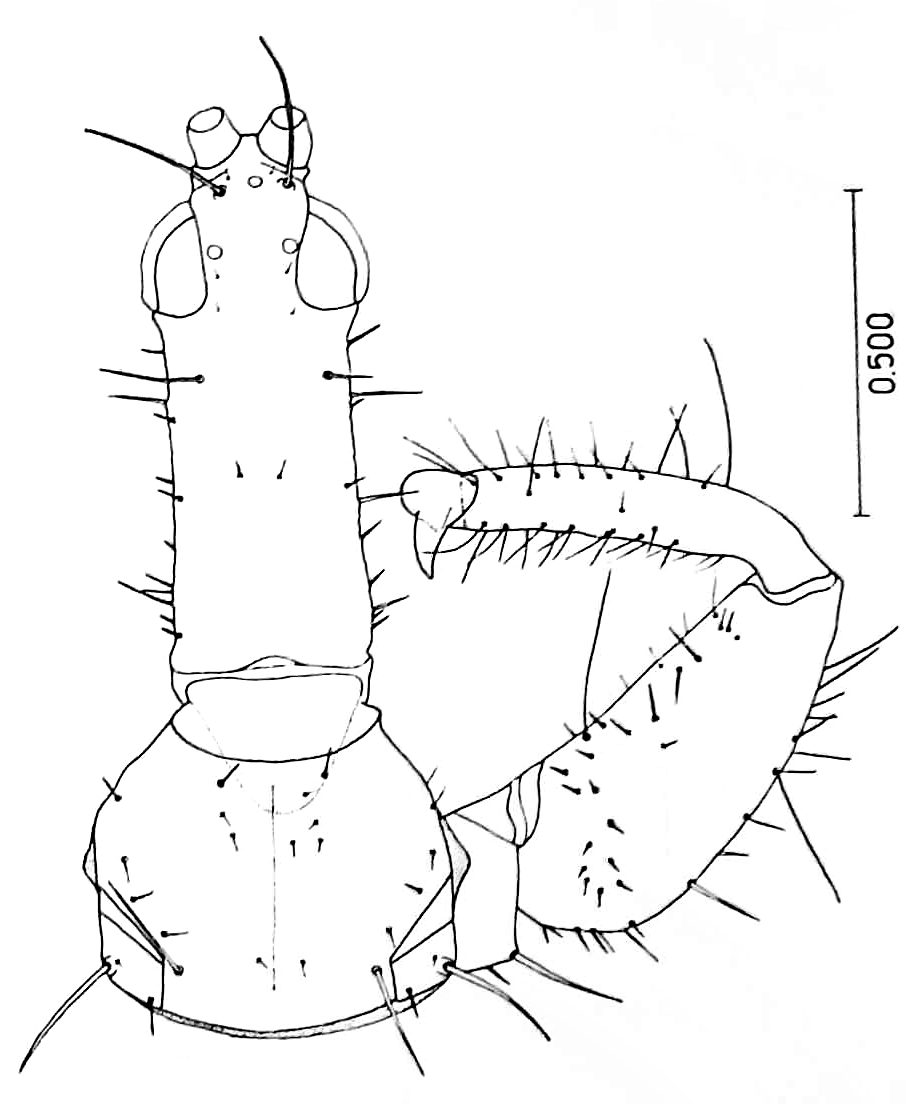
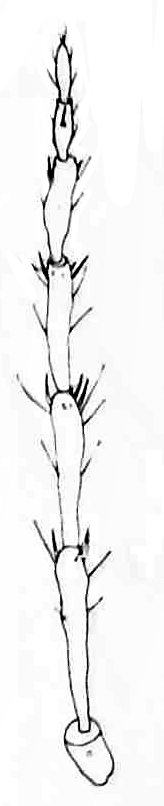
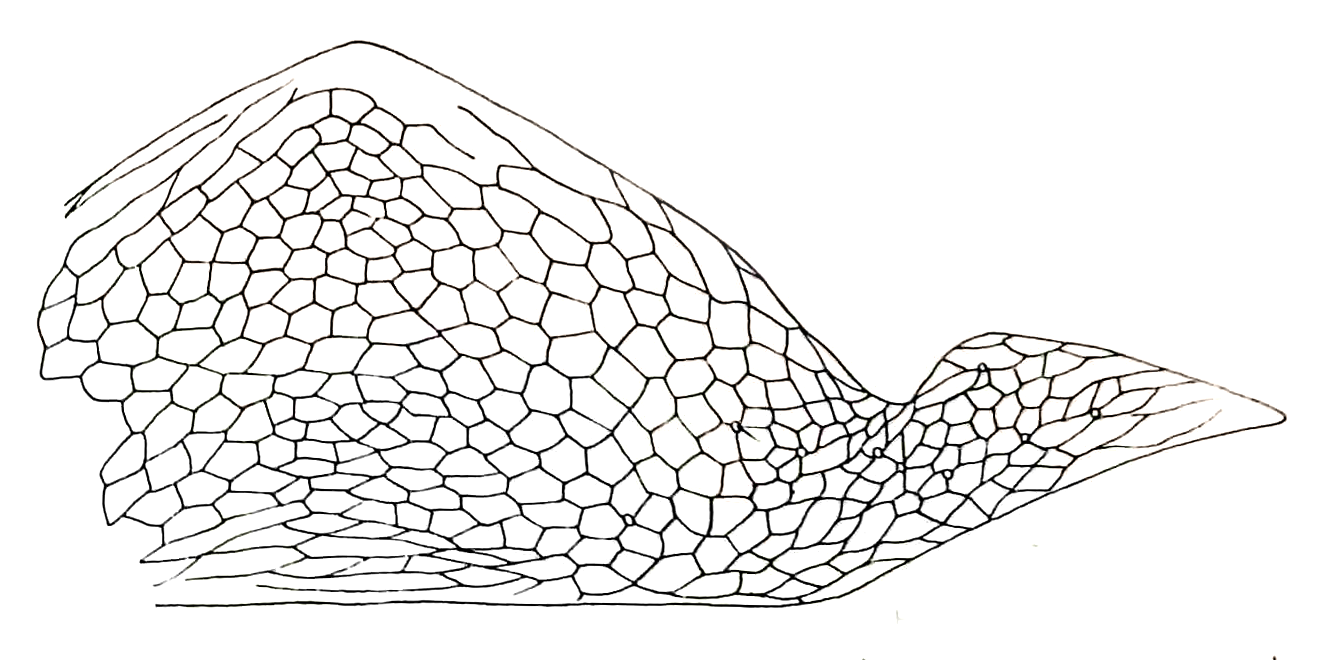
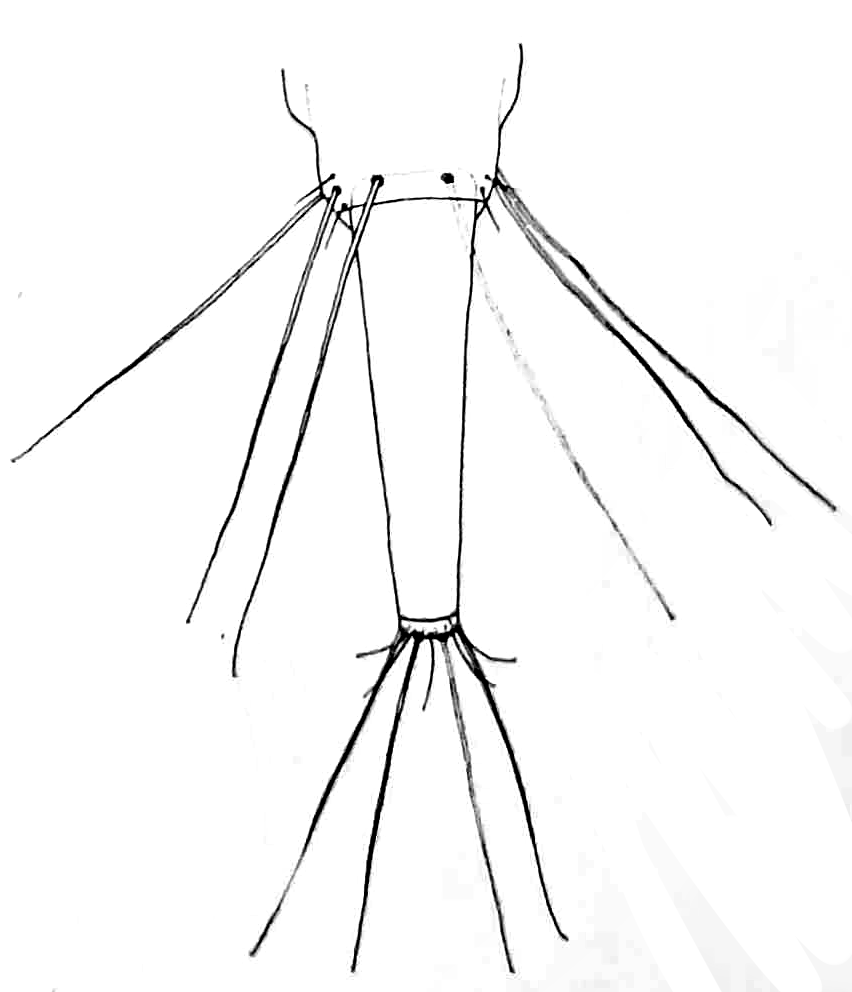
Male macropterous; body color dark brown, almost black, with leg articulations, apex of tibiae and tarsi slightly paler; antennae mostly black, with antennomere III light yellow on basal tree-fourths, IV paler on basal half, and sometimes the apex of II and/or pedicel of V lighter; wings weakly shaded with brown, with a median dark line. Antennae 8-segmented, antennomere III longer than the others; III with 2 and IV with 3 sense cones. Head longer than wide, projected ahead of eyes; dorsal surface with two pairs of long setae (ocellar and postocular), cheeks with stout and short setae; eyes large, not projected ventrally; maxillary stylets far apart. Pronotum almost smooth, only epimeral and posteroangular setae elongate, remaining setae short; prosternal basantra present. Metathoracic sternopleural sutures absent. Pelta triangular and broad, reticulated, basal angles curved upwards;tergites II–VII with 2 pairs of wing-retaining setae and several smaller accessory setae; major posteromarginal setae on abdominal tergite IX longer than tube.Abdominal sternites without pore plates. Tube cone-shaped, about3.5x as long as basal width, without lateral setae. Fore legs swollen, fore femora with several well-developed setae, fore tarsi with a well-developed tooth. Fore wings with about 48 duplicated cilia.
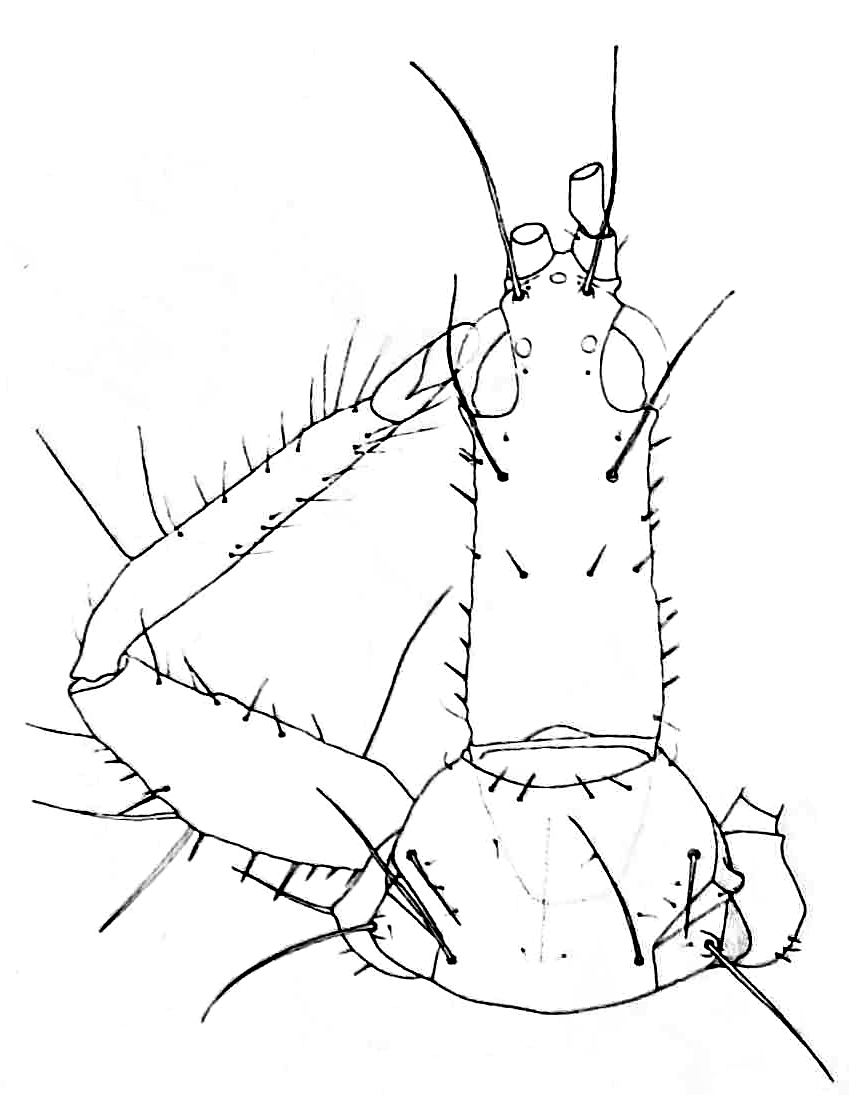
Female macropterous. Similar to males in appearance and coloration, but with longer setae (including midlateral pair on pronotum) and head relatively shorter. Fore legs without a tarsal tooth.
Intraspecific variation
Unknown.
Genus and similar species information
Elaphrothrips is the Idolothripinae genus with the most described species, with almost 150 species widely distributed across tropical and subtropical regions. These thrips are usually large and dark-colored, distinguished from other Brazilian Idolothripinae (except Saurothrips) for having two pairs of wing-retaining setae on the abdominal tergites; in larger specimens, many accessory setae may be present in addition to the main wing-retaining pairs. Besides that, they have elongated head, major ocellar setae posterior to the anterior ocellus, basantra present, and tube shorter than the head, without lateral setae. Many species have high morphological diversity associated to size, wing-development and sex, which makes the distinction between species harder; and it is possible that many species in the genus will be identified as synonyms in the future.
Elaphrothrips costalimai is one of the few species of this genus in Brazil whose pronotum is almost smooth, with little to no lines of sculpture. Moreover, males do not have the postocular setae reduced, and the setae in both sexes are almost black, with only the apex paler.
Distribution around the world
Described from Brazil.
Distribution in Brazil
http://fauna.jbrj.gov.br/fauna/faunadobrasil/64130
Life history
Lives in dead leaves, where it feeds on fungal spores.
Economic importance
Not recorded.
Suggested references
Hood JD (1955) Brasilian Thysanoptera VI. Revista Brasileira de Entomologia 4: 51–160.
Attendance
Brasil, Rio Grande do Sul, Rio Grande
Campus Carreiros: Av. Itália km 8
Bairro Carreiros
Thysanoptera © Todos Direitos Reservados 2026