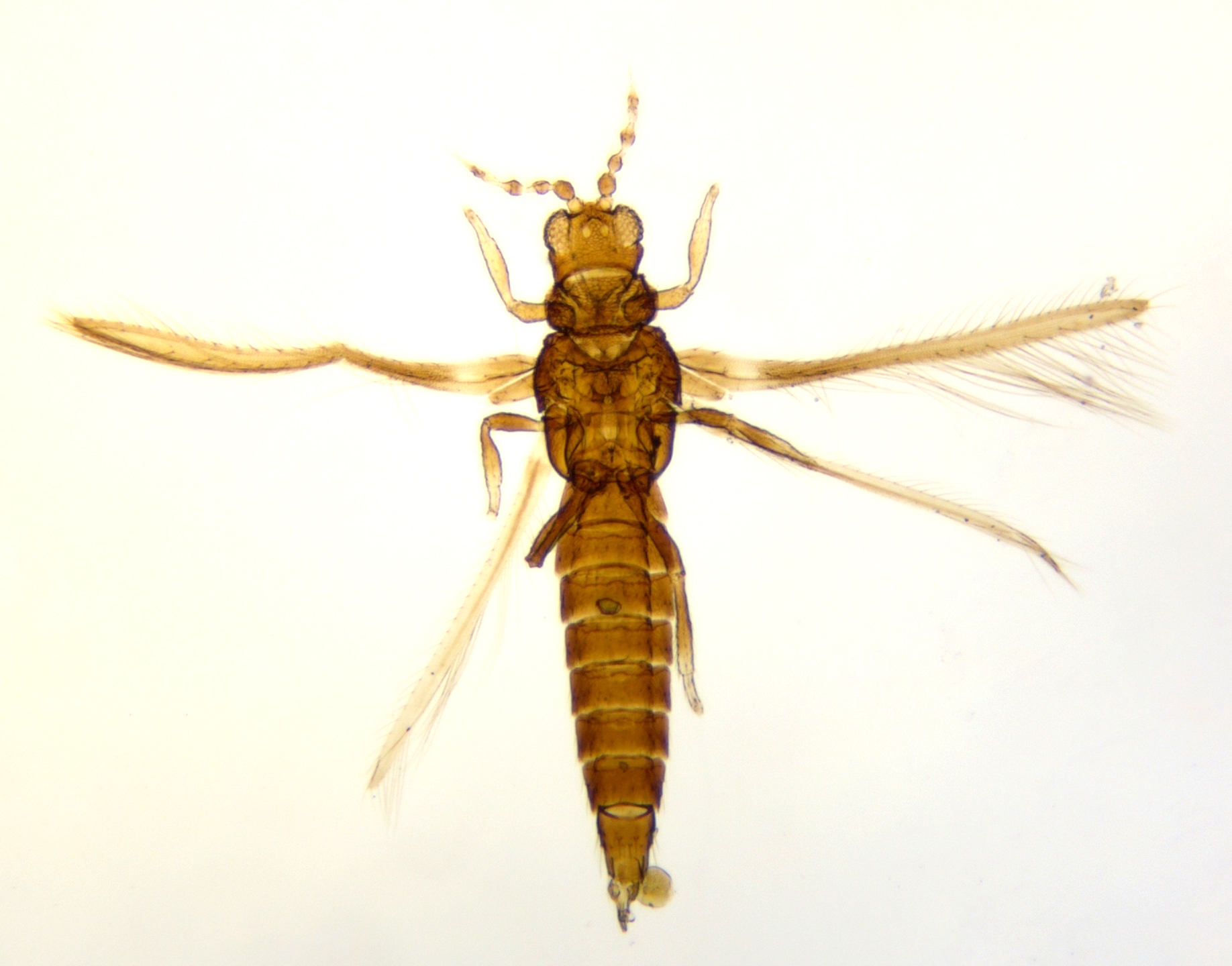
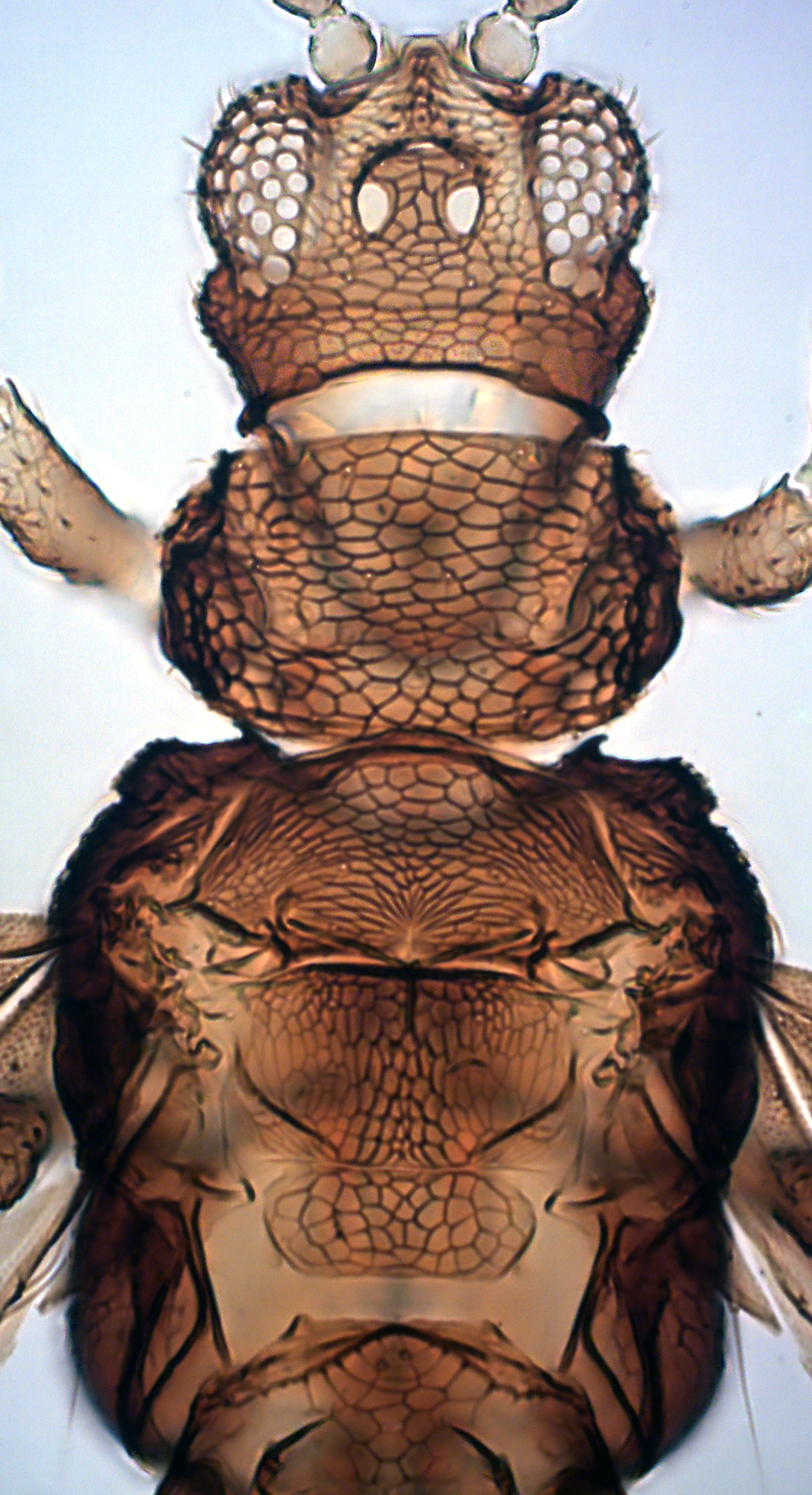
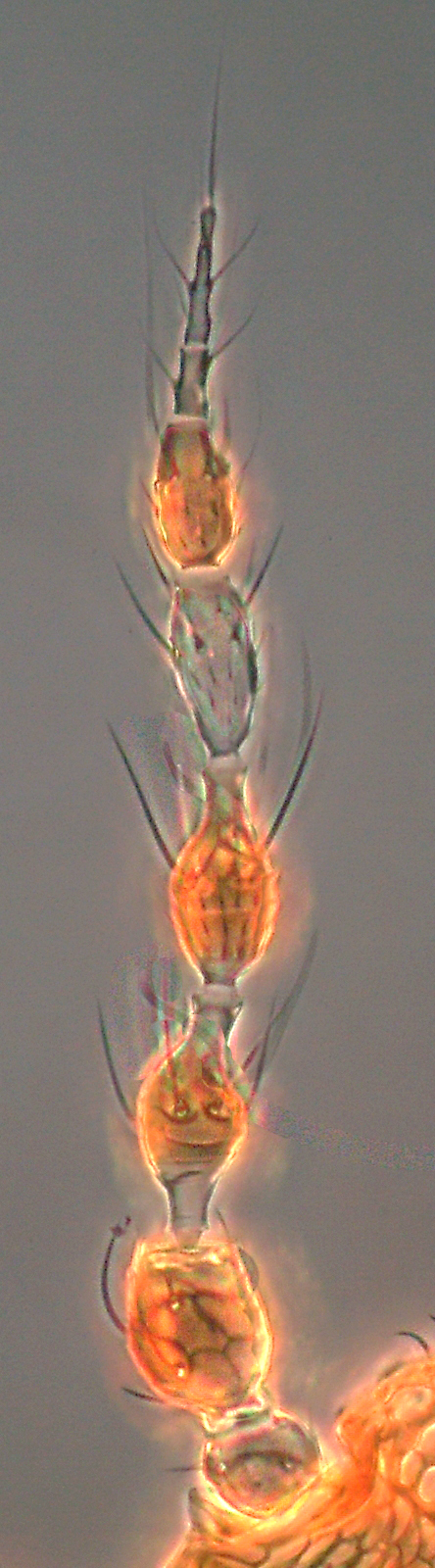
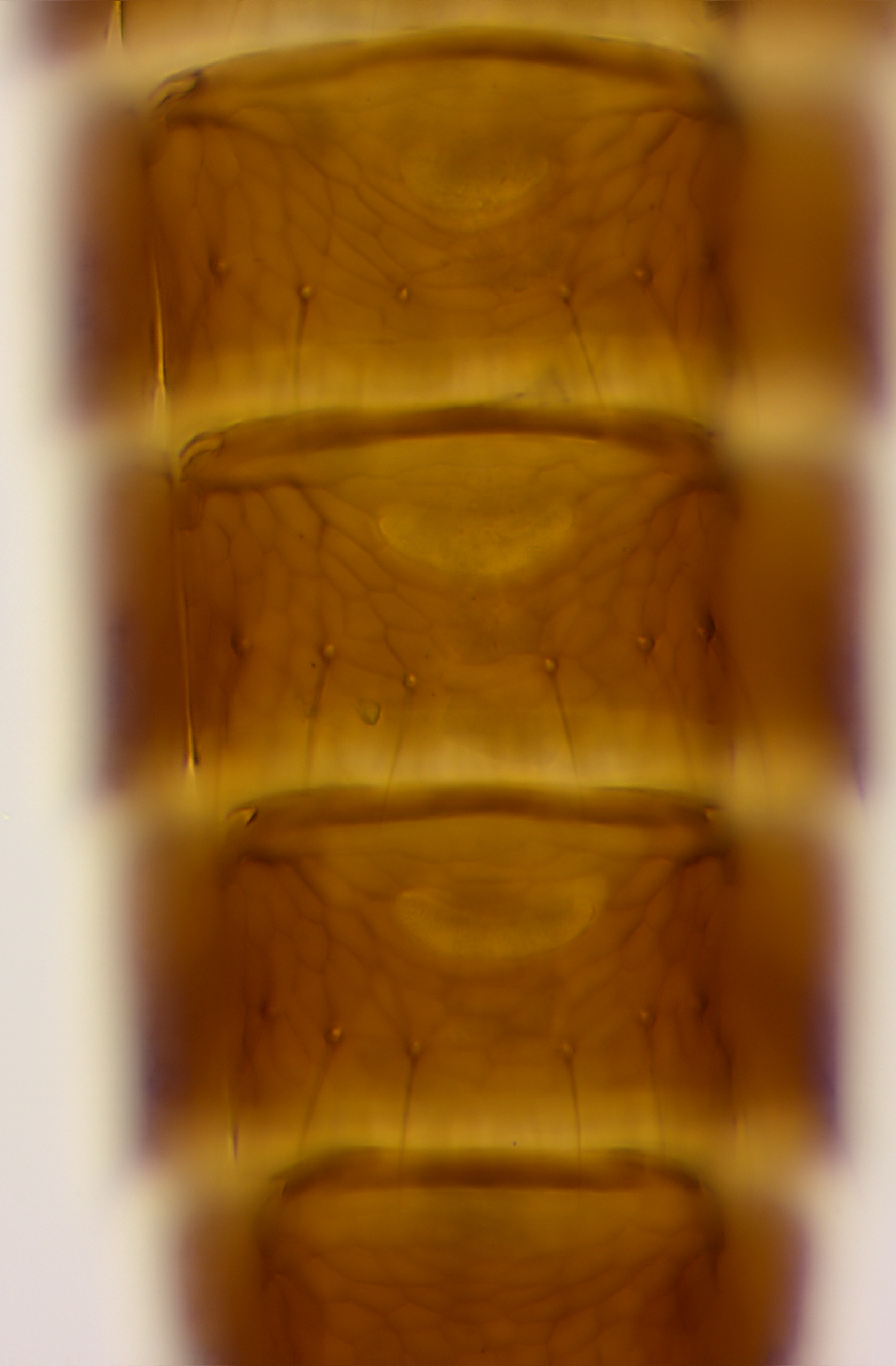
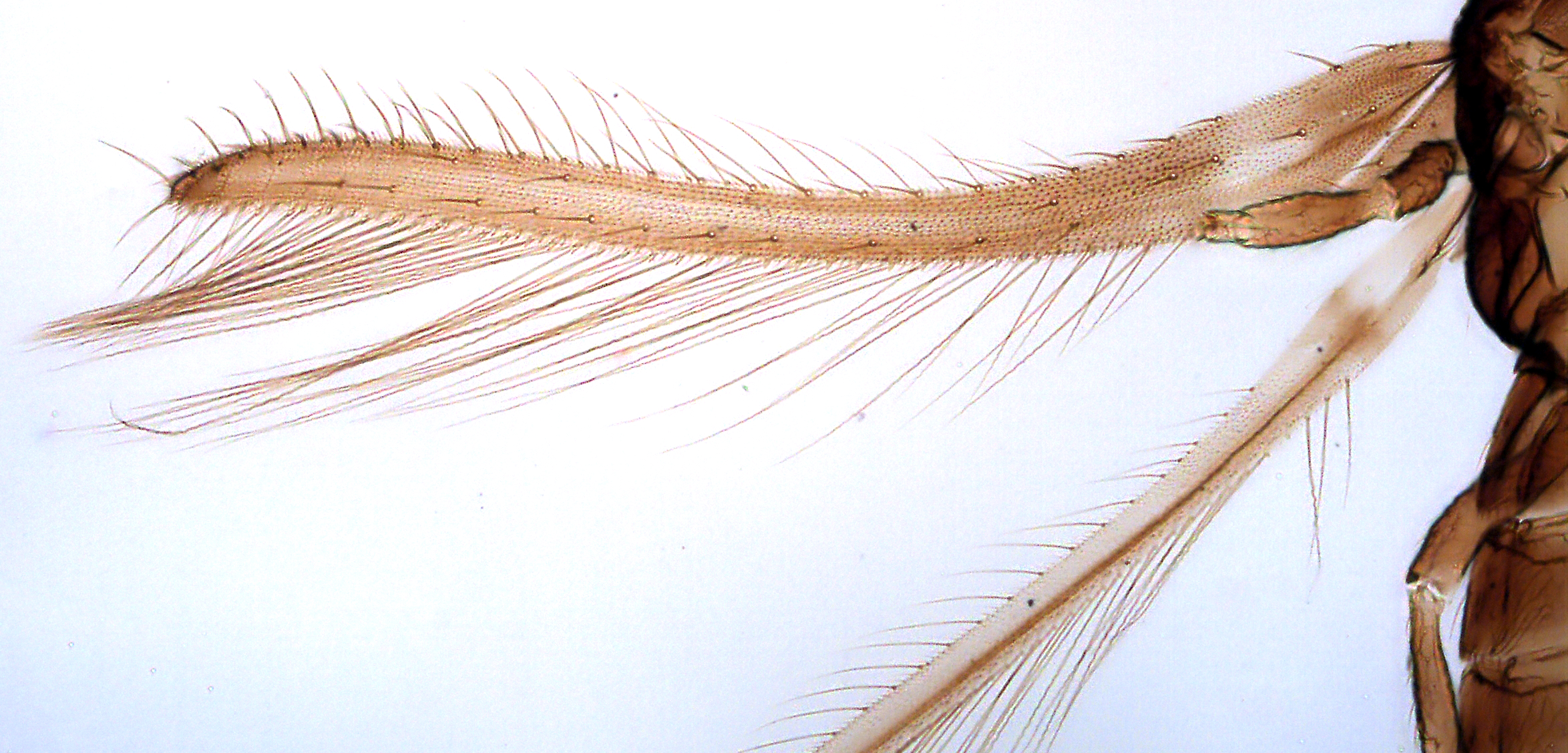
Diagnose Corpo castanho, com área entre o triângulo ocelar e olhos compostos mais clara; pernas anteriores castanho-claras, pernas medianas e posteriores castanhas, tarsos e ápices das tíbias amarelos. Segmento antenal I castanho-claro, II castanho, III–IV castanhos com base e ápice mais claros, V pálido, VI castanho e VII–VIII castanho-claros a pálidos; asas anteriores castanhas com mancha pálida sub-basalmente. Cabeça fortemente reticulada, constrita atrás dos olhos e na base. Antenas com 8 segmentos, III & IV com pescoço apical curto e cones sensoriais bifurcados, sensório do IV se estendendo por dois terços do segmento V. Pronoto reticulado, sem marcas internas. Endofurca mesotorácica sem espínula, metatorácica sem espínula e com braços robustos, se estendendo ao mesotórax. Mesonoto sem divisão longitudinal medialmente. Metanoto reticulado, sem formar triângulo marcado; um par de cerdas robustas presente; sensilas campaniformes presentes medialmente. Tarsos com um segmento. Asas anteriores com a primeira fileira de cerdas interrompida medialmente, com três cerdas distais; segunda fileira com cerca de 9 a 11 cerdas igualmente espaçadas entre si; cerdas finas, cílios das asas ondulados. Tergitos abdominais III–VIII com estriações oblíquas nos terços laterais, algumas retículas próximas da região mediana; cerdas medianas curtas e distantes entre si; craspeda posteromarginal presente; tergito VIII com dentes oriundos do craspeda lateralmente; X sem fenda longitudinal. Esternitos abdominais com três pares de cerdas, pares 1 e 2 próximos da margem posterior, par 3 à frente da margem posterior. Ambos os sexos macrópteros.
Macho semelhante à fêmea, mas menor; esternitos abdominais V–VII com placas porosas côncavas e transversais no terço mediano.
Variação intraespecífica O número de cerdas na segunda venação das asas anteriores varia de 9 a 11.
Informações do gênero e espécies similares O gênero Oneilliella possui cinco espécies Neotropicais, todas com corpo escuro fortemente reticulado; esculturação do metanoto sem formar um triângulo marcado; metafurca robusta e longa, sem espínula, chegando ao mesosterno; e tergito abdominal X sem uma fenda longitudinal completa. Dentre as três espécies do gênero registradas no Brasil, Oneilliella wanessae possui antenômero III com o pescoço apical mais curto, e cerdas das asas anteriores finas.Uma chave para as espécies Neotropicais de Oneilliella está disponível em Lima et al. (2023).
História de vida Desconhecida; possivelmente fitófaga. Diversos espécimes da série-tipo foram coletados em bambu (Chusquea sp.), mas sem presença de larvas.