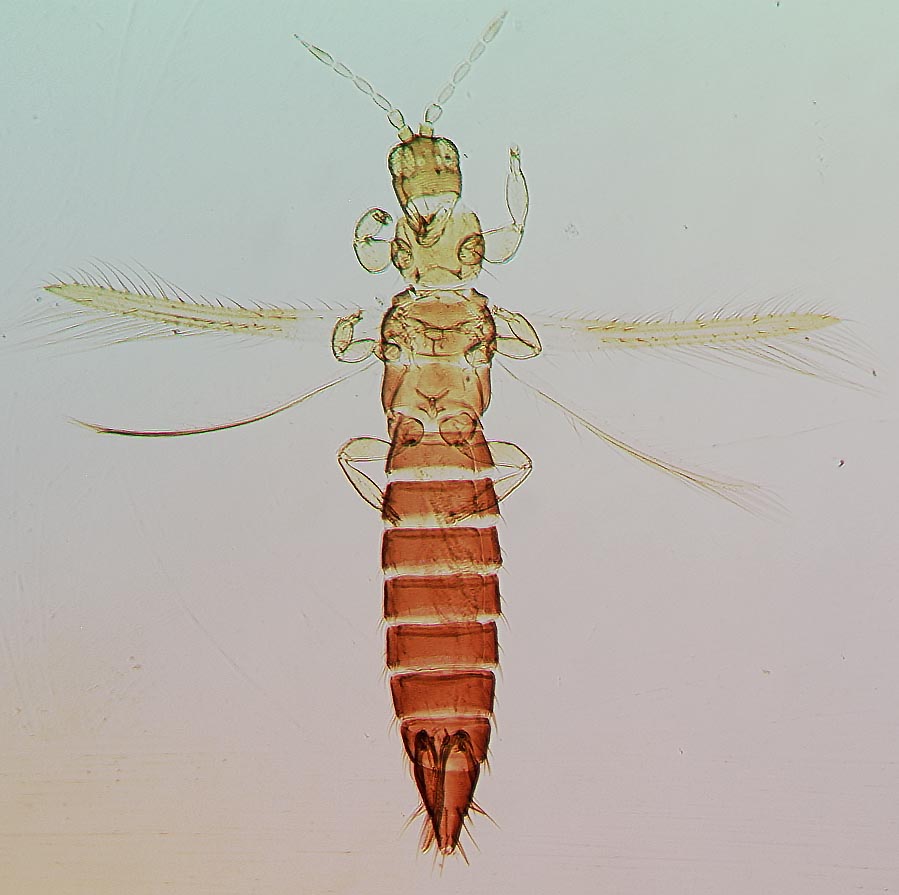
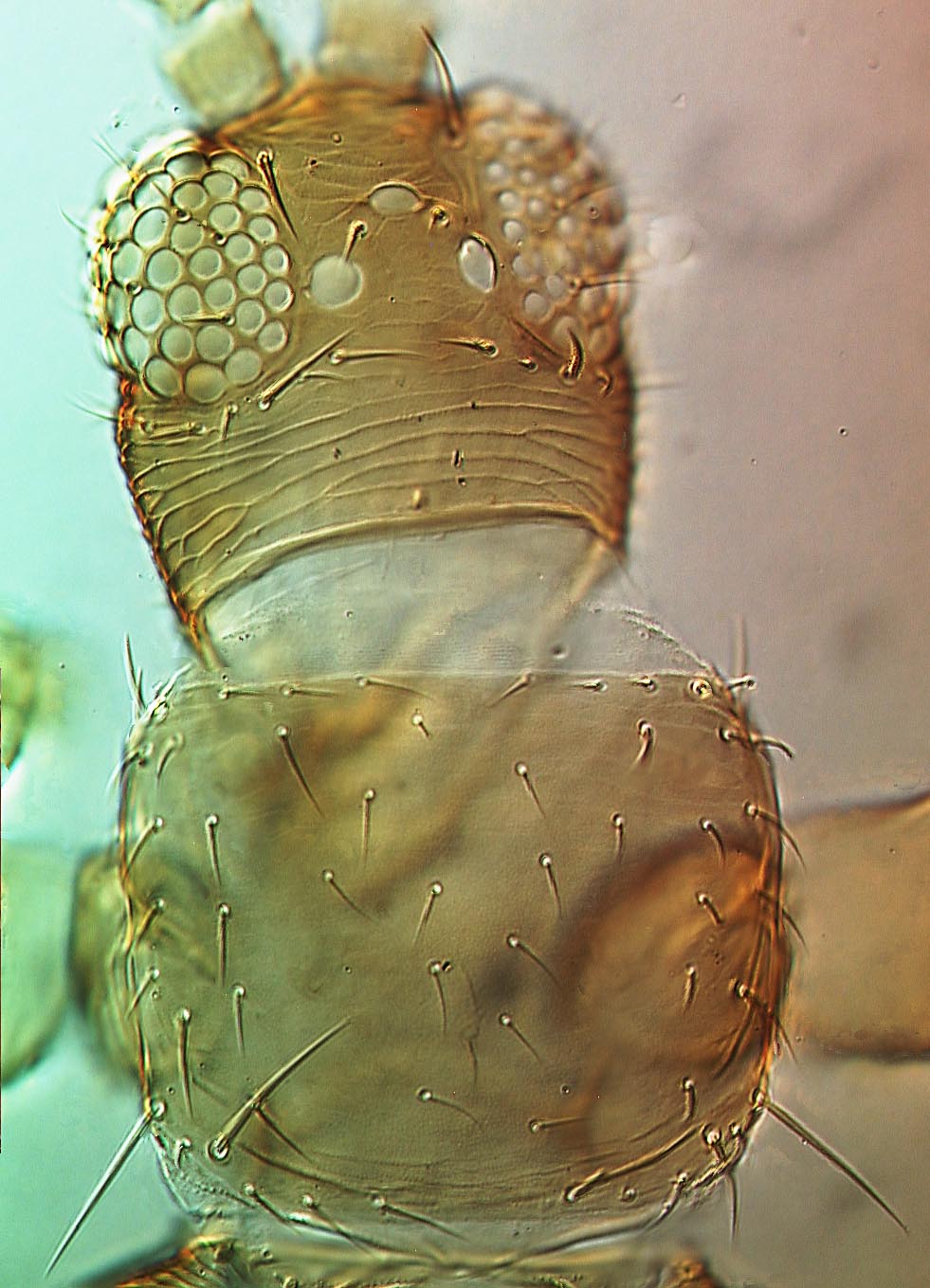
Body colour brown; legs distinctively paler; antennal segments I–II largely brown, III–V yellow, VI yellow at basal half; fore wings light brown but slightly paler at base. Head with only two pairs of ocellar setae, pair II longer than pair III. Antennae 7-segmented, III & IV with forked sense cones. Pronotum rectangular and not distinctively sculptured; two pairs of long posteroangular setae; few moderately long setae arising close to anterior margin. Meso & metathoracic endofurca without spinula. Metanotum longitudinally striate; paired campaniform sensilla present; two pairs of setae, median pair long and arising behind anterior margin. Tarsi 2-segmented. Fore wing with first vein with few sparse setae but second vein essentially complete. Abdominal tergites II–VIII each with a pair of small and wide apart discal median setae; V–VIII with few minute microtrichia and lateral ctenidia, on VIII posteromesad to spiracle; VIII with a complete posteromarginal comb of microtrichia. Sternites with no discal setae or microtrichia; setae S1 on sternite VII arising just in front of margin; three pairs of long posteromarginal setae. Both sexes fully winged.
Male with abdominal sternites III–VII(or –VI) with transverse pore plates.
Intraspecific variation
Not recorded.
Genus and similar species information
This Old World genus comprises more than 30 species, and is related to Thrips genus. Stenchaetothrips species are found predominantly in Asia and all have ocellar setal pair II longer than setal pair III on head. Stenchaetothrips minutus is similar to S.biformis in having dark brown colour and complete posteromarginal comb of microtrichia on abdominal tergite VIII. But S. minutus is distinctive in exhibiting fore wings brown but paler at base and paired campaniform sensilla on metanotum. A key to the Stenchaetothrips species recorded from the Neotropics is provided by Mound & Marullo (1996).
World distribution
Originally described from from Java, it is widespread in the tropics, including Brazil and USA.