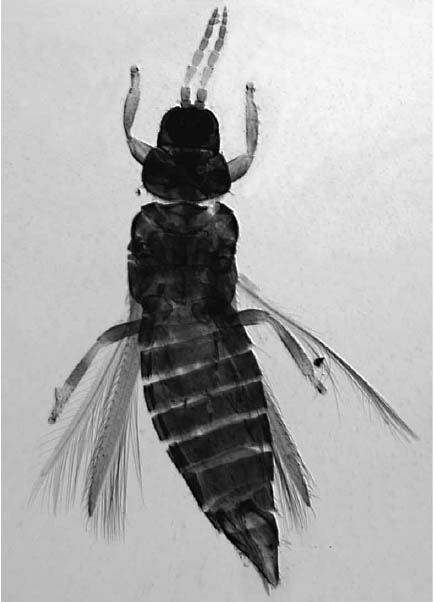
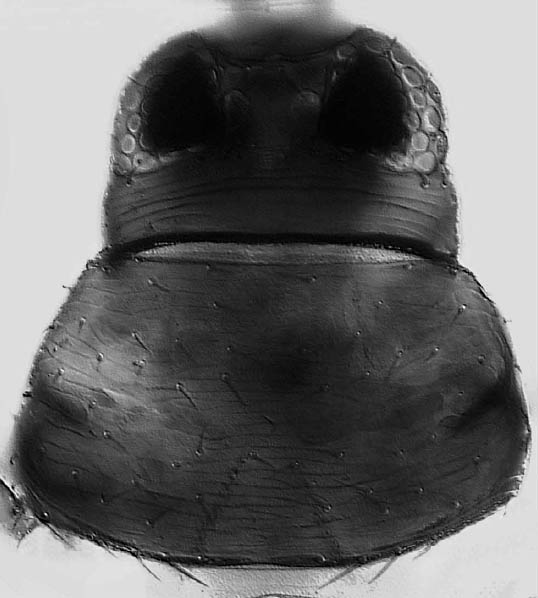
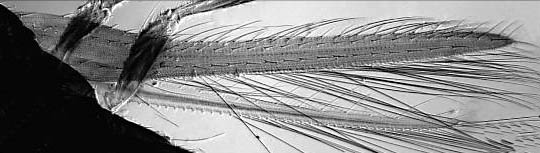
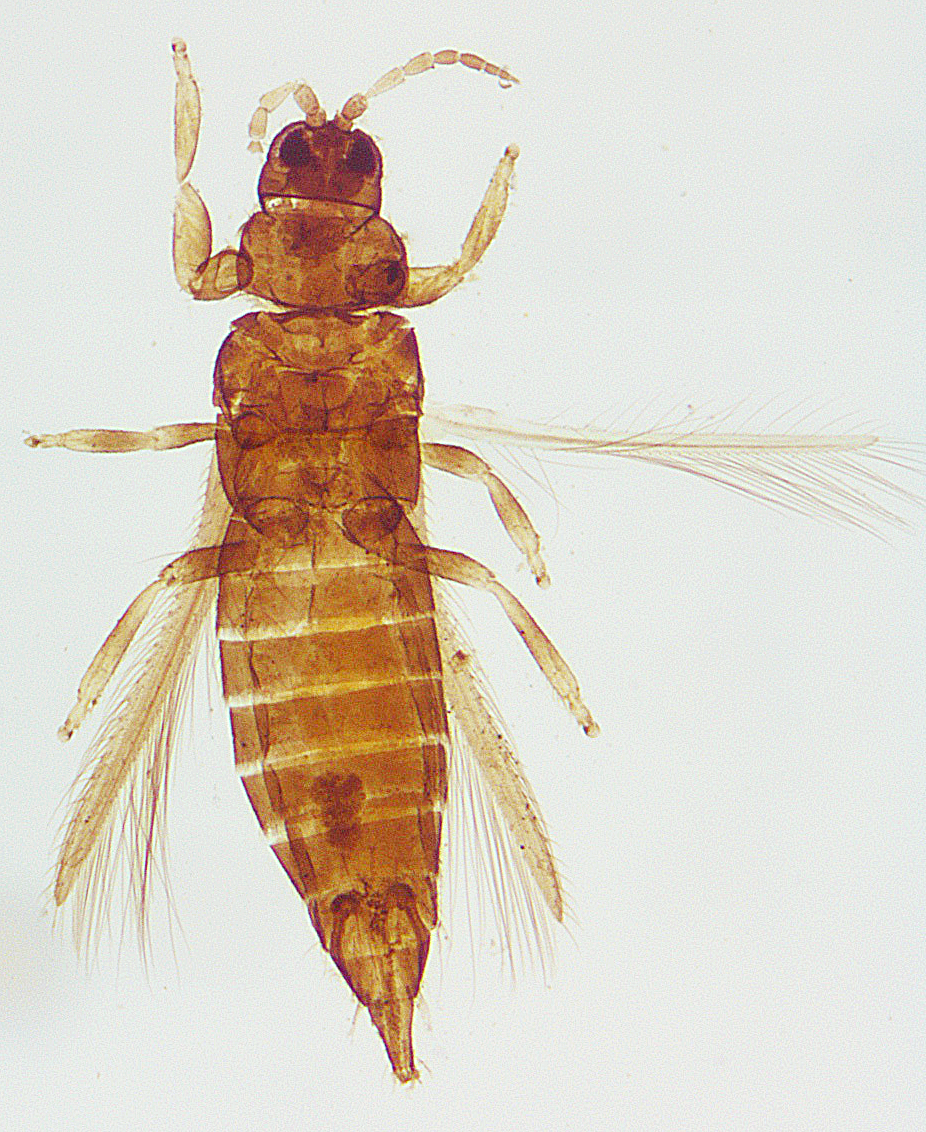
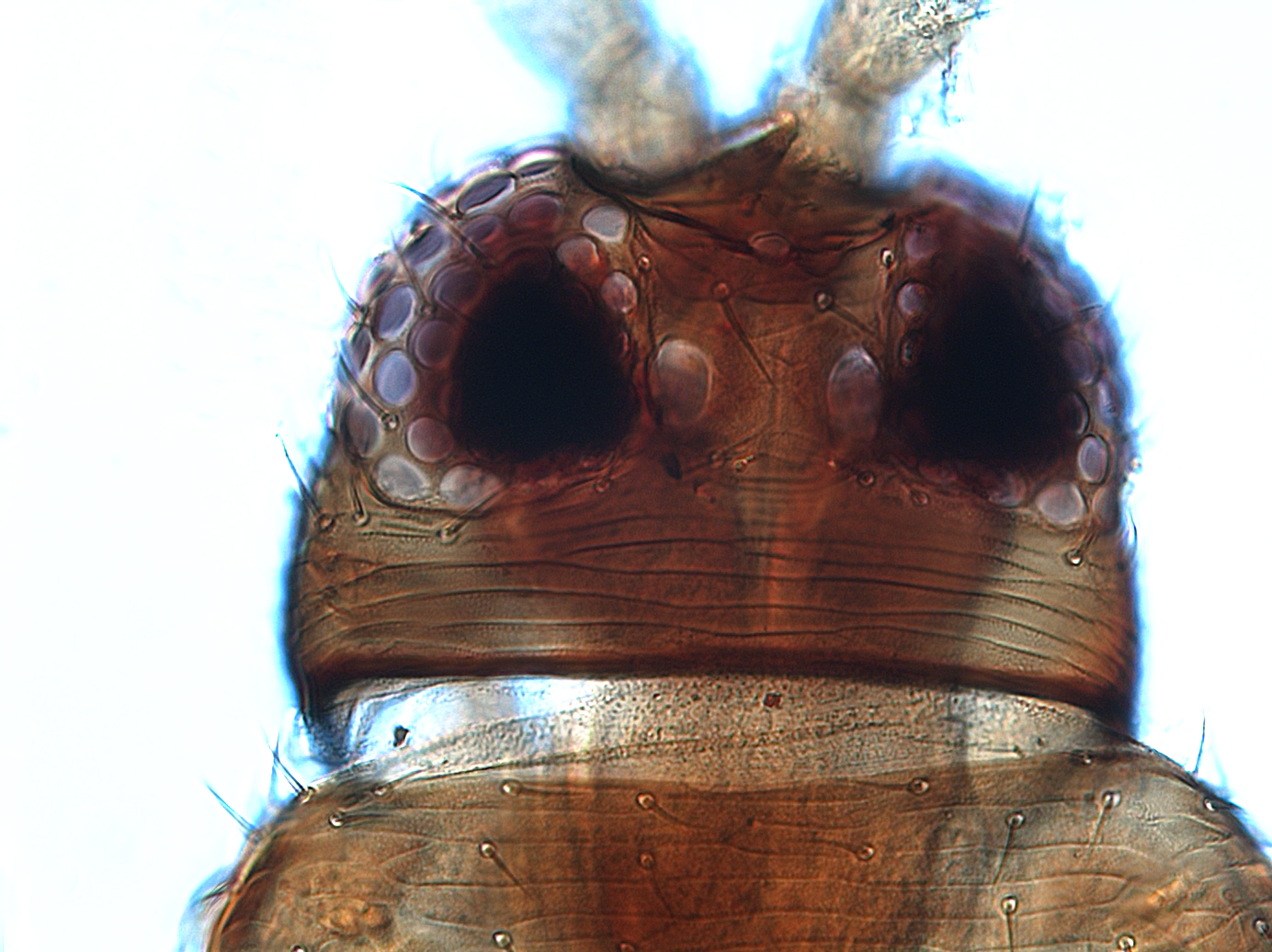
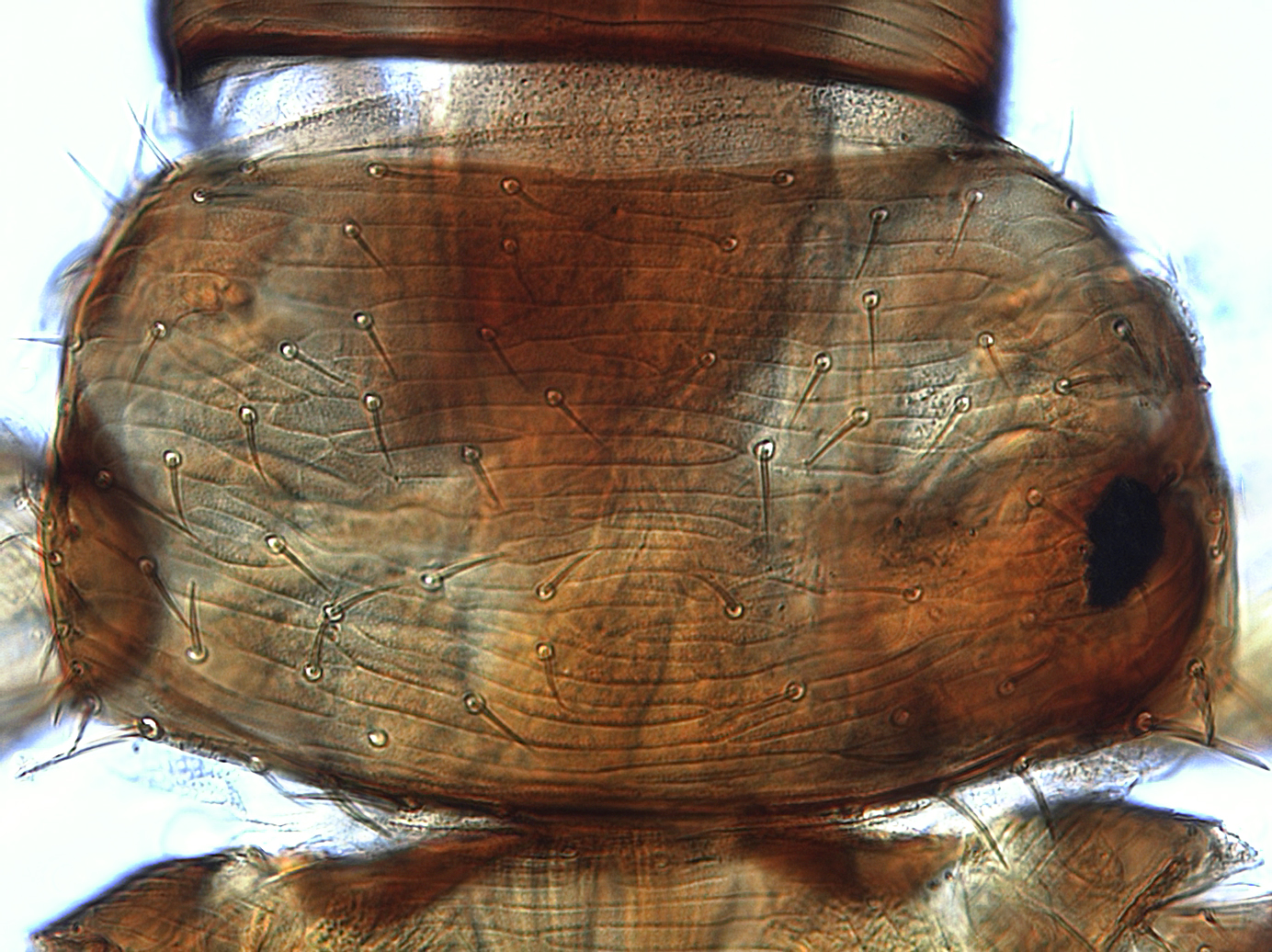
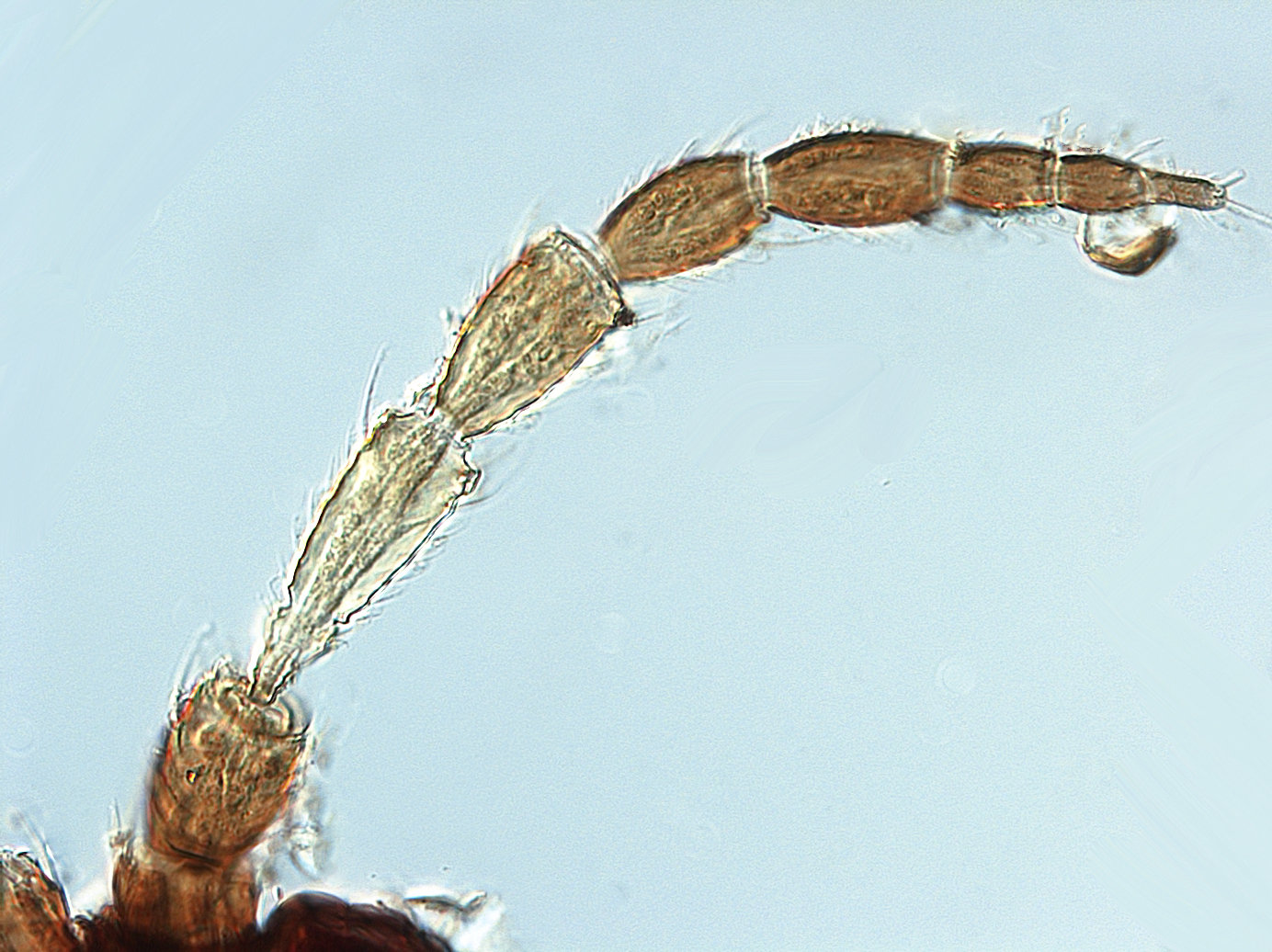
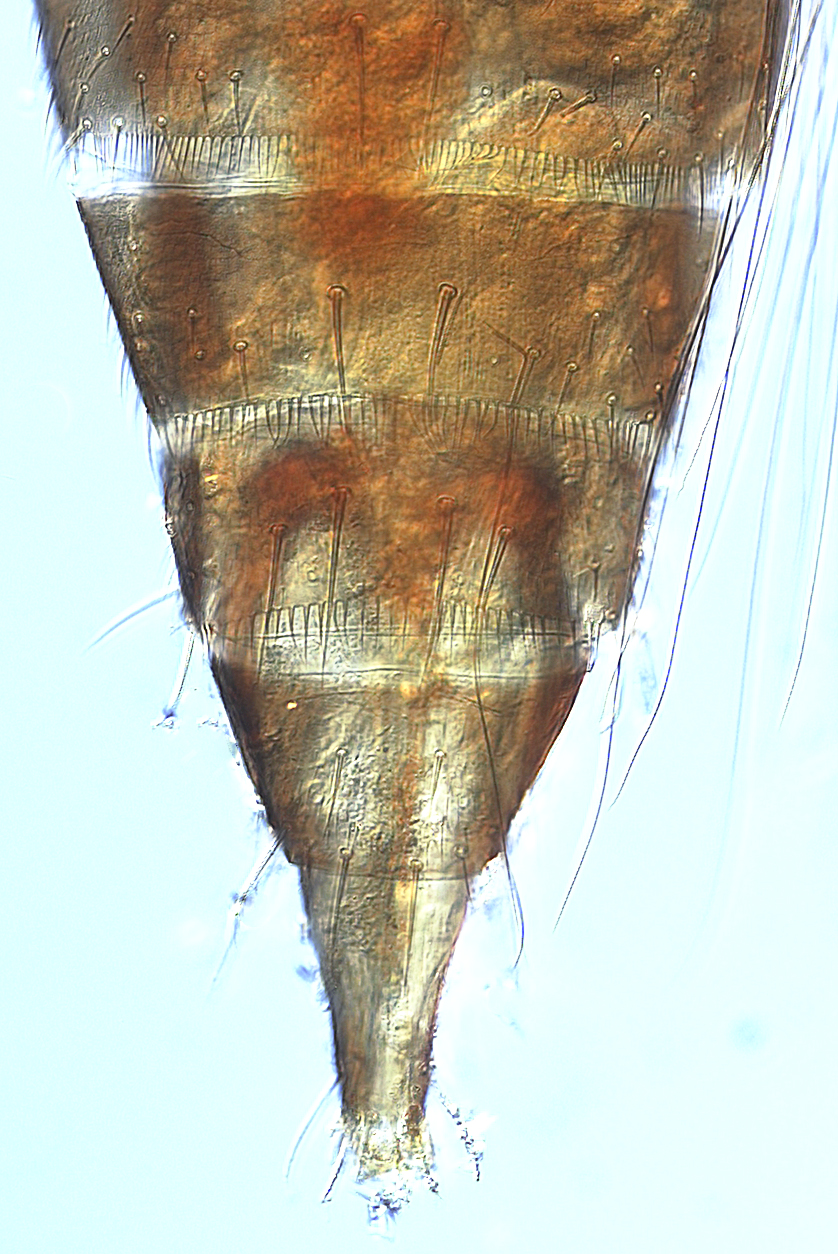
Body largely brown; tibiae paler and tarsi yellow; antennal segment III extensively yellow;fore wing uniformly brown. Head wider than long, with no long setae; ocellar region with three pairs of setae, pair III longer than the diameter of an occelus. Antennae 9-segmented, segments III & IV each with one transverse row of sensorial pores at apex. Pronotum broadly striate, with no long setae; mesonotum striate; metanotum with concentric lines of sculpture and covered with microtrichia. Abdominal tergites I–V with posteromarginal comb of microtrichia laterally, II–V with a few marginal microtrichia medially; VI–VIII with complete marginal comb of long microtrichia; II–VII with regular transverse rows of microtrichia laterally. Sternites with a long microtrichial fringe on posterior margin and with discal setae on II–VI.
Male smaller, abdominal sternites without pore plates.
Intraspecific variation
Not recorded.
Genus and similar species information
Heterothrips Hood is the largest genus in the family Heterothripidae, currently comprising more than 70 species. It is restricted to the Americas and two informal groups were proposed by Moulton (1932). Species placed in “group I” bear a posteromarginal fringe of independent microtrichia on the abdominal tergites, whereas species in “group II” have microtrichia that arise on the posterior margin of the tergites from a well-developed craspedum. Antennal segments III & IV each bears apically a circumpolar sensorium with one or more rows of pores. This is a dark brown species which has fore wing uniformly brown. The antennal segment III is pale with dark apex, and V usually yellow in basal third. Abdominal tergites bear a fringe of independent posteromarginal microtrichia, and females have sternal discal setae. A key to Heterothrips species recorded from Brazil is given by Pereyra & Cavalleri (2012).