Original reference: Bondar G (1931) Uma Nova Praga das Orchideas (Anaphothrips orchidearum Bondar) e como combater esta e outros thysanopteros damninhos. Chacaras e Quintaes 44: 435–436.
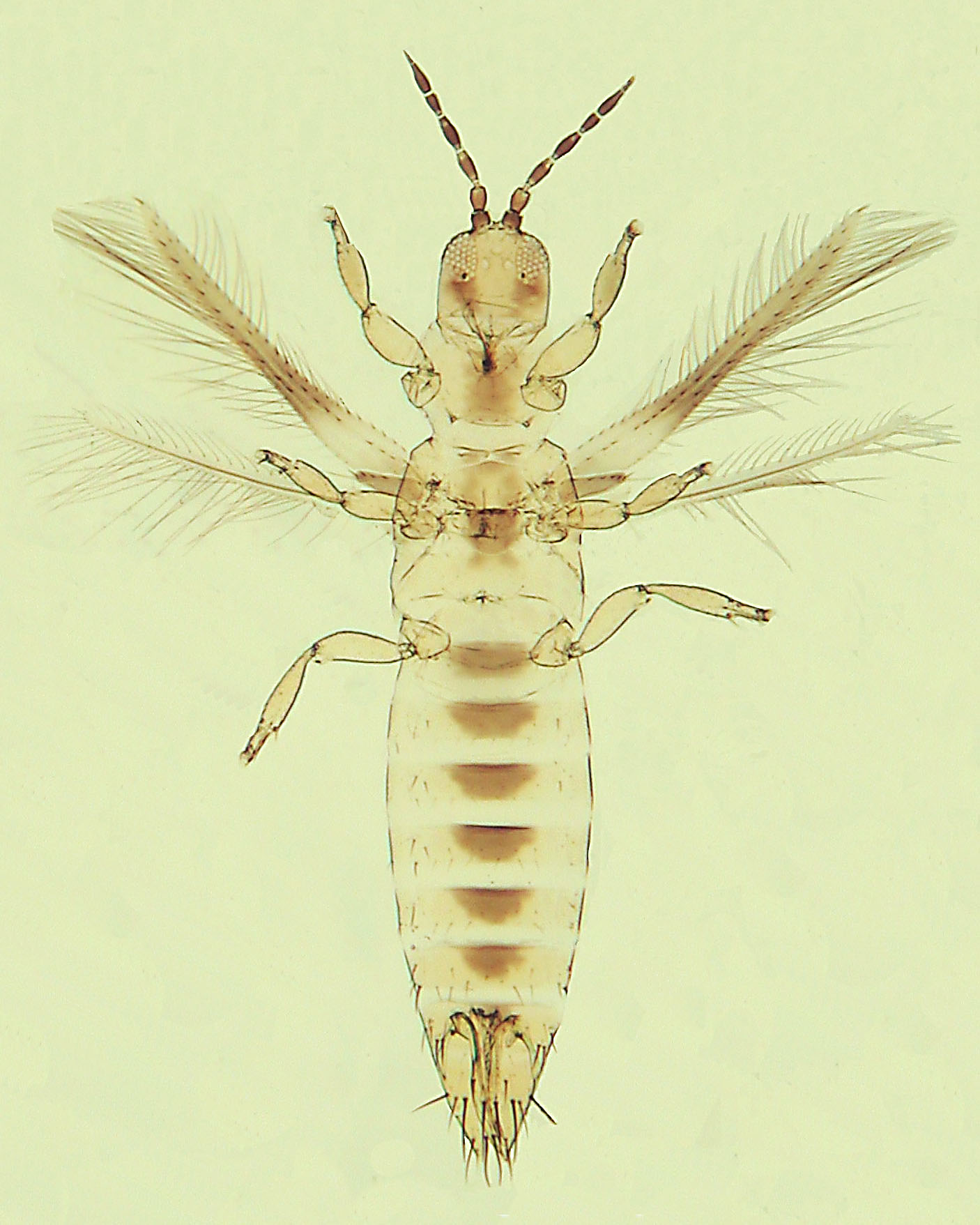
Body extensively yellow, brown markings on head just behind eyes, medially on pronotum, mesonotum, metanotum and abdominal tergites II–VII; antennal segments brown, III–V with a narrow pale area basally; legs yellow; fore wing banded, pale in basal third, brown medially; apical third slightly paler; clavus uniformly brown. Head with weak reticulate sculpture, with three pairs of ocellar setae. Antennae 8-segmented, III & IV each with a forked sense cones. Pronotum reticulate, without long setae. Mesothoracic spinula present; metathoracic endofurca weakly developed, without spinula. Metanotum reticulate medially; paired campaniform sensilla absent; two pairs of setae, median pair arising behind anterior margin. Tarsi 2-segmented. Fore wing first vein setal row widely interrupted, second vein setal row essentially complete. Abdominal tergites with reticulation and few and sparse microtrichia on lateral thirds; II–VIII with pair of small setae medially; VIII with posteromarginal comb of microtrichia; IX with rows of fine microtrichia. Sternites without craspeda or discal setae; three pairs of long posteromarginal setae. Both sexes winged.
Male tergite IX with two pairs of thorn-like setae; abdominal sternites III–VII each with transverse pore plates.
Intraspecific variation
Thorn-like setae reduced in small males.
Genus and similar species information
According to Mound & Marullo (1996), it is unclear if one or more species are involved in this genus. Sakimura (1967) treated A. orchidearum as a subspecies of A. orchidaceus and stated that they can be distinguished from each other by the fore wing colour and antennal structure. But variation continues to cause problems (Goldarazena et al. (2008).
Breeding on leaves and branches of several Orchidaceae. In Brazil, it was found in Cattleya autumnalis, Cattleya grandis, Catasetum, Coryanthes, Cyrtopodium, Epidendrum fulgens and Miltonia.
Economic importance
Recorded as pest of some orchids by Bondar (1931).
References suggested
Bondar (1931) Uma Nova Praga das Orchideas (Anaphothrips orchidearum Bondar) e como combater esta e outros thysanopteros damninhos. Chacaras e Quintaes 44: 435–436.
Goldarazena A, Mound LA & Zur Strassen R (2008) Nomenclatural problems among Thysanoptera (Insecta) of Costa Rica. Revista Biologia Tropical 56: 961–968.
Mound LA & Marullo R (1996) The Thrips of Central and South America: An Introduction. Memoirs on Entomology, International 6: 1–488.
Sakimura K (1967) Redescriptions of Anaphothrips orchidaceus and A. orchidearum (Thysanoptera: Thripidae). Florida Entomologist 50: 89–97.
Published in: 23/12/2016 Posted by: Mariana Lindner