Heliothrips similis Nakahara, O'Donnell & Mound, 2015: 579.
Original reference: Nakahara S, O’Donnell CA & Mound LA (2015) Heliothrips haemorrhoidalis and its relatives, with one new species and one new genus (Thysanoptera). Zootaxa 4021 (4): 578–584.
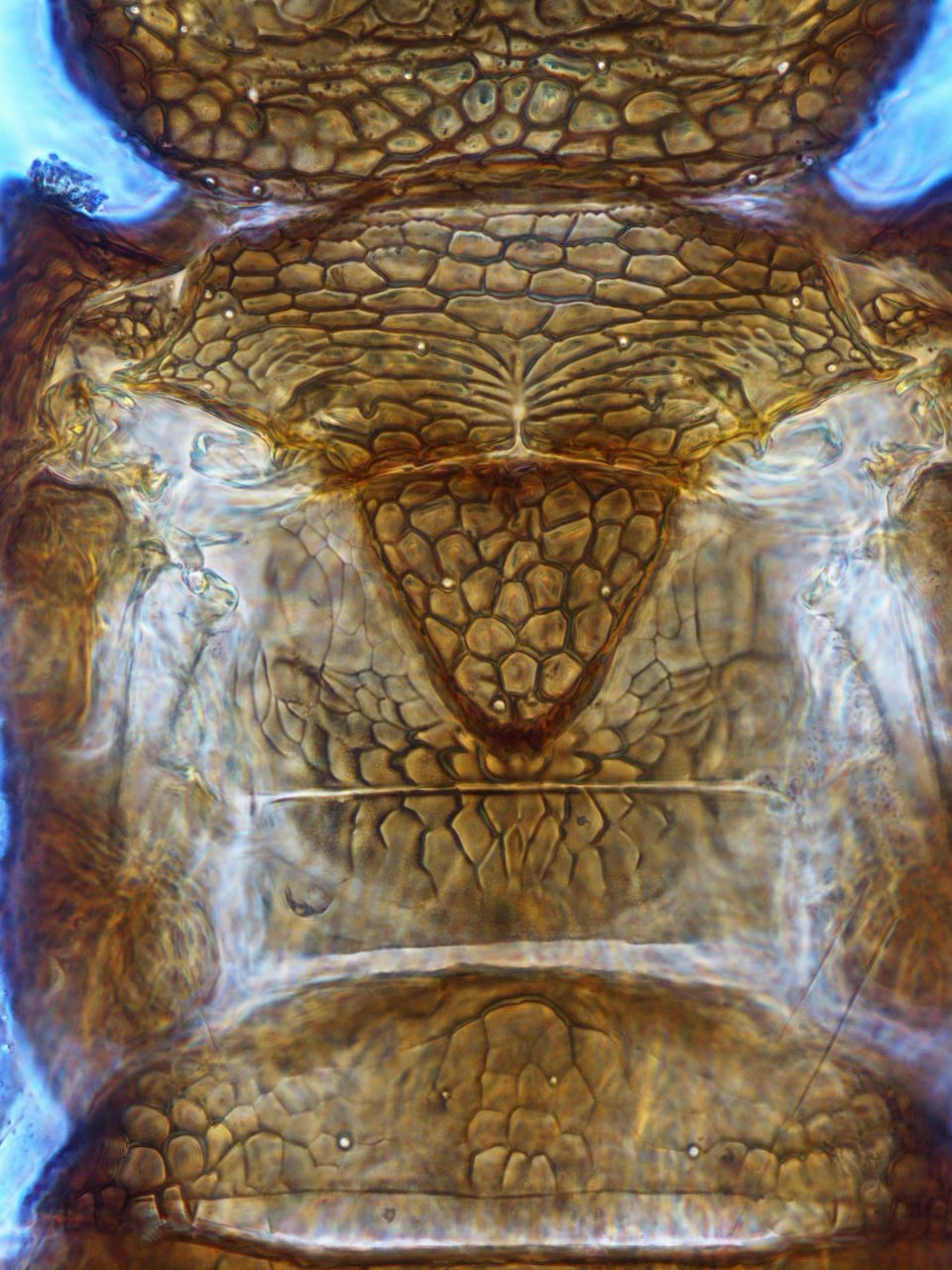
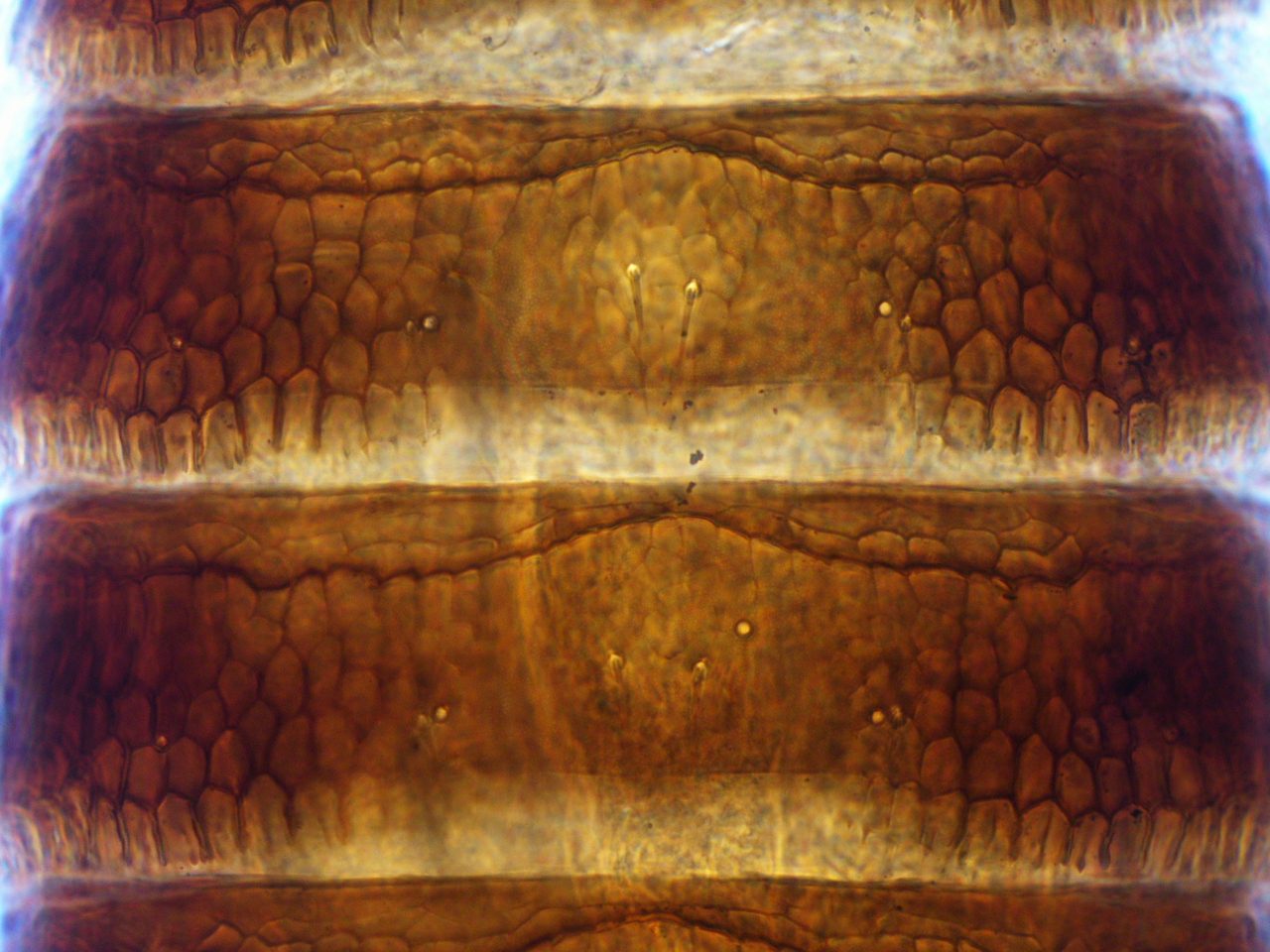
Species not studied on the current work. Body dark brown, antennal segments III–V and base of VI yellow, fore wings pale. Body covered by strong sculpture, metascutum with a reticulate triangle, its three sides subequal, with the posterior flange small or absent, not reaching the anterior margin of metascutelum. Tergite I with a pair of median minute setae arising from the reticulate area. Sculpture in front of antecostal ridge on abdominal tergites III–VIII weak or absent.
Male not studied.
Intraspecific variation
Not recorded.
Genus and similar species information
This genus belongs to the subfamily Panchaetothripinae and includes five Neotropical species. They have body strongly sculptured, simple and long sense cones on antennal segment III–IV, and fore wings with a distinctive rounded apex. Heliothrips similis can be differentiated from the other species in the genus by the shorter triangle on metascutum, not reaching the anterior margin of metascutellum, and by the median minute pair of setae on tergite I positioned more posteriorly, in the sculptured area. An illustrated key to neotropical Heliothrips species is given by Silva et al. (2024).
Breeds on leaves, of several plant species, being recorded in leaves of mango, bamboo, Eugenia and Miconia calvescens.
Economic importance
Not recorded.
References suggested
Nakahara S, O’Donnell CA & Mound LA (2015) Heliothrips haemorrhoidalis and its relatives, with one new species and one new genus (Thysanoptera). Zootaxa 4021 (4): 578–584.