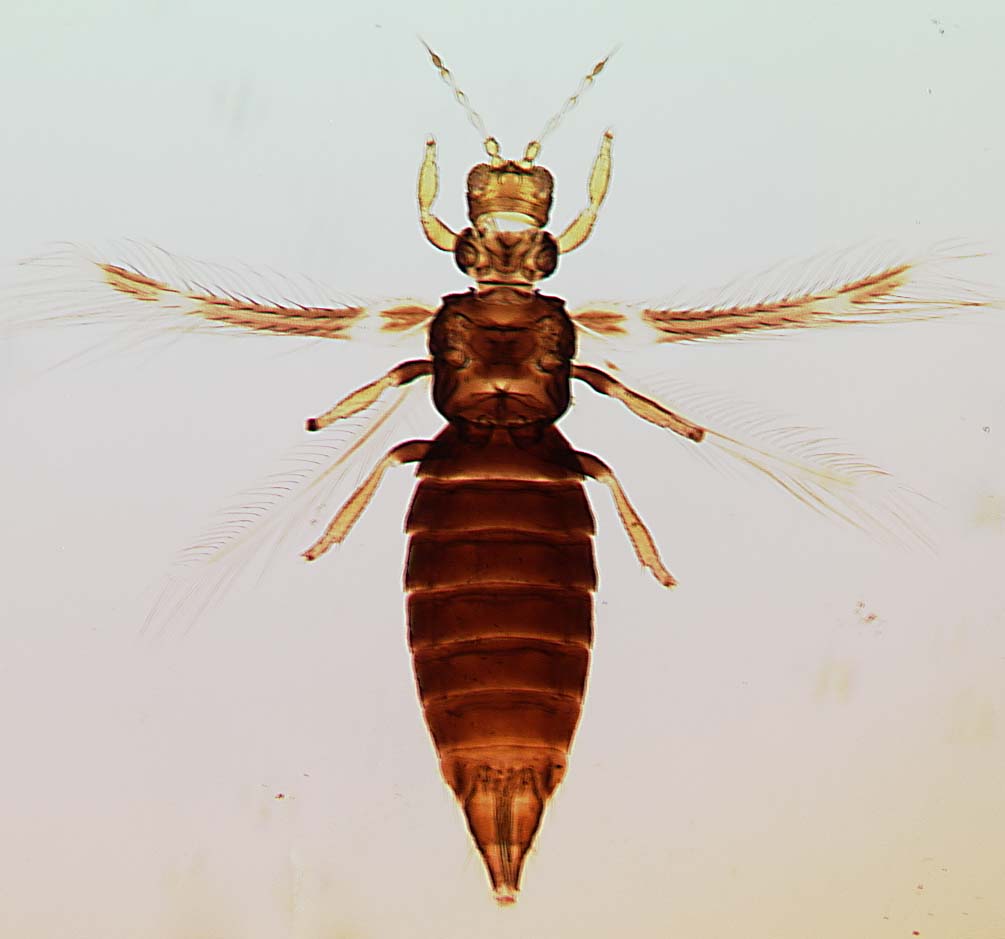
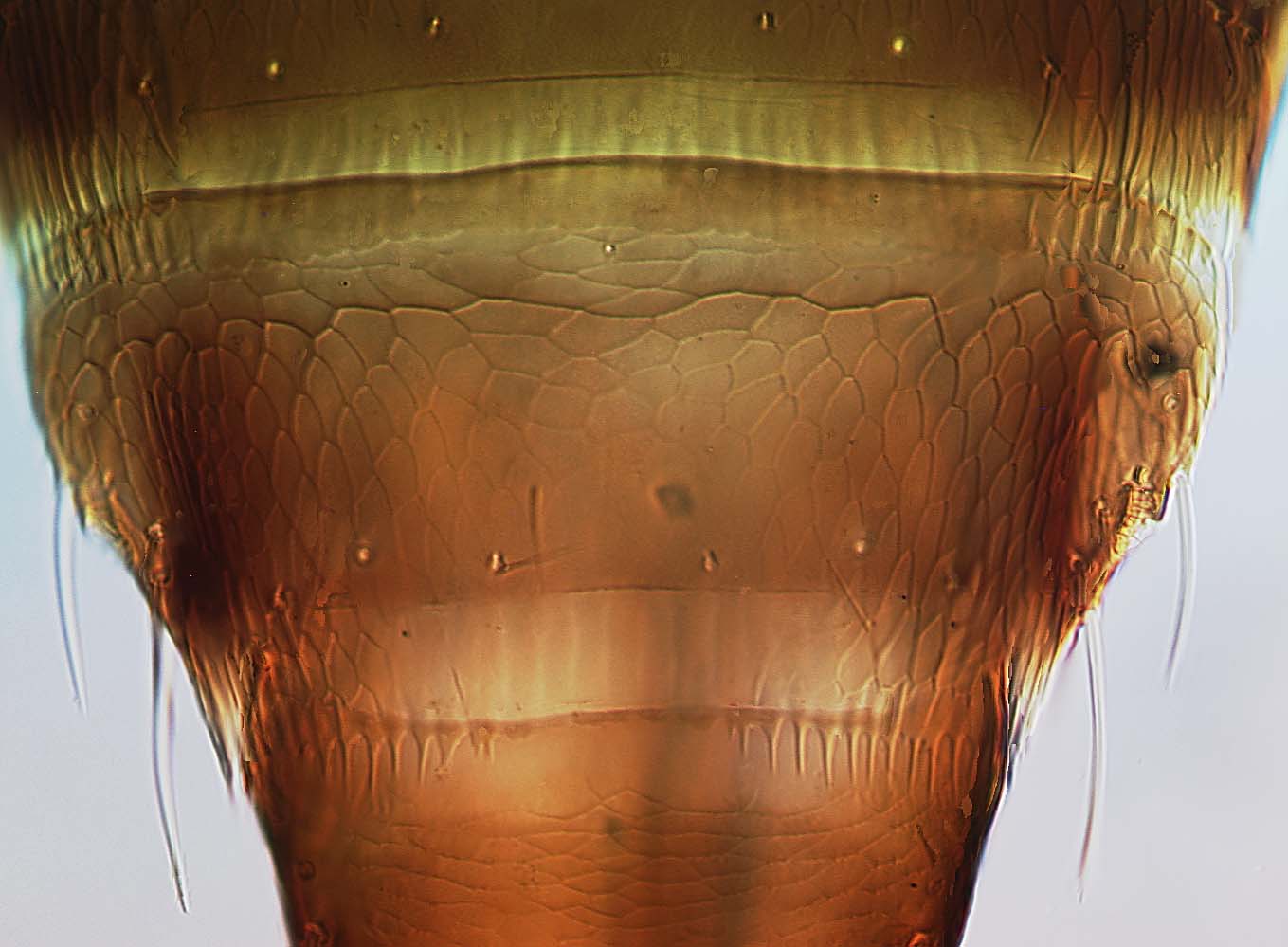
Hercinothrips femoralis (Reuter, 1891: 166).
Original reference: Reuter OM (1891) Thysanoptera, funna i finska orangerier. Meddeleser af Societas pro Fauna et Flora Fennica 17: 160–167.
Family
Thripidae, Panchaetothripinae
Nomenclatural information
http://thrips.info/wiki/Hercinothrips_femoralis
Diagnosis
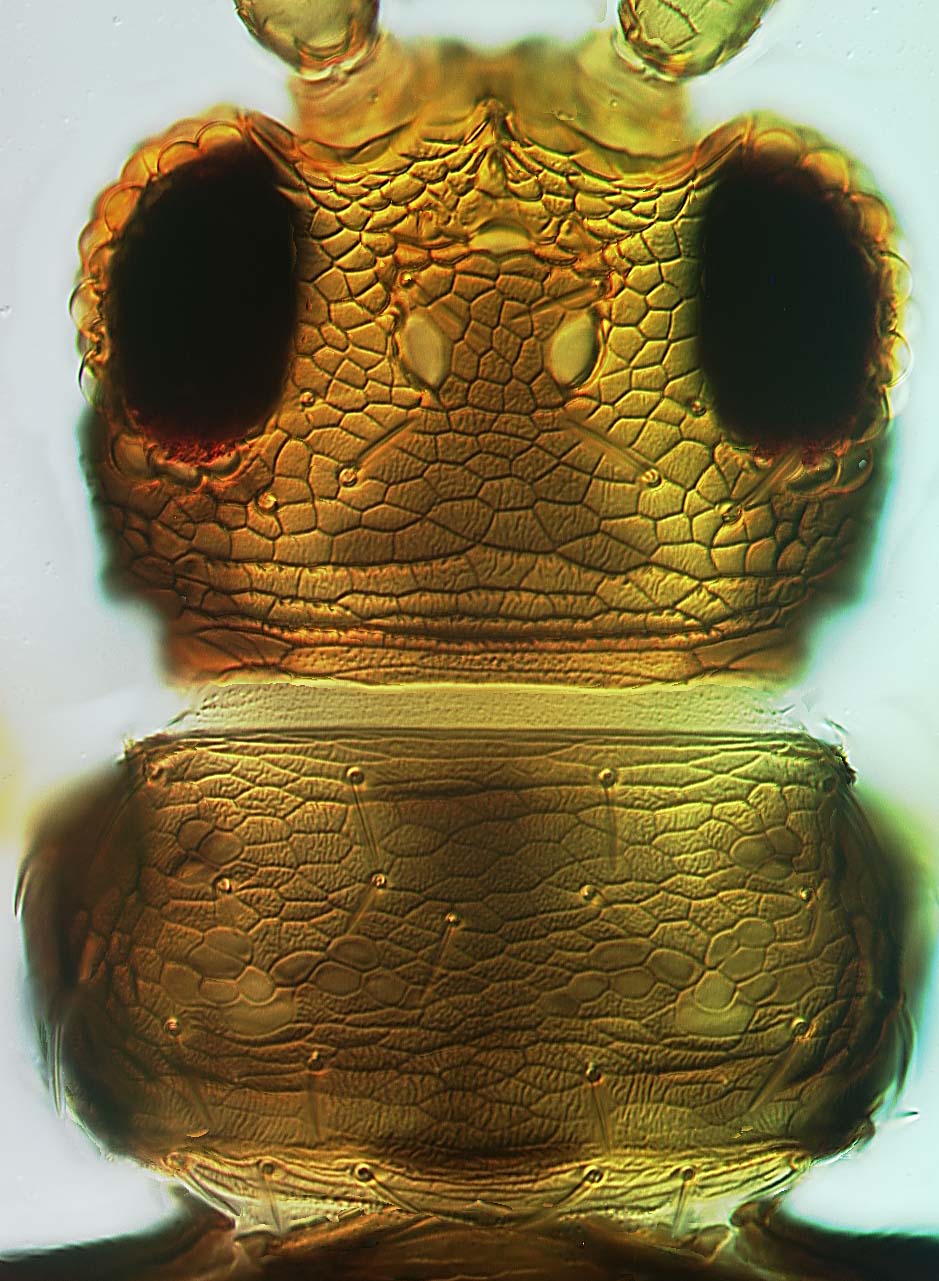
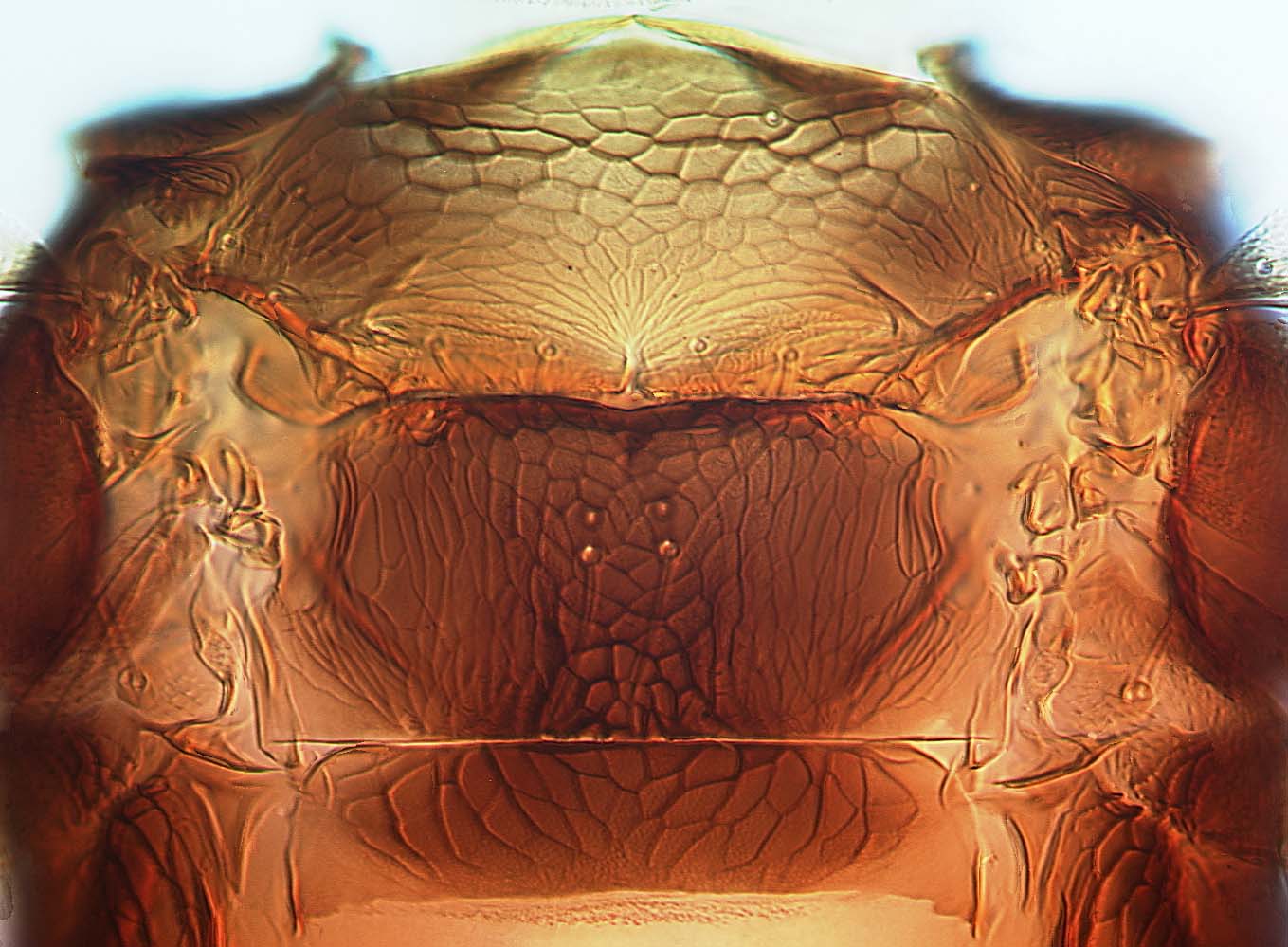
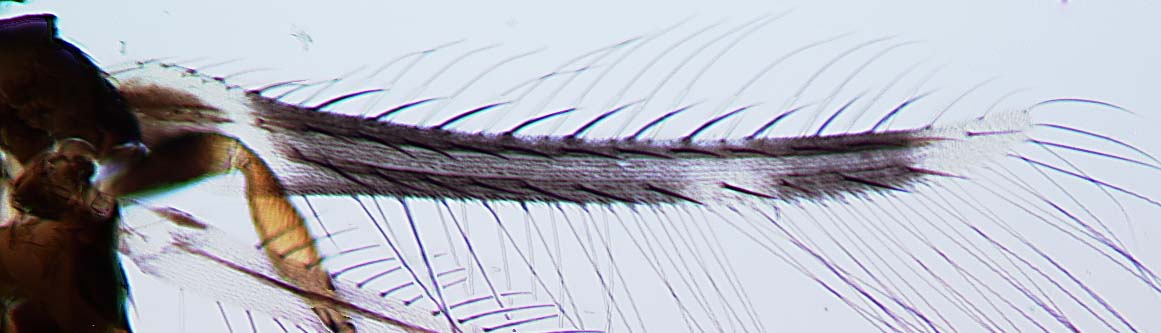
Body brown; head and pronotum with yellow markings; all tarsi and tibiae yellow; abdominal segments IX–X paler; antennal segments I & III yellow; II brown; IV & V yellow and shaded brown apically; VI–VIII brown; fore wings mainly brown, with a sub-basal and subapical area pale, apex pale. Head reticulate and with transverse occipital ridge. Antennae 8-segmented, III & IV with forked and slender sense cones; VIII elongated. Pronotum reticulated and without long setae at posterior angles; reticles with internal markings. Mesothoracic endofurca without spinula and methathoracic endofurca with long curved paired arms extending to mesothorax. Mesonotum not divided longitudinally. Metanotum reticulated, median setae long; paired campaniform sensilla present and placed anteriorly. Tarsi 2-segmented. Fore wing with complete row of setae on first and second veins. Abdominal tergites finely sculptured with elongated reticles on lateral thirds, sculpture transversely reticulate anteromedially; median setae minute and wide apart; tergite VIII with comb of microtrichia laterally; tergite X partially divided medially. Both sexes fully winged.
Male with sternites III–VII each with a long, slender and transverse pore plate; sternite IX with three pairs of stout thorn-like setae.
Intraspecific variation
Subapical pale area on fore wings varies from a small patch to a well-defined band.
Genus and similar species information
Hercinothrips is an African genus which includes nine species, most of them widespread around the world. The members of this genus are unusual, but not unique among Panchaetothripinae, in having fore wing with two complete rows of setae and tarsi 2-segmented. Hercinothrips femoralisis very similar to H. bicinctus, but this species is distinctive in having brown antennal segments VI–VIII and fore wings more extensively dark.
World distribution
Described originally from Finland, it is presumably African in origin. It is now widespread around Tropics and Subtropics, including Central and South America.
Distribution in Brazil
http://fauna.jbrj.gov.br/fauna/faunadobrasil/25622
Life history
Often called the Banded Greenhouse Thrips, this species breeds on mature leaves of several plant species. It is usually found breeding on cucumbers, bananas and ornamentals. In Brazil, it was collected in Hyptis (Lamiaceae). The life cycle, from oviposition to adult, takes about 19 days under experimental conditions of 27°C (Laughlin 1971).
Economic importance
It is considered a minor pest in glasshouses and banana plants (Wilson 1975). The damaged areas develop a silvery blemish, spotted with the thrips’ dark faeces.
References suggested
Laughlin R (1971) A culture method for Hercinothrips femoralis (Reuter) (Thysanoptera). Journal of the Australian Entomological Society 10: 301–303.
Mound LA (1970) Studies on heliothripine Thysanoptera. Proceedings of the Royal Entomological Society of London 39: 41–56.
Mound LA & Marullo R (1996) The Thrips of Central and South America: An Introduction. Memoirs on Entomology, International 6: 1–488.
Wilson TH (1975) A monograph of the subfamily Panchaetothripinae (Thysanoptera: Thripidae). Memoirs of the American Entomological Institute 23: 1–354.
Attendance
Brasil, Rio Grande do Sul, Rio Grande
Campus Carreiros: Av. Itália km 8
Bairro Carreiros
Thysanoptera © Todos Direitos Reservados 2026