Elaphrothrips brasiliensis Johansen, 1979: 104.
Family
Phlaeothripidae, Idolothripinae
Nomenclatural information
https://thrips.info/wiki/Elaphrothrips_brasiliensis
Diagnosis
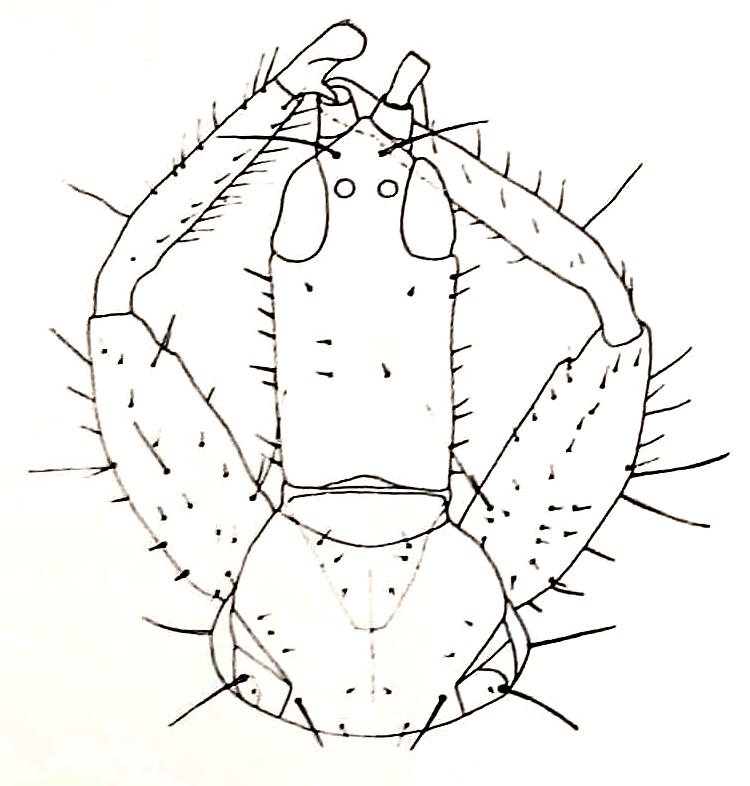
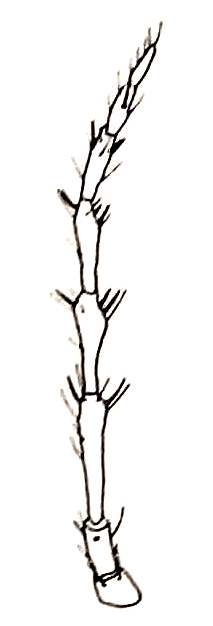
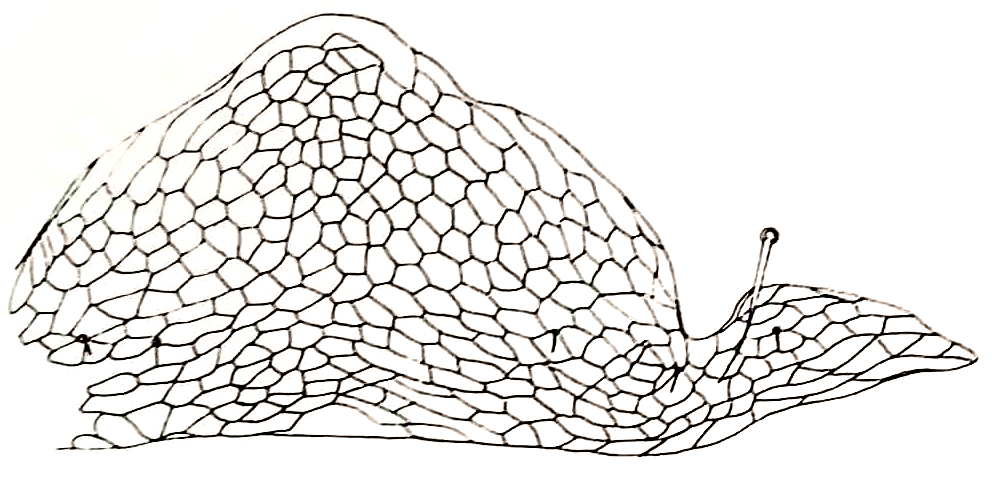
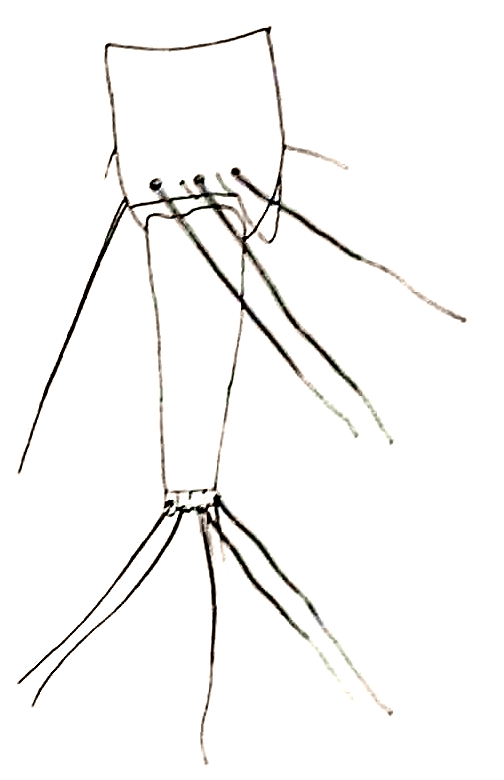
Male macropterous; body color mainly dark brown; legs dark brown, with all trochanters and tarsi, fore tibiae and extreme base and apex of the other tibiae and femora yellow; antennomere I dark brown, II dark brown with yellow apex, III yellow with extreme apex dark brown, IV–V yellow basally and dark brown apically, VI–VIII dark brown; wings yellowish, with a dark median line. Antennae 8-segmented, antennomere III with 2 and IV with 3 sense cones; III longer than the other segments. Head longer than wide, lateral margins parallel, slightly projected ahead of eyes; dorsal surface with only the ocellar pair of setae elongate, other setae short; cheeks with stout and short setae; eyes large, not projected ventrally. Pronotum reticulated, with 3 pairs of long setae, anteromarginal and anteroangular pairs as short as discal setae; prosternal basantra present. Metathoracic sternopleural sutures absent. Pelta reticulated, triangular and broad, basal angles curved upwards. Abdominal tergites II–VII with 2 pairs of wing-retaining setae and several smaller accessory setae; major setae on tergite IX as long as or longer than the tube. Tube cone-shaped, about 3x as long as basal width, without lateral setae. Fore legs enlarged, with many setae, fore tarsi with a tooth. Fore wings with about 30 duplicated cilia.
Female not studied.
Intraspecific variation
Unknown.
Genus and similar species information
Elaphrothrips is the Idolothripinae genus with the most described species, with almost 150 species widely distributed across tropical and subtropical regions. These thrips are usually large and dark-colored, distinguished from other Brazilian Idolothripinae (except Saurothrips) for having two pairs of wing-retaining setae on the abdominal tergites; in larger specimens, many accessory setae may be present in addition to the main wing-retaining pairs. Besides that, they have elongated head, major ocellar setae posterior to the anterior ocellus, basantra present, and tube shorter than the head, without lateral setae. Many species have high morphological diversity associated to size, wing-development and sex, which makes the distinction between species harder; and it is possible that many species in the genus will be identified as synonyms in the future.
Elaphrothrips brasiliensis seems to be among the smallest species from this genus in Brazil, with the male holotype measuring only 5 millimeters when fully distended; moreover, it has around 30 duplicated cilia on each forewing, while the other species usually have 40 or more of these cilia. Other relevant characters for this species are antennomere IV with 3 sense cones, a reticulated pronotum with the anterior margin setae very small, and males with the postocular setae reduced or absent.
Distribution around the world
Described from Brazil.
Distribution in Brazil
http://fauna.jbrj.gov.br/fauna/faunadobrasil/72497
Life history
Lives in dead leaves, where it feeds on fungal spores.
Economic importance
Not recorded.
Suggested references
Johansen RM (1979) Seis nuevas especies de Elaphrothrips Buffa, 1909 (Thysanoptera: Phlaeothripidae) de Brasil Y Peru. Anales del Instituto de Biologia. Universidad Nacional de Mexico 49 [1978]: 95–114.Palmer JM & Mound LA (1978) Nine genera of fungus-feeding Phlaeothripidae (Thysanoptera) from the Oriental Region. Bulletin of the British Museum (Natural History). Entomology 37: 153-215.
Attendance
Brasil, Rio Grande do Sul, Rio Grande
Campus Carreiros: Av. Itália km 8
Bairro Carreiros
Thysanoptera © Todos Direitos Reservados 2026