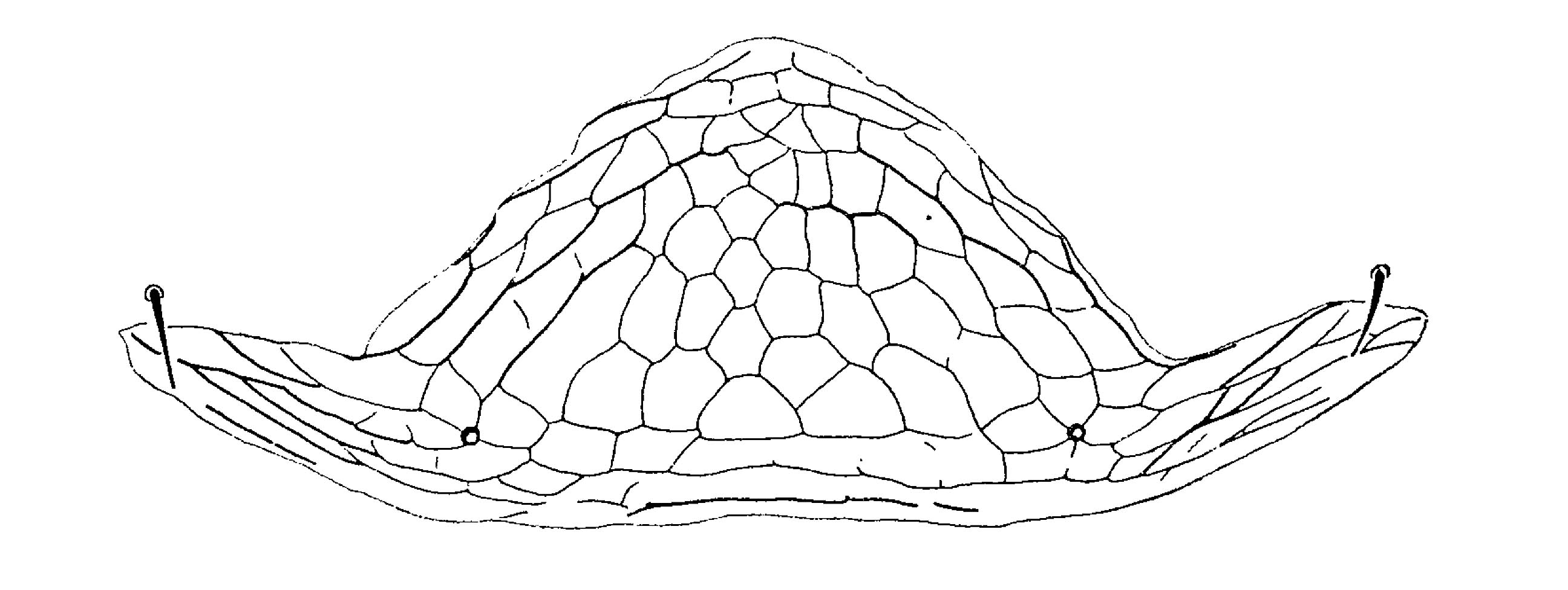
Female macropterous; body color brown, gradually darker on distal abdominal segments, with the tube almost black; legs knees and all tarsi paler; antennomere I light brown, II and bases of III–V yellow, apical half of III–V brown, gradually darker, VI–VIII dark brown; wings light brown with median line almost black. Antennae 8-segmented, antennomere III with 2 and IV with 4 sense cones. Head longer than wide, with one pair of long postocular setae and some short discal setae; lateral margins almost parallel, slightly curved, with a pair of structures similar to ommatidia; maxillary stylets more than half of head width apart, extending almost to the base of postocular setae. Pronotum with 4 pairs of well-developed setae, anteromarginal pair similar to discal setae; prosternal basantra present. Metanotum reticulated, with two pairs of median setae. Metathoracic sternopleural sutures present. Pelta reticulated, triangular with small basal wings curving upward; abdominal tergites transversely reticulated medially, tergites II–VII with 1 pair of wing-retaining setae. Tube cone-shaped, strongly tapering to the apex; about 1.75x as long as basal width, without lateral setae. Fore legs slightly enlarged, fore tarsi with a curved tooth. Fore wings without duplicated cilia.
Male micropterous or apterous. They can have distinct forms, with minor males similar to females; and major males that are paler, with multiple discal setae on the metanotum and abdominal tergites, fore legs swollen and with a large and curved tooth. Pore plates absent.
Intraspecific variation
Males have distinct forms, with some minor specimens, similar to females; and some major specimens, lighter-colored, with swollen forelegs, thick tarsal tooth and a trapezoidal pronotum.
Genus and similar species information
Phacothrips is a monotypic genus, with several characters comparable to different groups of Idolothripinae, such as the head similar to Gastrothrips species, or the robust and strongly tapering tube as in Pygothrips and Acallurothrips species. It is distinguished from all these groups by the presence of an ommatidium-like structure on the lateral margins of head, between eyes and posterior margin of head.