Original reference: Franklin HJ (1908) On a collection of Thysanopterous insects from Barbados and St Vincent Islands. Proceedings of the United States National Museum 33: 715–730. https://www.biodiversitylibrary.org/part/51964
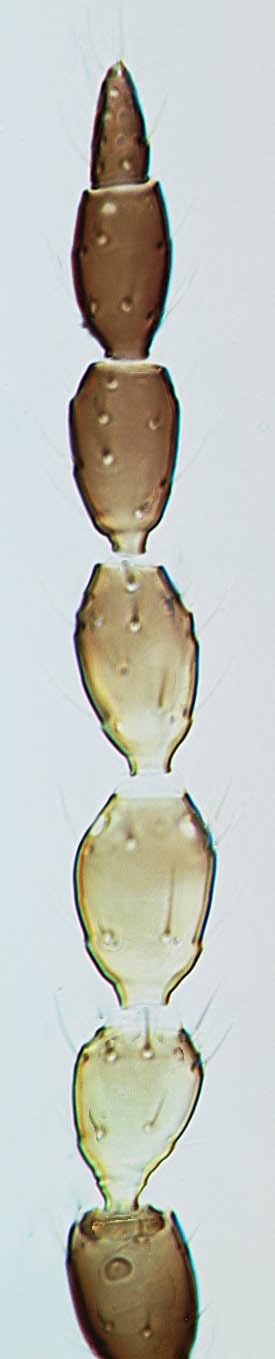
Haplothrips is one of the richest genera in Thysanoptera, with around 250 species distributed across the world, but especially in temperate areas of the northern hemisphere. Most of the species live in flowers, but some are recorded predating small arthropods. Haplothrips belongs to tribe Haplothripini, which contains about 30 genera, with species having medially constricted forewings, maxillary bridge and a well-developed basantra. It has several similarities to Karnyothrips, but both genera are distinguished from each other by the number of sense cones on antennomere IV (3 in Karnyothrips, 4 in Haplothrips) and the fore tarsi (without a tarsal tooth in Haplothrips, with a curved tarsal tooth in Karnyothrips).
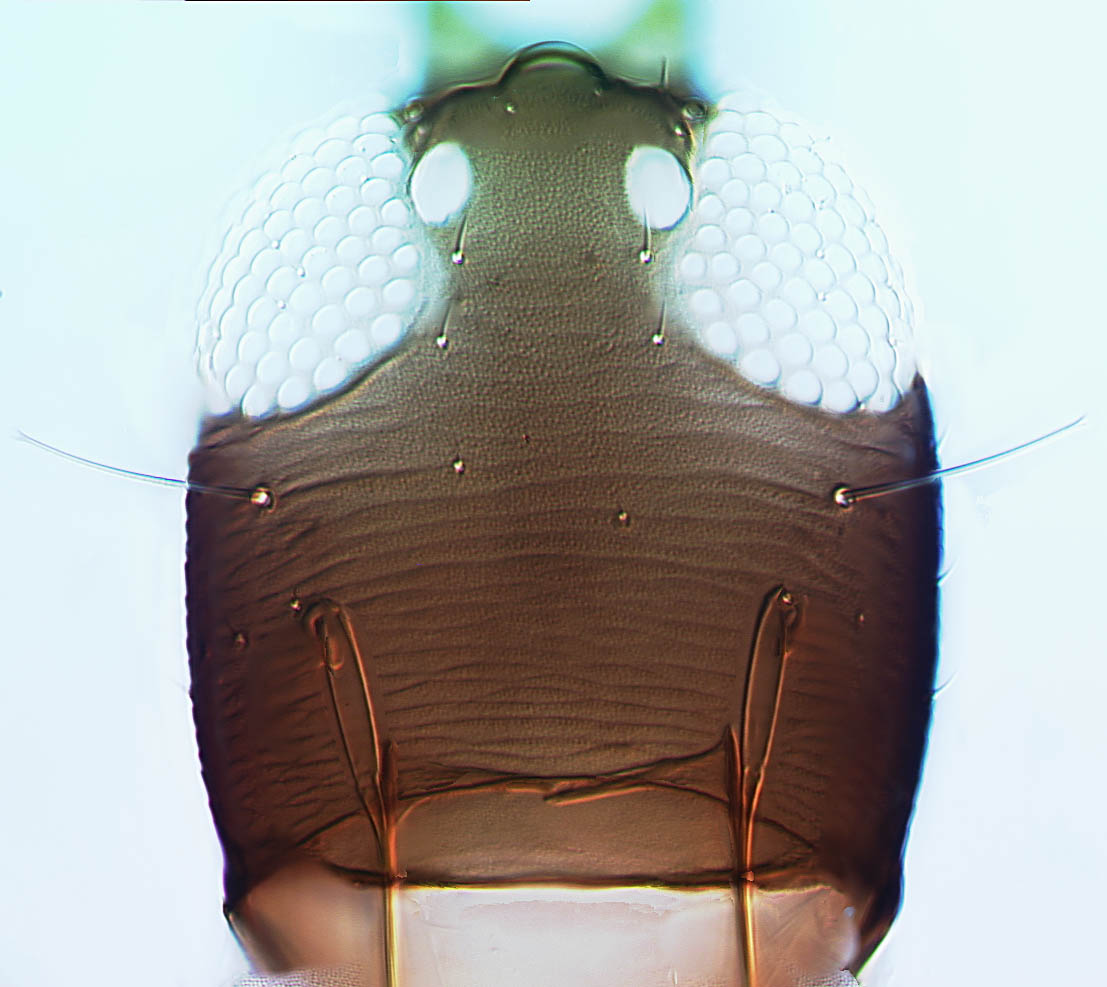
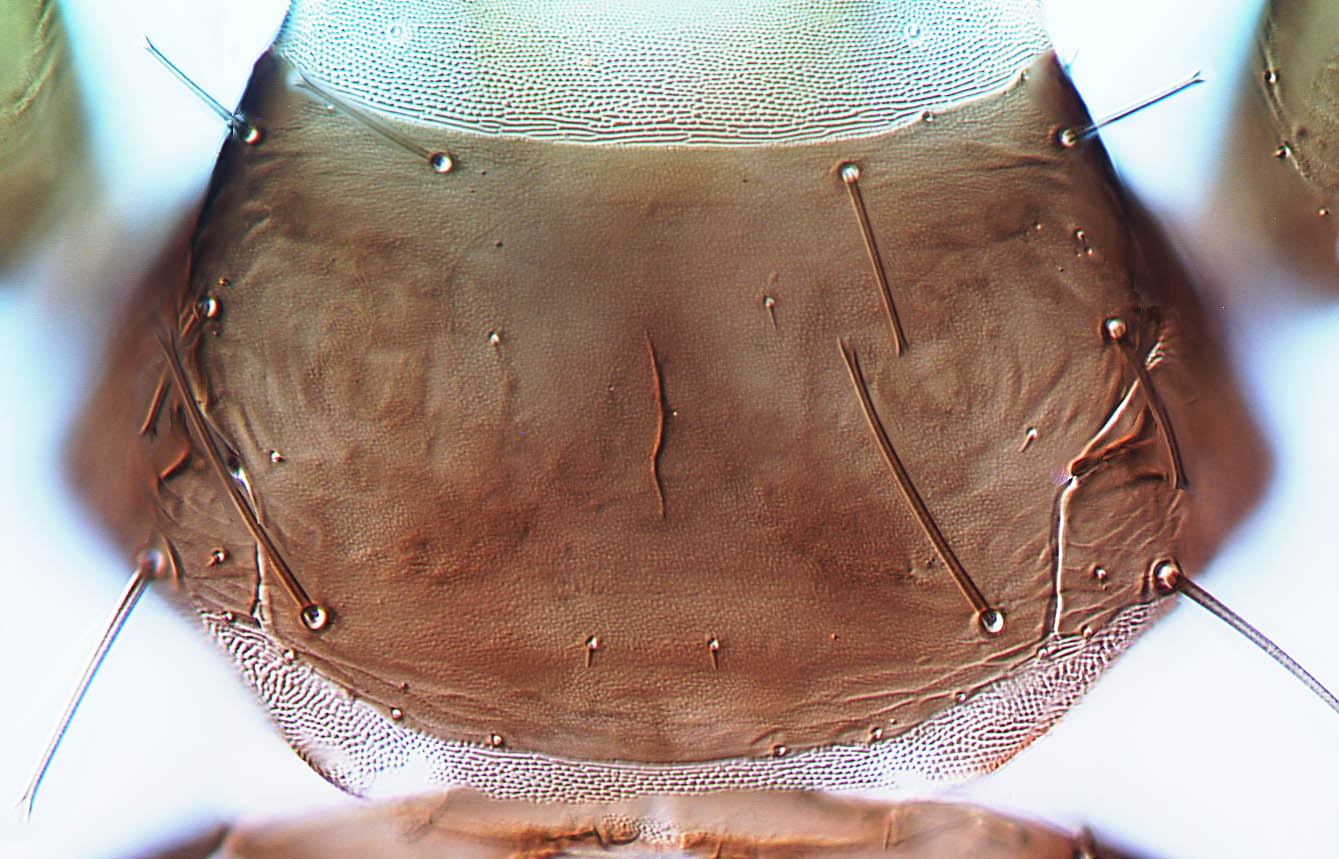
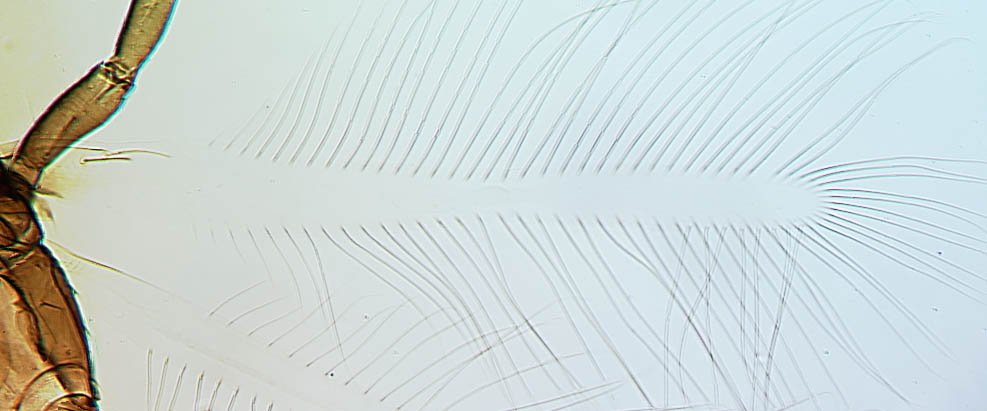
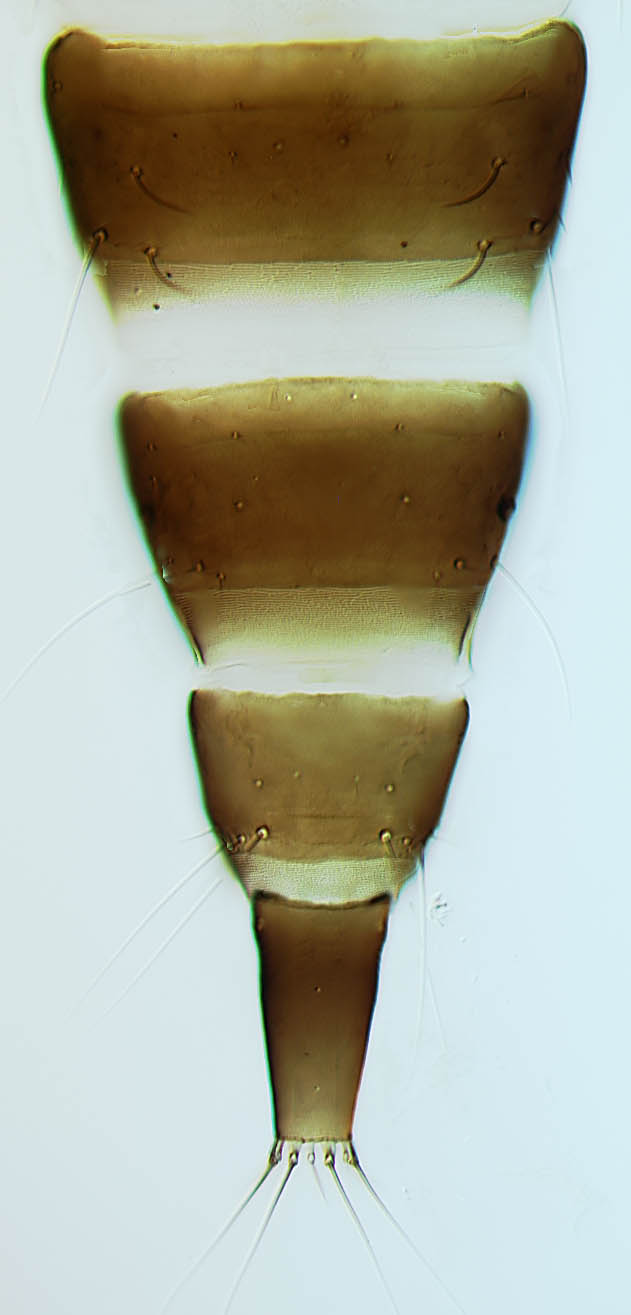
The species in Haplothrips are divided between two subgenera: those with duplicated cilia in the fore wings are placed in Haplothrips (Haplothrips), and those without such cilia belong to Haplothrips (Trybomiella). Haplothrips gowdeyi belongs to the first subgenus, together with H. dissociatus; and it is distinguished from the latter for having well-developed anteromarginal setae on pronotum, as well as males lacking a pore plate on abdominal sternite VIII. A key to the species of Haplothrips from Central and South America is available in Cavalleri et al. 2016.
Distribution around the world
Described from Florida, USA. Widely distributed in tropical and subtropical countries.
Phytophagous species, lives on flowers of a wide range of plants, including in Poaceae.
Economic importance
Referred damaging the flowers of Jasminum anquestifolium (sic. - possibly J. angustifolium?) in India (Mital, 1967).
Suggested references
Cavalleri, A, Lindner, MF & Mendonça Jr, M de S (2016) New Neotropical Haplothripini (Thysanoptera: Phlaeothripidae) with a key to Central and South American genera. Journal of Natural History 50: 1389–1410. doi: https://doi.org/10.1080/00222933.2015.1113316
Mital, VP (1967) Haplothrips gowdeyi Franklin (Thysanoptera-Phiaeothripidae) - A Serious Pest of Jasminum anquestifolium Vohl. In Rajasthan. Annals of Arid Zone, 6(2), 233-234. https://epubs.icar.org.in/index.php/AAZ/article/view/63376
Mound LA & Marullo R (1996) The Thrips of Central and South America: An Introduction. Memoirs on Entomology, International 6: 1–488.
Published in: 01/05/2018 Posted by: Mariana Lindner