Original reference: Lindner MF, Mendonça Jr MS, Cavalleri A (2016) Holopothrips molzi sp.n. (Thysanoptera, Phlaeothripidae): natural history and interactions in Myrtaceae galls. Zootaxa 4114(2): 139–148 https://doi.org/10.11646/zootaxa.4114.2.3
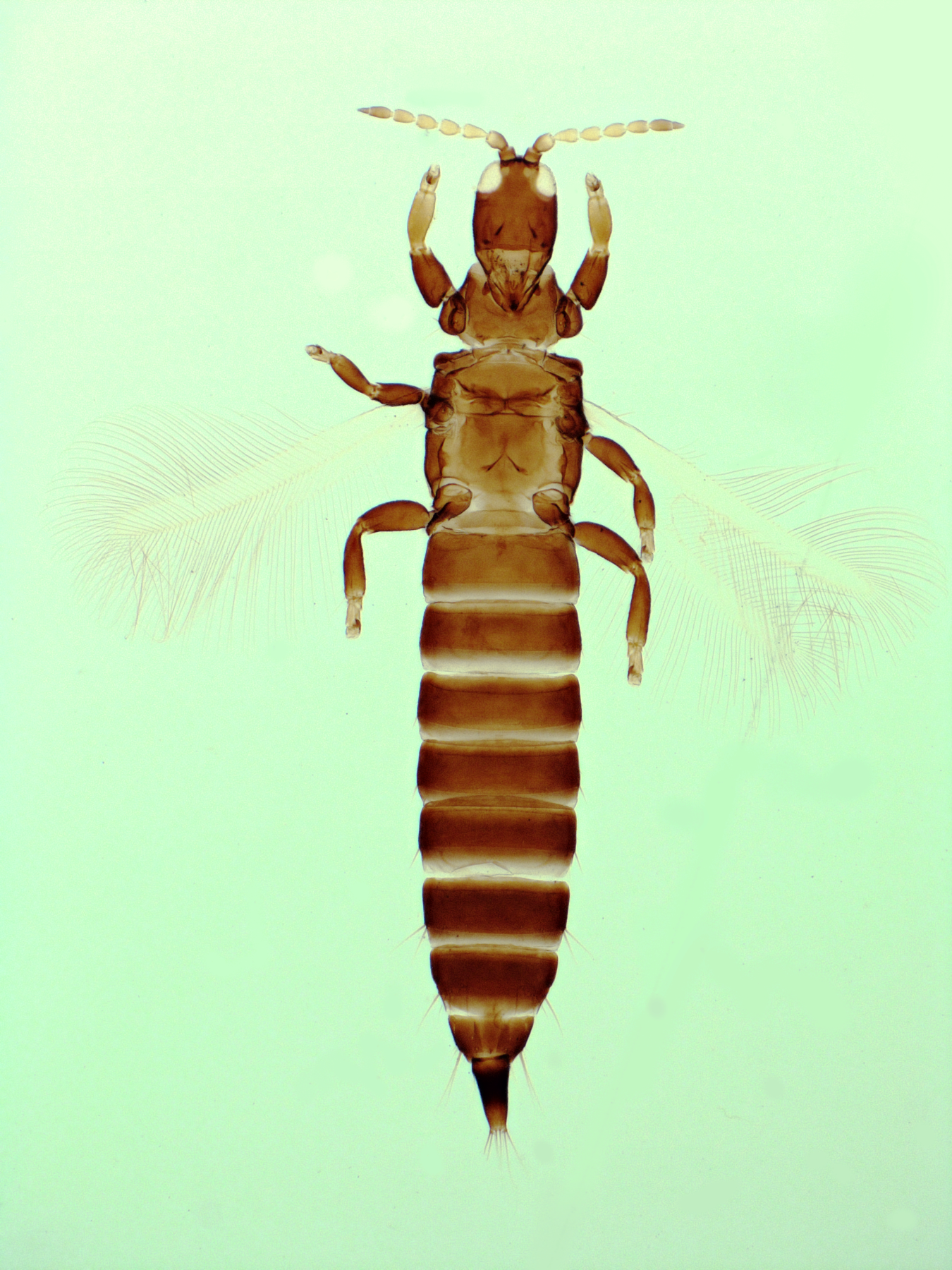
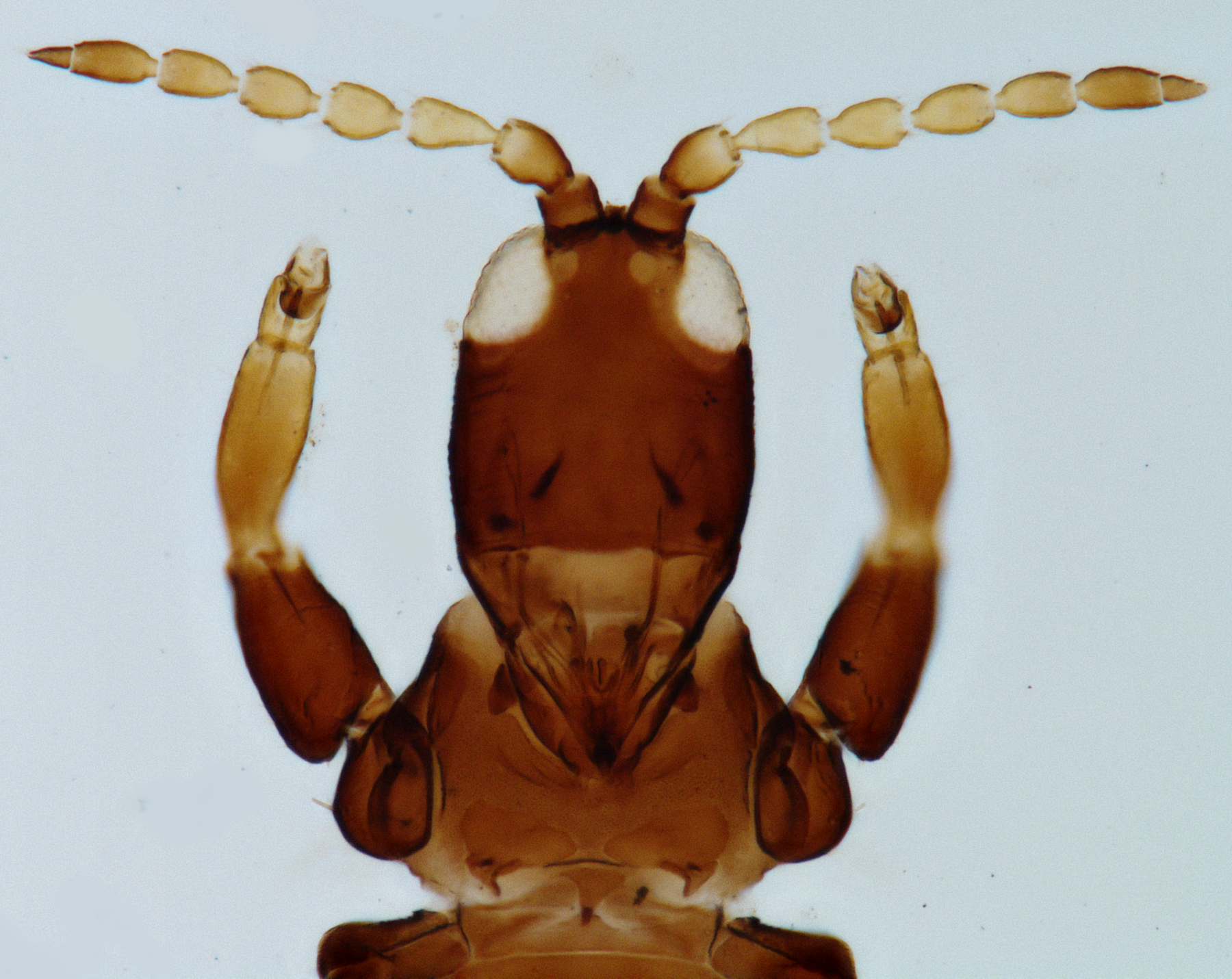
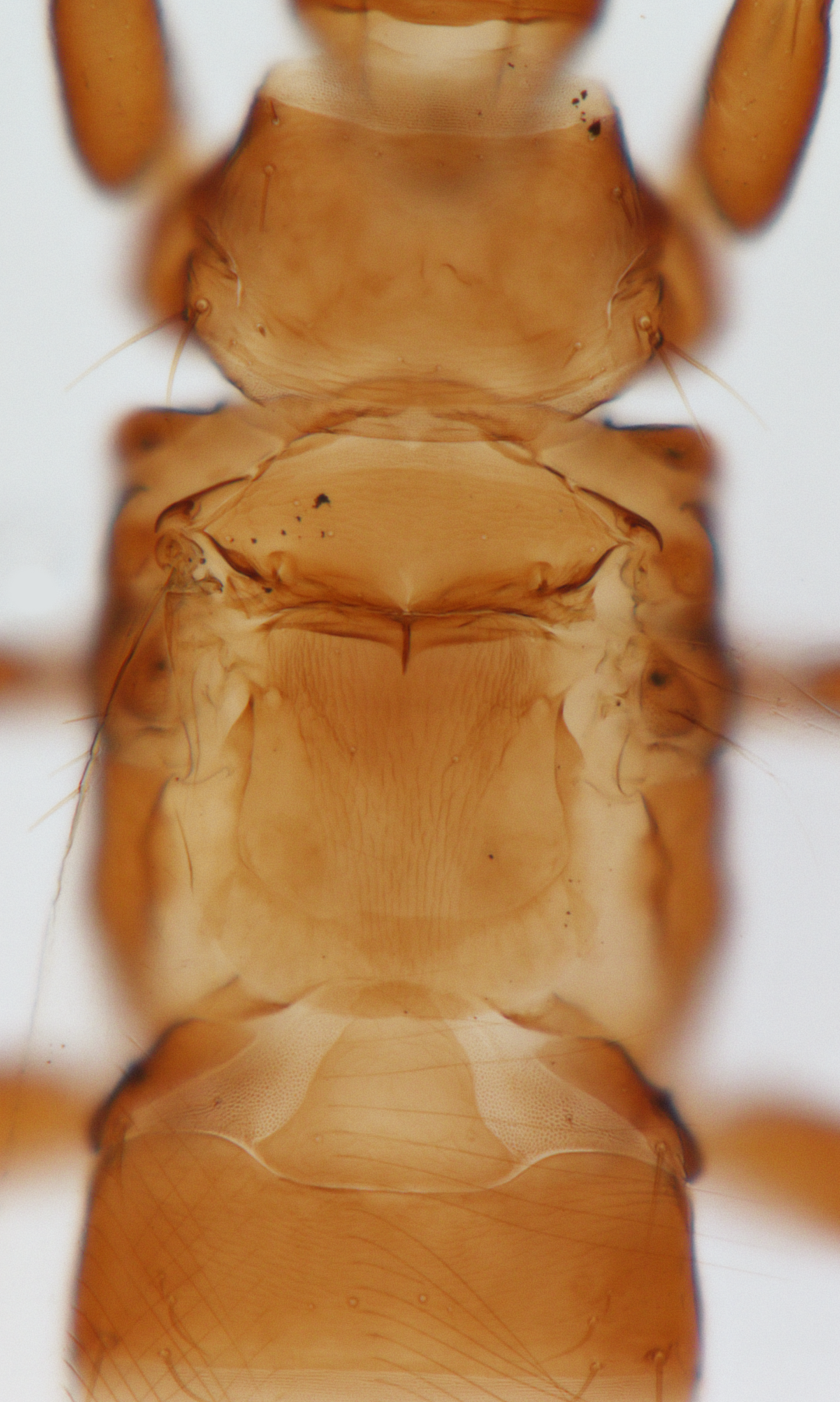
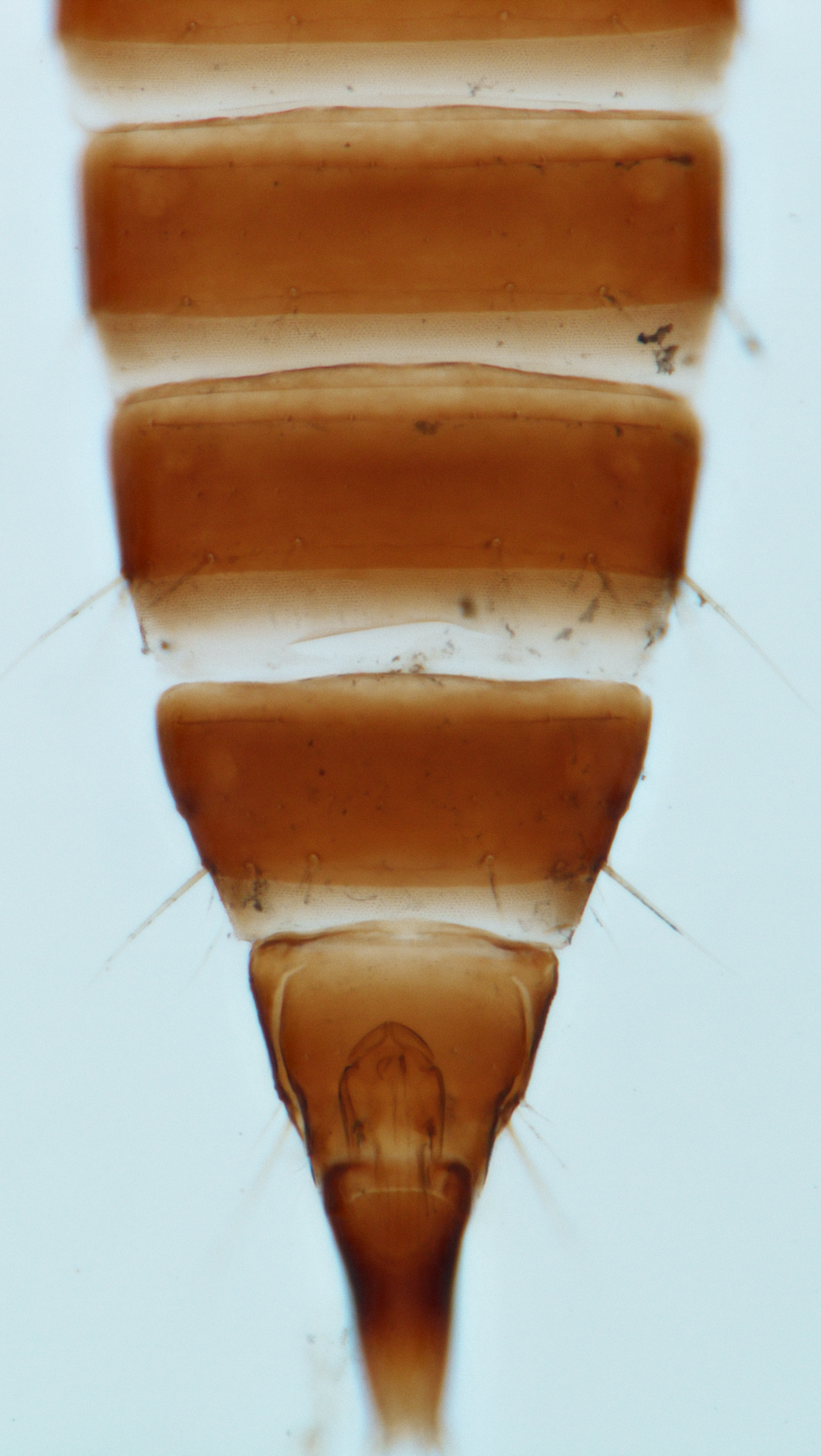
Body mainly brown, with tube darker medially, fore tibiae and all tarsi yellow; antennomere I brown, II brown basally and yellow apically, III–VI yellow, gradually more shaded with brown apically, VII–VIII yellowish brown; fore wings pale and without a dark median line. Head 1.1–1.5x longer than greatest width, cheeks slightly curved; postocular setae short, with acute apex; maxillary stylets V-shaped, about half of head width apart; mouth cone short and rounded. Antennae 8-segmented, III–IV with 2 sense cones each. Pronotum weakly sculptured near margins, notopleural sutures incomplete; only the two pairs of epimeral setae elongate, other major pronotal setae short with blunt apexes, anteromarginal pair reduced or absent. Mesonotum transversely reticulated, without internal markings. Metanotum with 2 pairs of short median setae; sculpture formed by longitudinally elongate reticles, without internal markings. Fore wings with 7–12 duplicated cilia. Pelta bell-shaped, reticulated and without internal markings. Abdominal tergites II–VII with three pairs of wing-retaining setae. Both sexes macropterous.
Females bear an S-shaped spermatheca. Males are slightly smaller, and do not have any pore plates.
Intraspecific variation
Not recorded.
Genus and similar species information
Holopothrips is a genus with about 60 known species, distributed almost exclusively in the Neotropics. Several species in this genus are associated with plant galls, as inducers or invaders, in plants of many families. Most Holopothrips species bear three pairs of wing-retaining setae on tergites II–VII, males have complex pore plates and frequently in other sternites besides VIII, and the female spermatheca is visible. About 40 species in this genus have been described or recorded from Brazil. Holopothrips molzi s is one of the few species in the genus whose males lack any pore plates. Moreover, it has a reduced number of sense cones on antennomeres III and IV (only two, instead of the usual three in the genus), the major body setae are relatively short, and pronotum bears two pairs of epimeral setae. A key to the species of Holopothrips is available in Lindner et al. 2018.