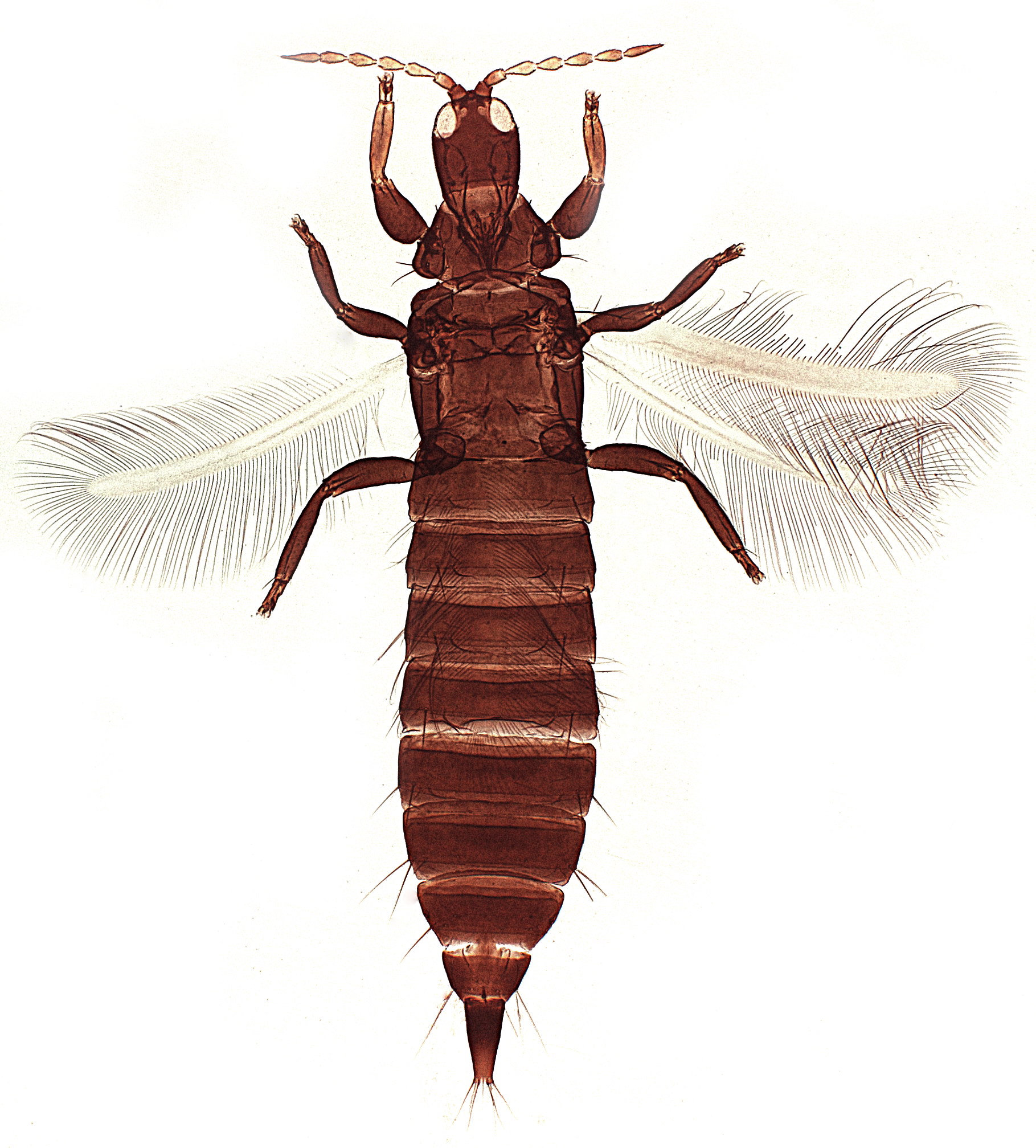
Holopothrips infestans Lindner, Ferrari, Mound & Cavalleri, 2018: 46.
Original reference: Lindner MF; Ferrari A; Mound LA & Cavalleri A (2018) Holopothrips diversity—a Neotropical genus of gall-inducing insects (Thysanoptera, Phlaeothripidae). Zootaxa 4494(1): 001–099.
Family
Phlaeothripidae, Phlaeothripinae
Nomenclatural information
https://thrips.info/wiki/Holopothrips_infestans
Diagnosis
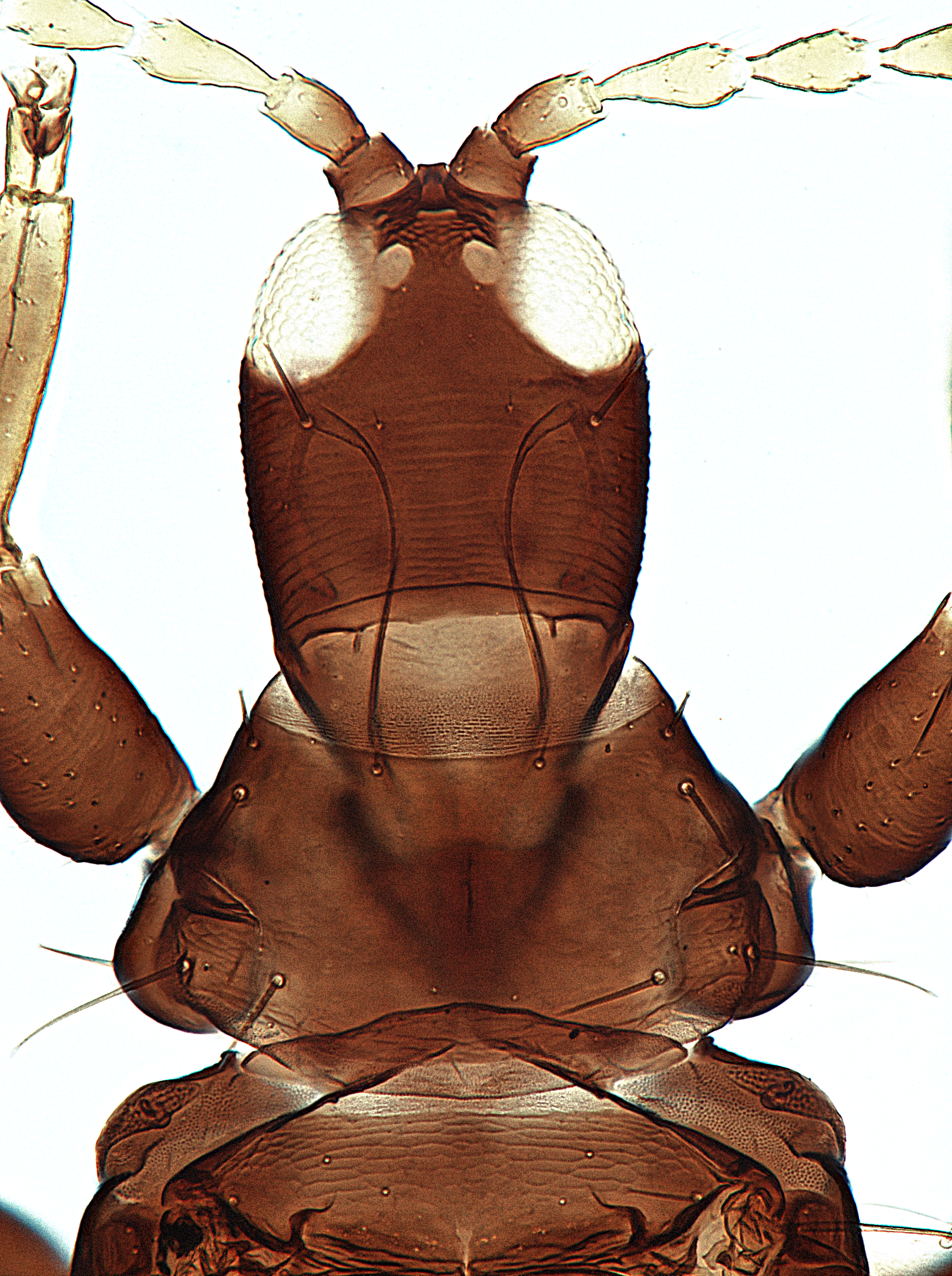
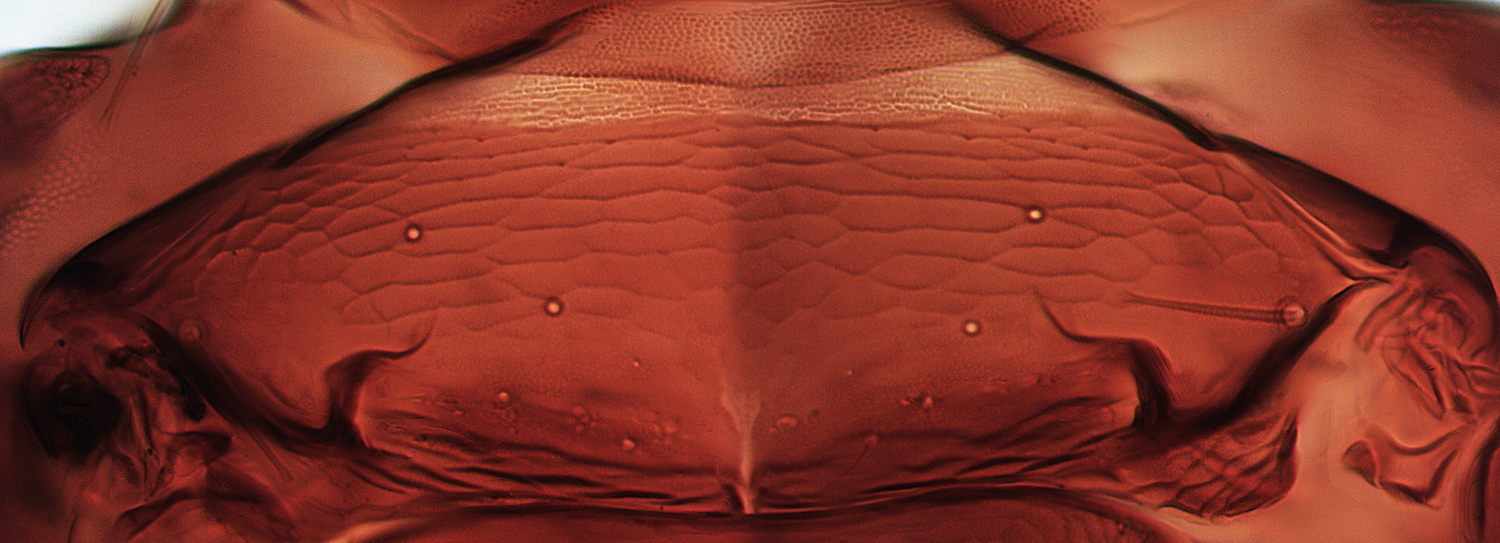
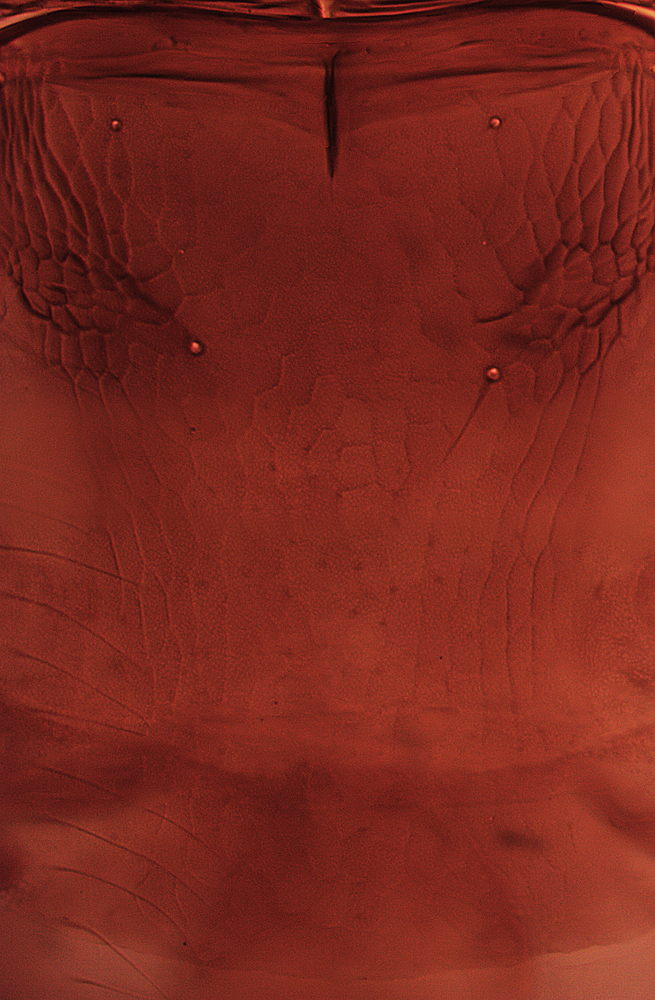
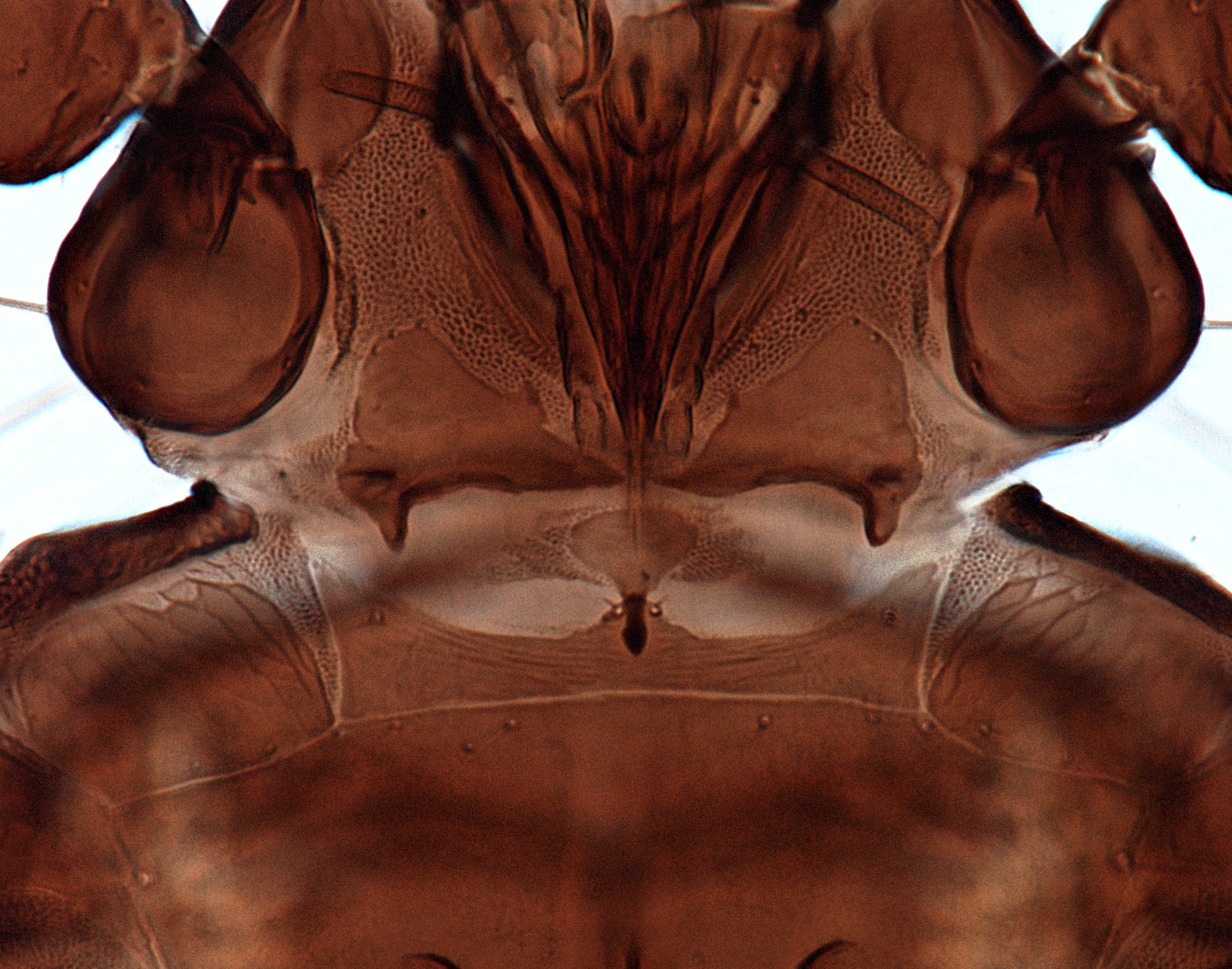
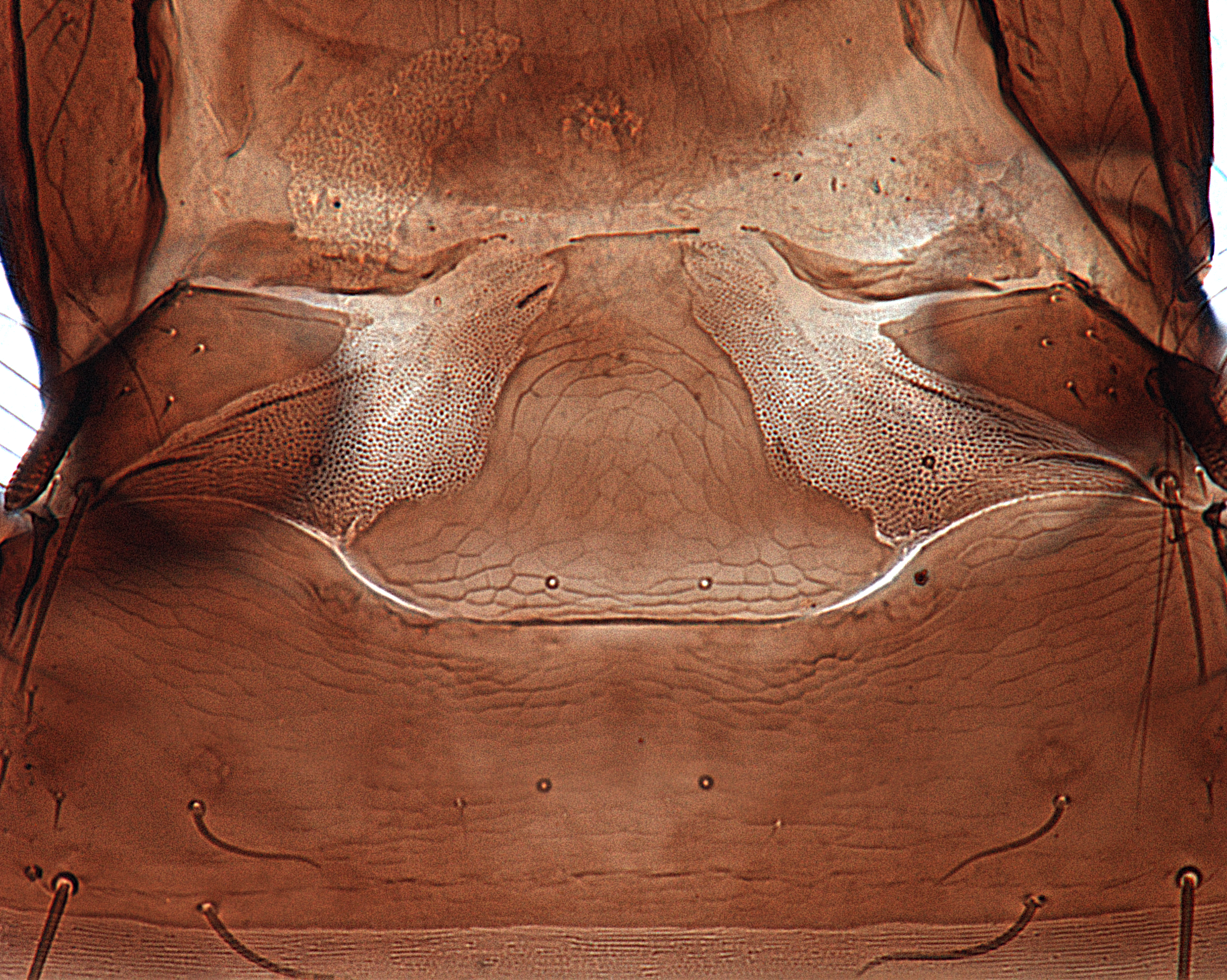
Body brown, with fore tibiae and fore tarsi yellow; antennomere I concolourous with head, II brown basally with apical half yellow, III–IV yellow, V–VI yellow but shaded on apical half, VII light brown with yellow base, VIII light brown; fore wings weakly shaded; major body setae brownish yellow. Head length and width behind eyes subequal, dorsal surface with transverse lines of sculpture; postocular setae slightly shorter than the length of a compound eye, with apexes weakly expanded to capitate; maxillary stylets parallel and about 1/4 of head width apart; mouth cone pointed. Antenna 8-segmented, antennomeres III–IV with 3 sense cones each. Pronotum smooth medially, with some sculpture lines on posterior margin, notopleural sutures incomplete and short; 5 pairs of major pronotal setae, one pair on epimeral region; anteromarginal setae short with acute apexes, the other major setae well-developed and with weakly expanded to capitate apexes. Mesonotal sculpture formed by equiangular to elongate reticles medially, without internal markings. Metanotum with 2–5 anterior discal setae and 1 median major pair; sculpture formed by weakly defined irregular reticles, without internal markings. Fore tarsal hamus small. Fore wings with about 10–14 duplicated cilia. Pelta almost bell-shaped, with lateral projections at base, one pair of campaniform sensilla present; sculpture formed by almost equiangular reticles medially, elongated marginally, without internal markings. Abdominal tergites with sculpture formed by irregular to elongate reticles, II–VII usually with two pairs of wing-retaining setae. Both sexes macropterous.
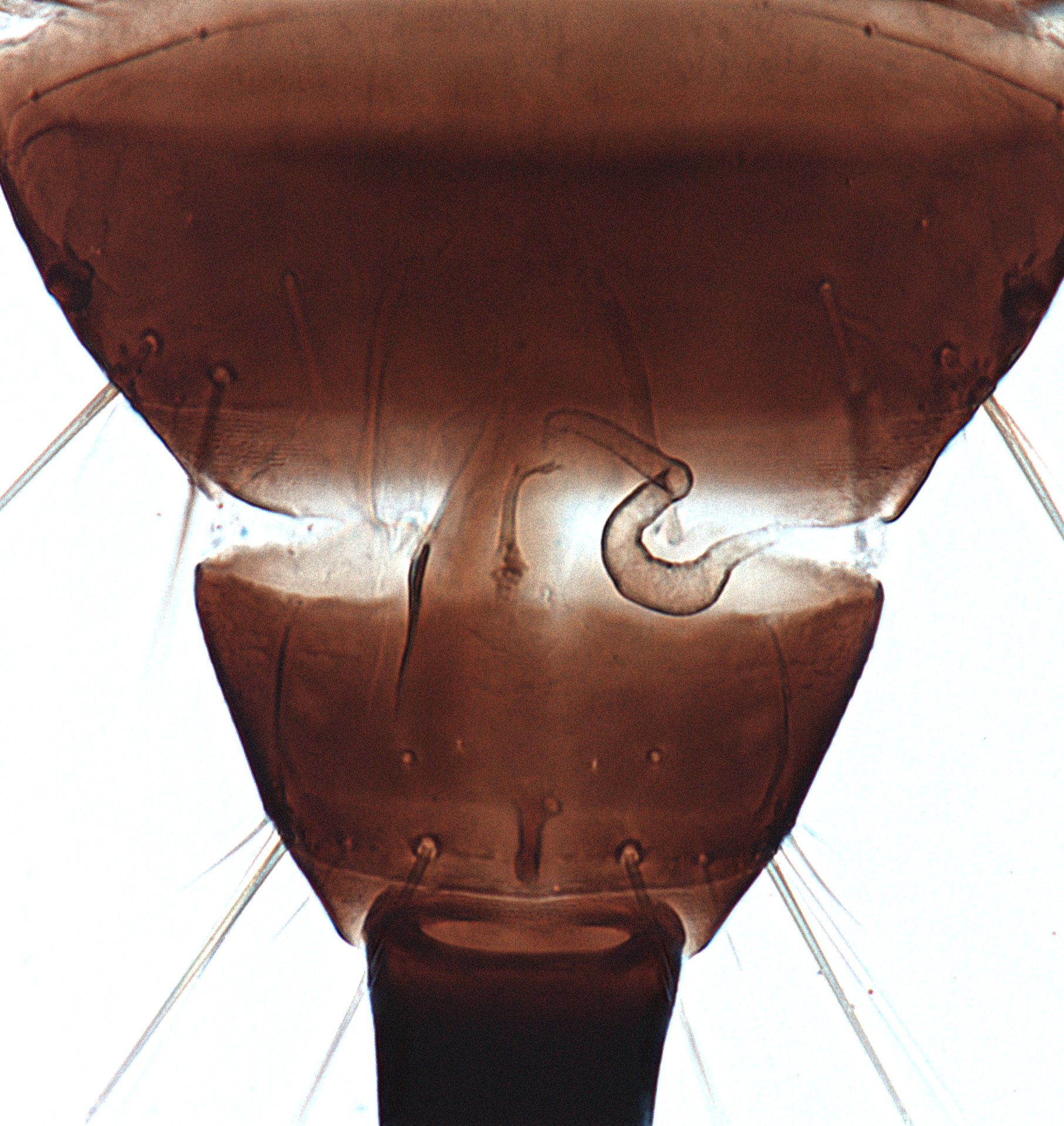
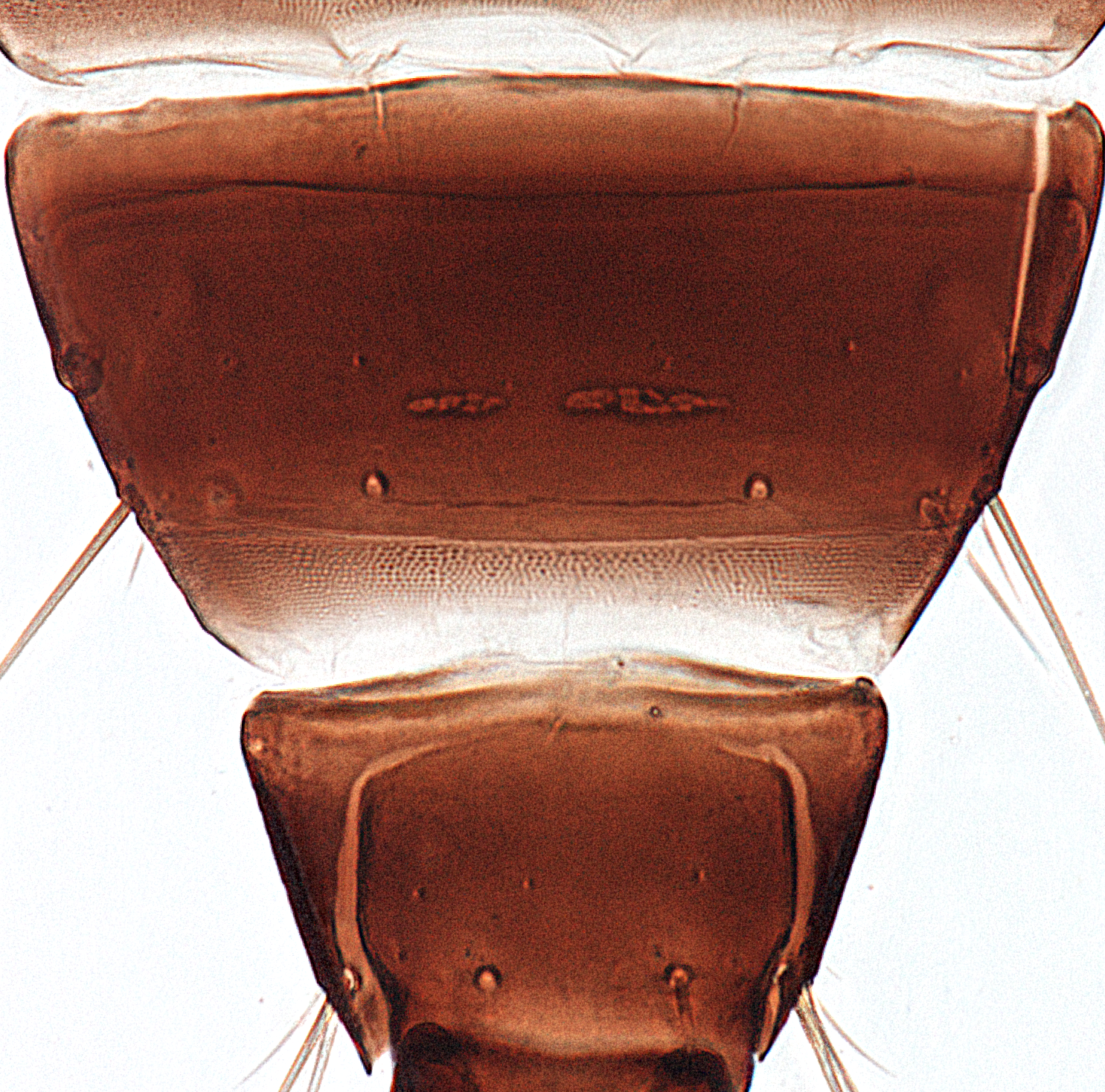
Females have S-shaped spermatheca. Males are slightly smaller and bear a pore plate on sternite VIII: one transverse and thin band medially, with reticulate texture.
Intraspecific variation
Specimens may bear in some abdominal tergites a third, non-sinuous seta, near the two pairs of wing-retaining setae.
Genus and similar species information
Holopothrips is a genus with about 60 known species, distributed almost exclusively in the Neotropics. Several species in this genus are associated to plant galls, as inducers or invaders, in plants of many families. Most Holopothrips species bear three pairs of wing-retaining setae on tergites II–VII, males have complex pore plates and frequently in other sternites besides VIII, and the female spermatheca is visible. About 40 species in this genus have been described or recorded from Brazil. Holopothrips infestans is similar to H. acrioris and H. conducans, especially in the sculpture pattern and male pore plates. However, it can be distinguished for bearing only one pair of epimeral setae, pelta constricted near base and abdominal tergites without the third pair of wing-retaining setae.
World distribution
Brazil.
Distribution in Brazil
http://fauna.jbrj.gov.br/fauna/faunadobrasil/197496
Life history
This species induces leaf galls in Acca sellowiana (Myrtaceae).
Economic importance
This species is considered a pest in Feijoa (Acca sellowiana).
References suggested
Lindner MF; Ferrari A; Mound LA & Cavalleri A (2018) Holopothrips diversity—a Neotropical genus of gall-inducing insects (Thysanoptera, Phlaeothripidae). Zootaxa 4494(1): 001–099.
Attendance
Brasil, Rio Grande do Sul, Rio Grande
Campus Carreiros: Av. Itália km 8
Bairro Carreiros
Thysanoptera © Todos Direitos Reservados 2026