Cyphothrips longifrons Cavalleri & Goulart, 2023: 499.
Family
Phlaeothripidae, Idolothripinae
Nomenclatural information
https://thrips.info/wiki/Cyphothrips_longifrons
Diagnosis
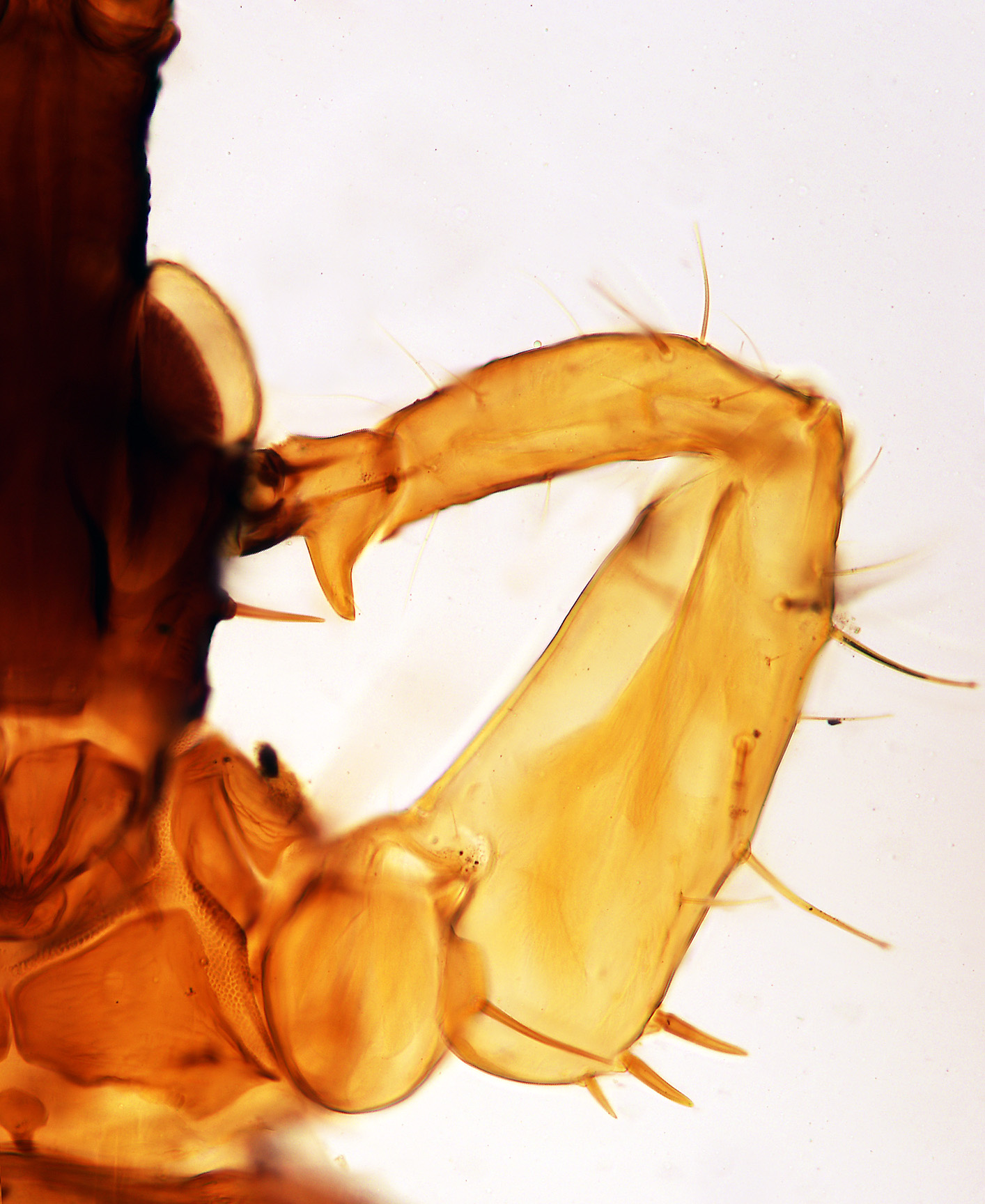
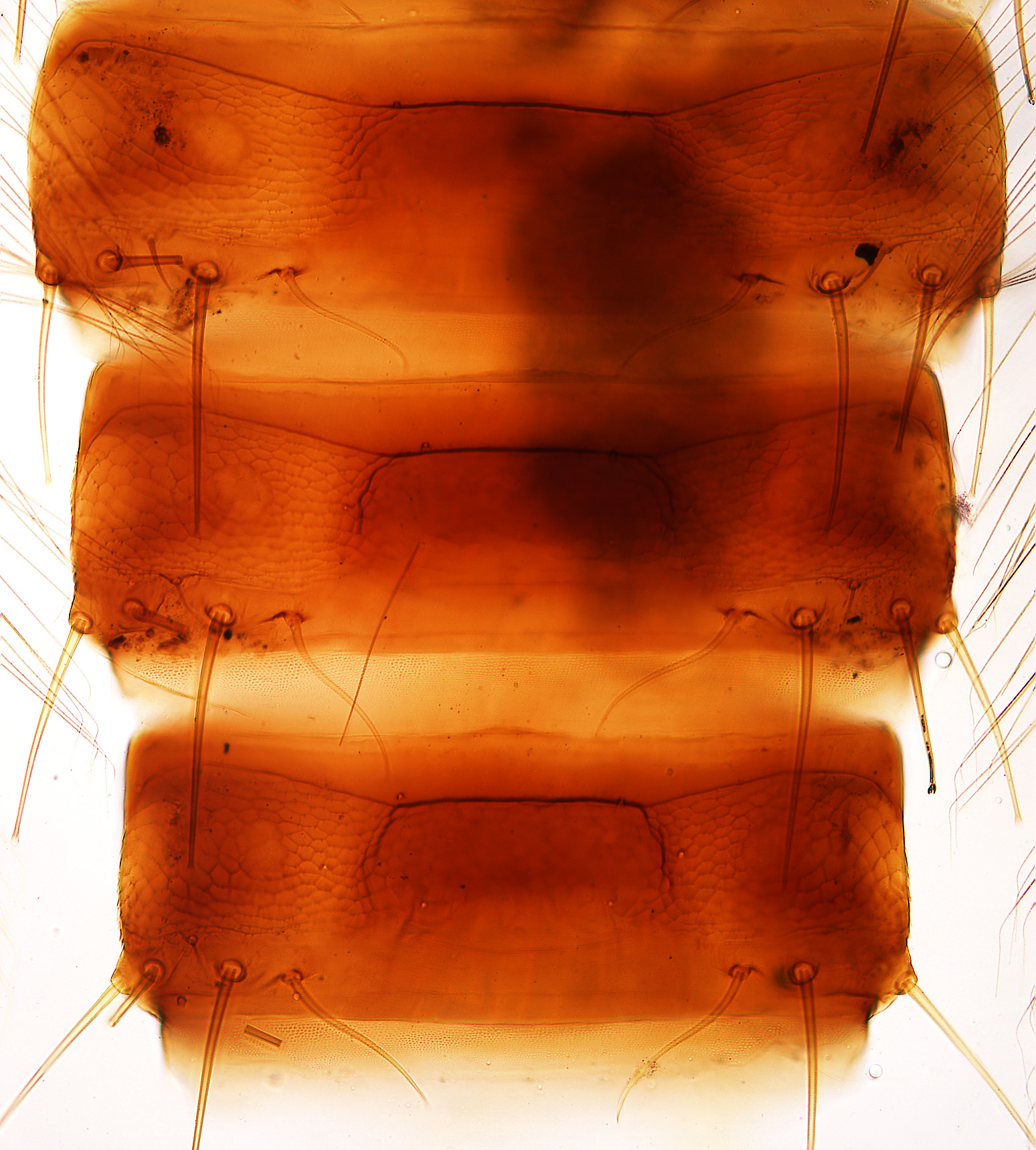
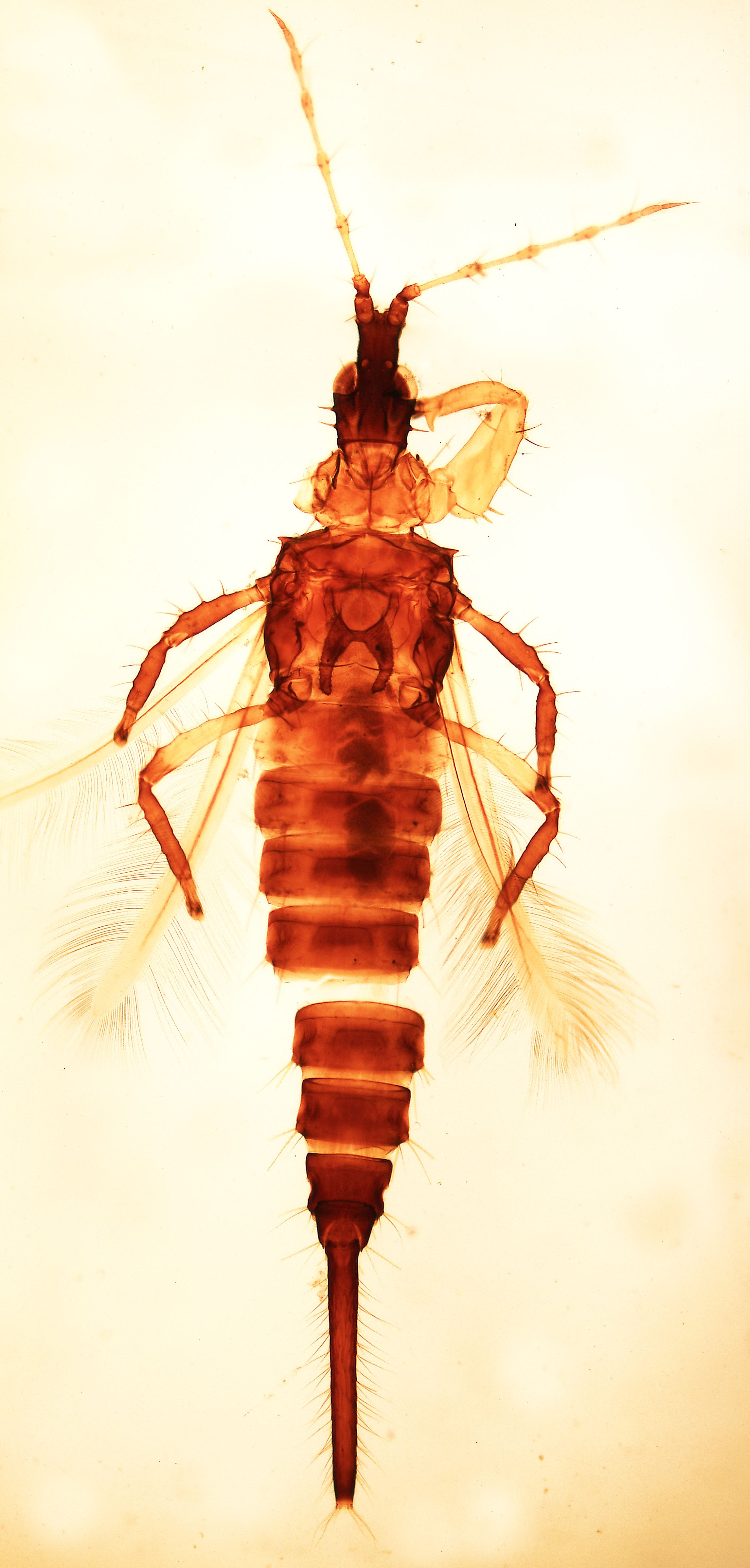
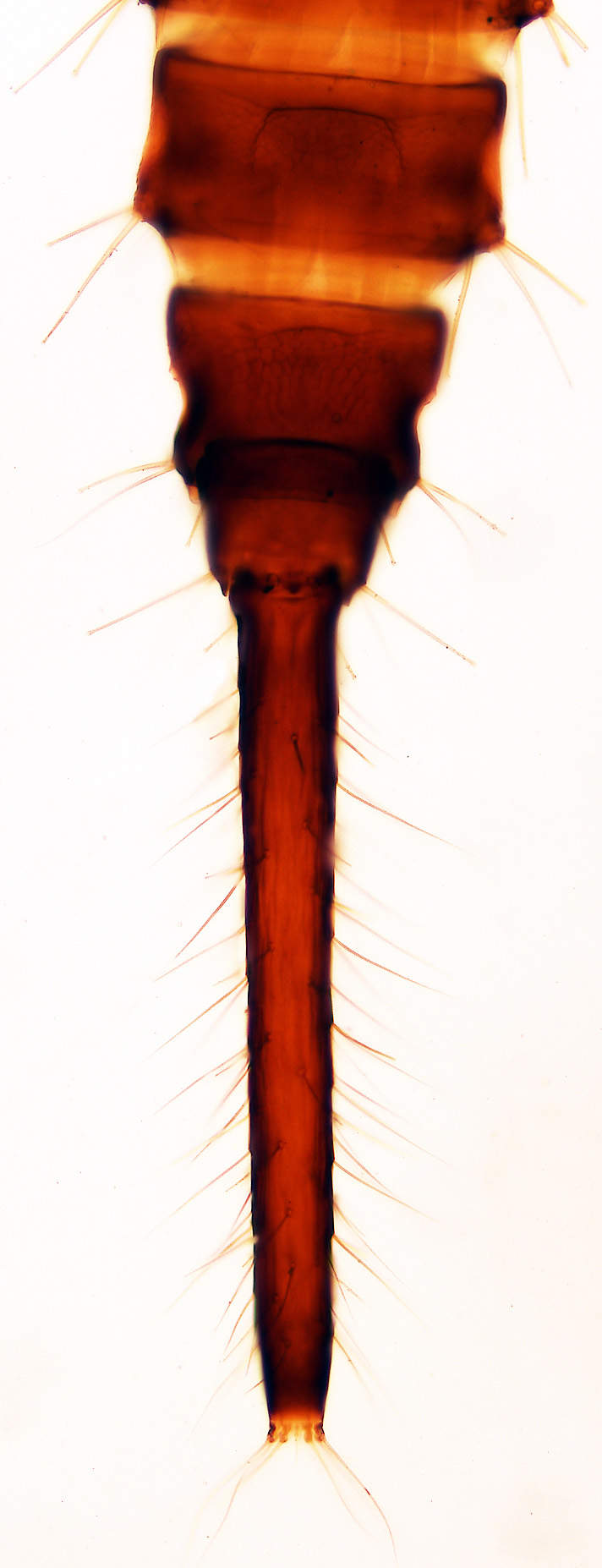
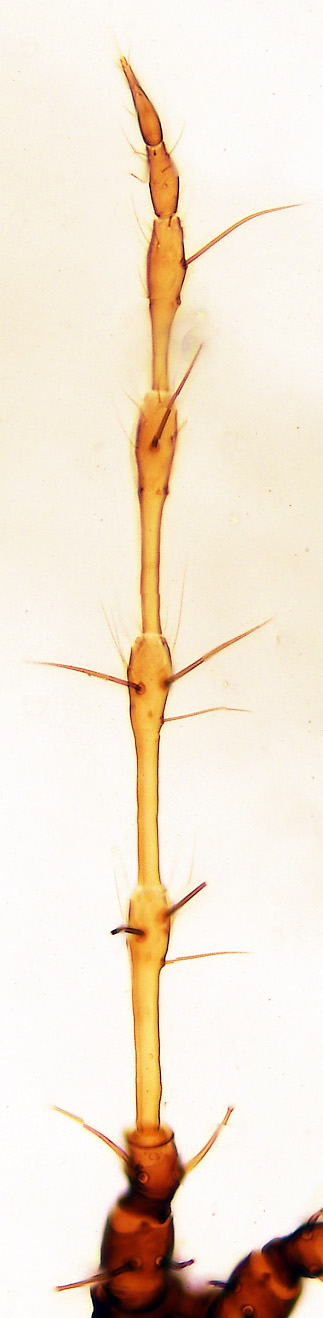
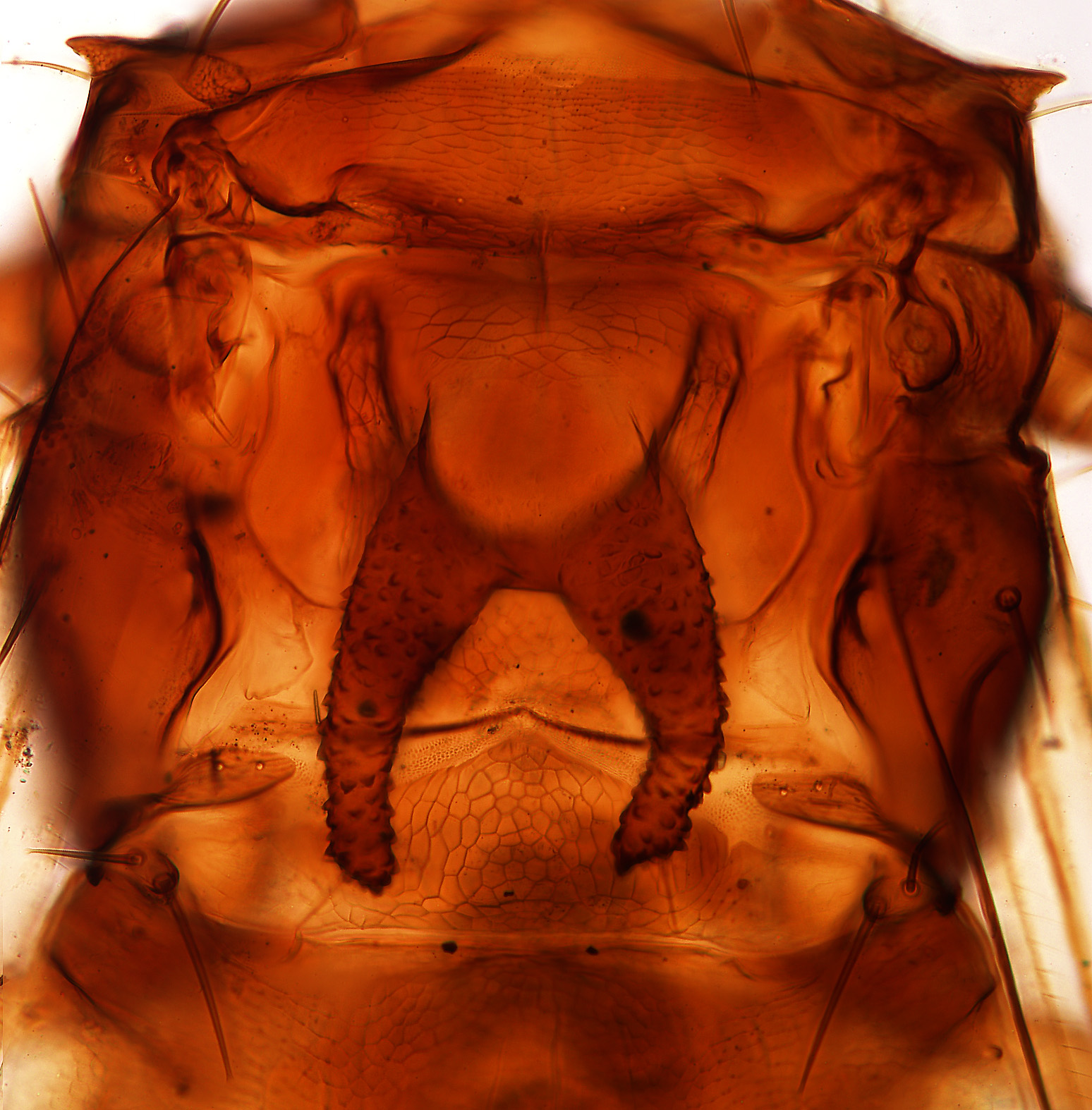
Male macropterous; body color mainly dark brown, but with prothorax, fore legs and median area of hind tibiae yellow; antennal segments III–VIII uniformly yellow; both wings are light brown with a dark median line. Antennae 8-segmented, antennomere III with 2 and IV with 3 or 4 sense cones; III–VI are long, club-shaped, and bear one or two long and stout setae. Head longer than wide, mainly due to the long projection ahead of eyes; with three pairs of long dorsal setae and two pairs of thick and long lateral setae arising from tubercles; eyes longer ventrally than dorsally, first ocellus near base of antennae; small ventrolateral tubercle present; maxillary stylets V-shaped, about 1/3 of head width apart. Pronotum with 5pairs of well-developed setae, anteroangular and midlateral pairs close together; prosternal basantra absent. Metanotum with two long tubercles, robust and rugose, with the median setae arising from near its tips; transversely reticulated anteriorly and posteriorly to tubercles. Metathoracic sternopleural sutures absent. Pelta triangular and wide, reticulated; abdominal tergites longitudinally reticulate in the lateral thirds, II–VII with 1 pair of wing-retaining setae. Abdominal sternites without pore plates. Tube cylinder-shaped, about 7.2x as long as basal width, with many lateral setae. Fore legs enlarged, fore femora with many long setae, fore tarsi with a large tooth. Fore wings with about 10 duplicated cilia.
Female unknown.
Intraspecific variation
Unknown.
Genus and similar species information
Cyphothrips is a genus with two species and is exclusively subtropical. The species in this genus have the abdominal segment X very elongated and covered by stout setae, a pair of elongate tubercles on metanotum, and the head has an unusual pair of ventral tubercles, similar to small ommatidia. The genus Cyphothrips is closely related to the Neotropical genera Actinothrips, Zactinothrips and Zeugmatothrips. Zeugmatothrips species can be distinguished from Cyphothrips for lacking duplicated cilia in the fore wings or a fore tarsal tooth in males. Females of Actinothrips and Cyphothrips are very similar in general appearance, and the recognition of these genera can be difficult in the absence of males for study. Cyphothrips longifrons is distinguished from C. dorsalis by the bicolored body, head with long projection ahead of eyes and metanotal tubercles longer and covered by denticles.
Distribution around the world
Described from Brazil.
Distribution in Brazil
Amazonas state.
Life history
Lives in the Amazon Rainforest, feeding on fungal spores.
Economic importance
Not recorded.
Mound LA & Marullo R (1996) The Thrips of Central and South America: An Introduction. Memoirs on Entomology, International 6: 1–488.
Cavalleri & Goulart (2023) A remarkable new Cyphothrips (Phlaeothripidae, Idolothripinae) species from Amazon rainforest, with elongate tubercles on metanotum. Zootaxa 5380(5): 498-500.
Attendance
Brasil, Rio Grande do Sul, Rio Grande
Campus Carreiros: Av. Itália km 8
Bairro Carreiros
Thysanoptera © Todos Direitos Reservados 2026