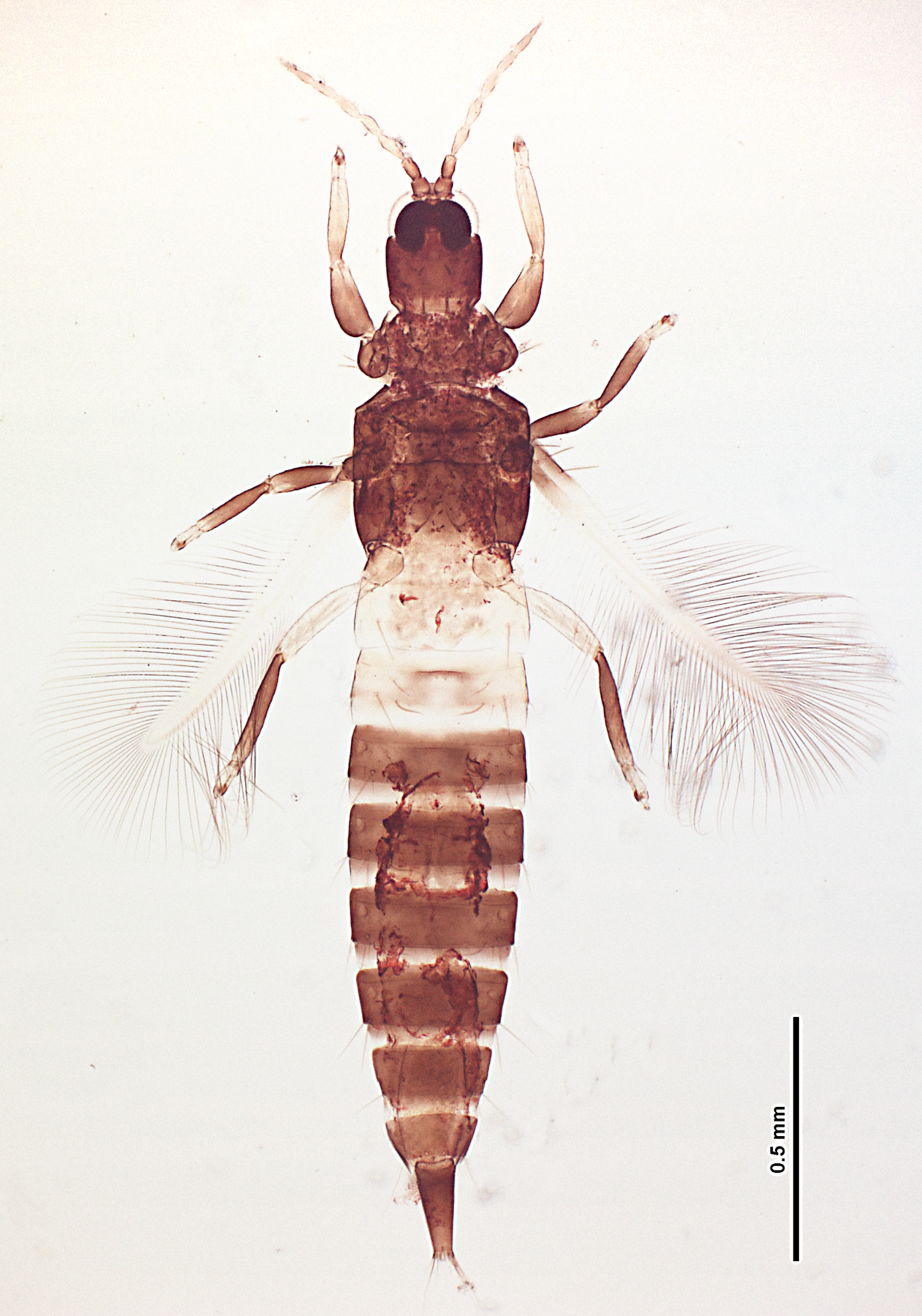
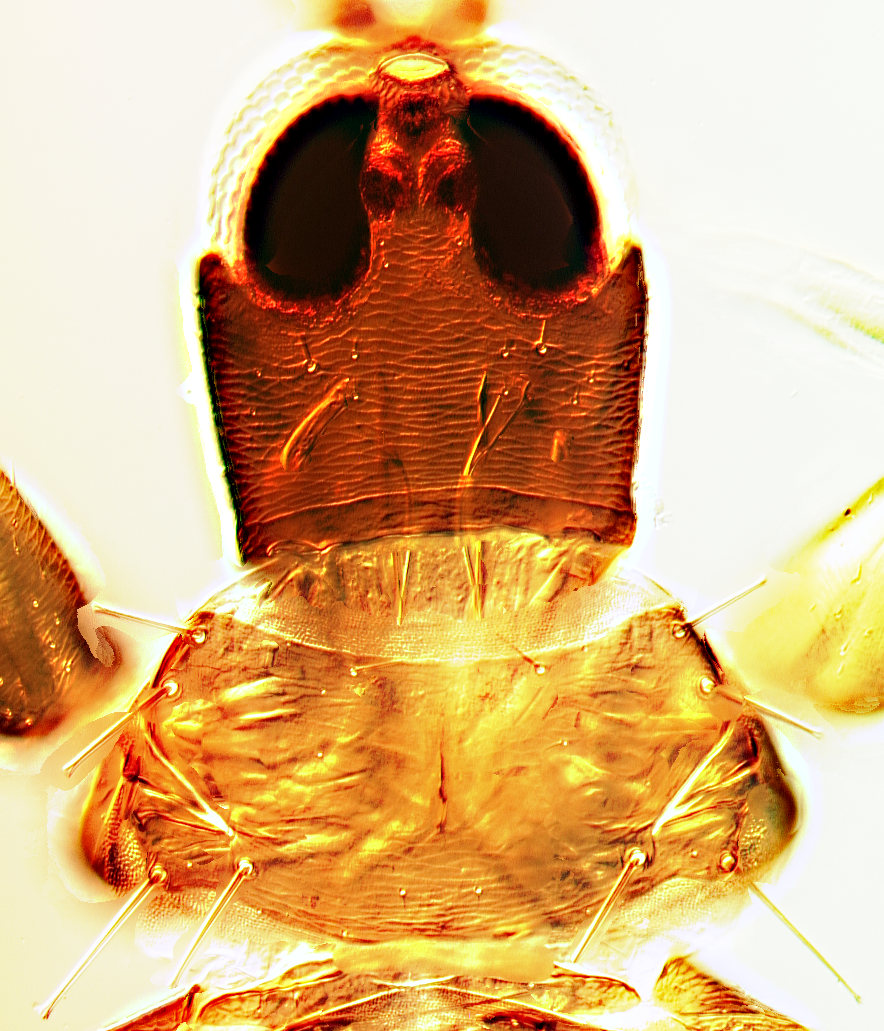
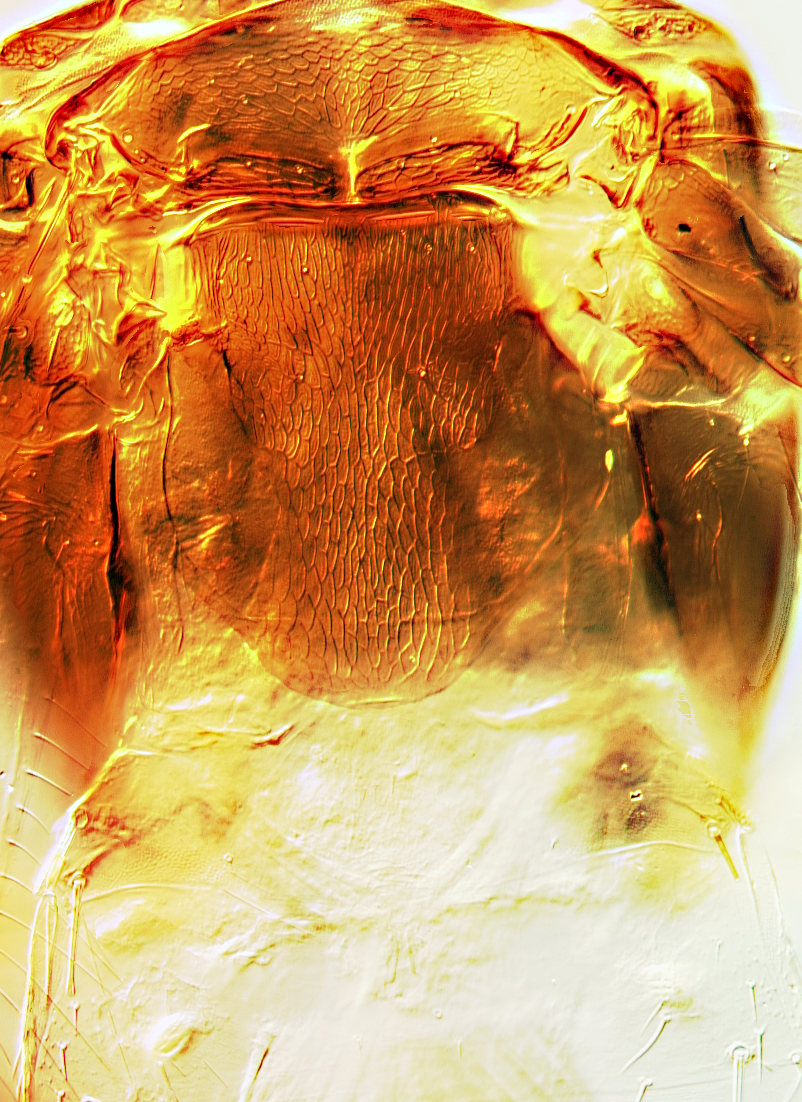
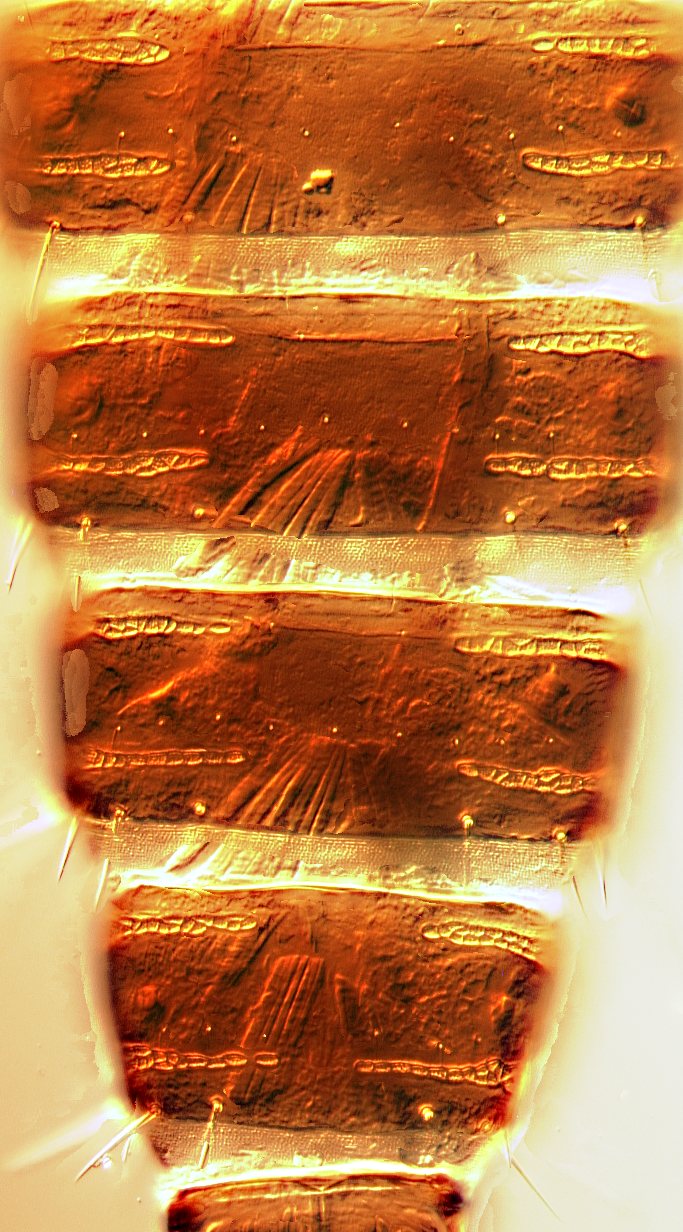
Diagnosis Body mainly brown, with abdominal segments I–III, all tarsi, fore tibiae and apex of fore and mid femora yellow, hind femora yellow or brown; antennomeres I–II concolorous with head, II paler apically, III–VI yellow, VII–VIII yellow weakly shaded with brown; fore wings pale with brown basal area. Head slightly longer than wide, dorsal surface with transversely elongate reticulation; postocular setae short, with acute or blunt apex; maxillary stylets parallel; mouth cone rounded. Antennae 8-segmented, III–IV with three sense cones each. Pronotum weakly sculptured posteriorly, notopleural sutures incomplete and short; 5 pairs of major pronotal setae, one pair on epimeral region; anteromarginal setae well-developed but shorter than the remaining major setae, the later with with expanded apexes. Mesonotum reticulated with internal markings. Metanotum with 2–3 pairs of anterior discal setae and one median major pair; sculpture formed by longitudinally elongate reticles, with internal markings. Fore wings with about 8 duplicated cilia. Pelta reticulated, without internal markings. Abdominal tergites II–VII with three pairs of wing-retaining setae. Both sexes macropterous.
Females bear a robust spermatheca. Males are slightly smaller, with reticulated pore plates on sternites V–VIII: two anteroangular and two lateral plates on sternites V–VII, two anteroangular plates and one median transverse band on VIII.
Intraspecific variation The color of hind femora varies between specimens, from yellow to brown.
Genus and similar species information Holopothrips is a genus with about 60 known species, distributed almost exclusively in the Neotropics. Several species in this genus are associated with plant galls, as inducers or invaders, in plants of many families. Most Holopothrips species bear three pairs of wing-retaining setae on tergites II–VII, males have complex pore plates and frequently in other sternites besides VIII, and the female spermatheca is visible. About 40 species in this genus have been described or recorded from Brazil. Holopothrips signatus is one of the few species in the genus with the body mainly brown, but abdominal segments I–III yellow to almost white, contrasting with the rest of the abdomen. The postocular setae are short with acute or blunt tips, and males have pore plates on abdominal sternites V–VIII.
Distribution around the world Described from Panama and recorded from Brazil and Peru.