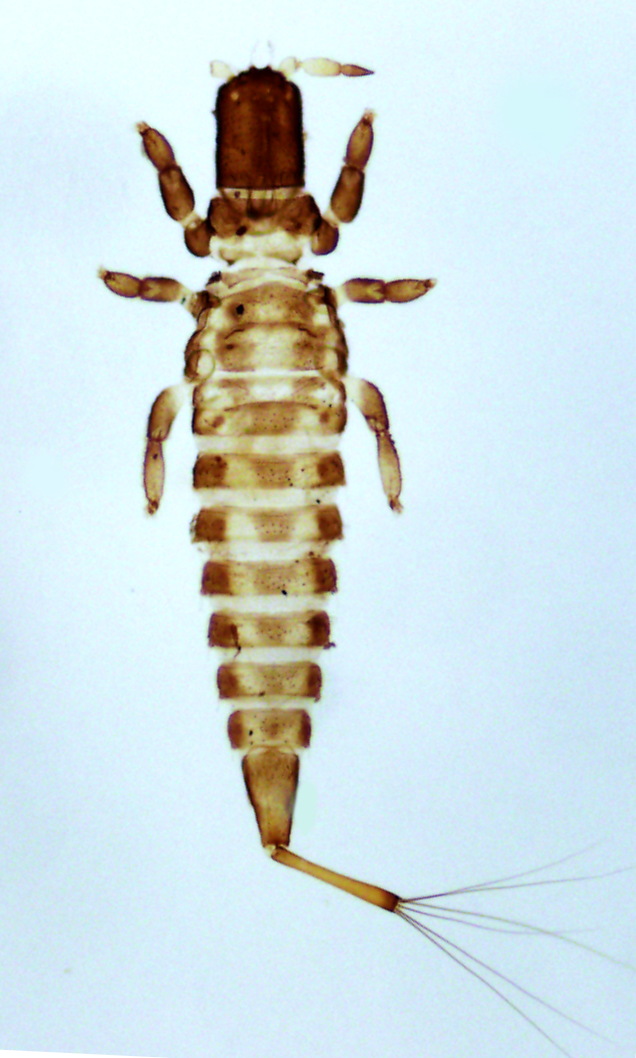
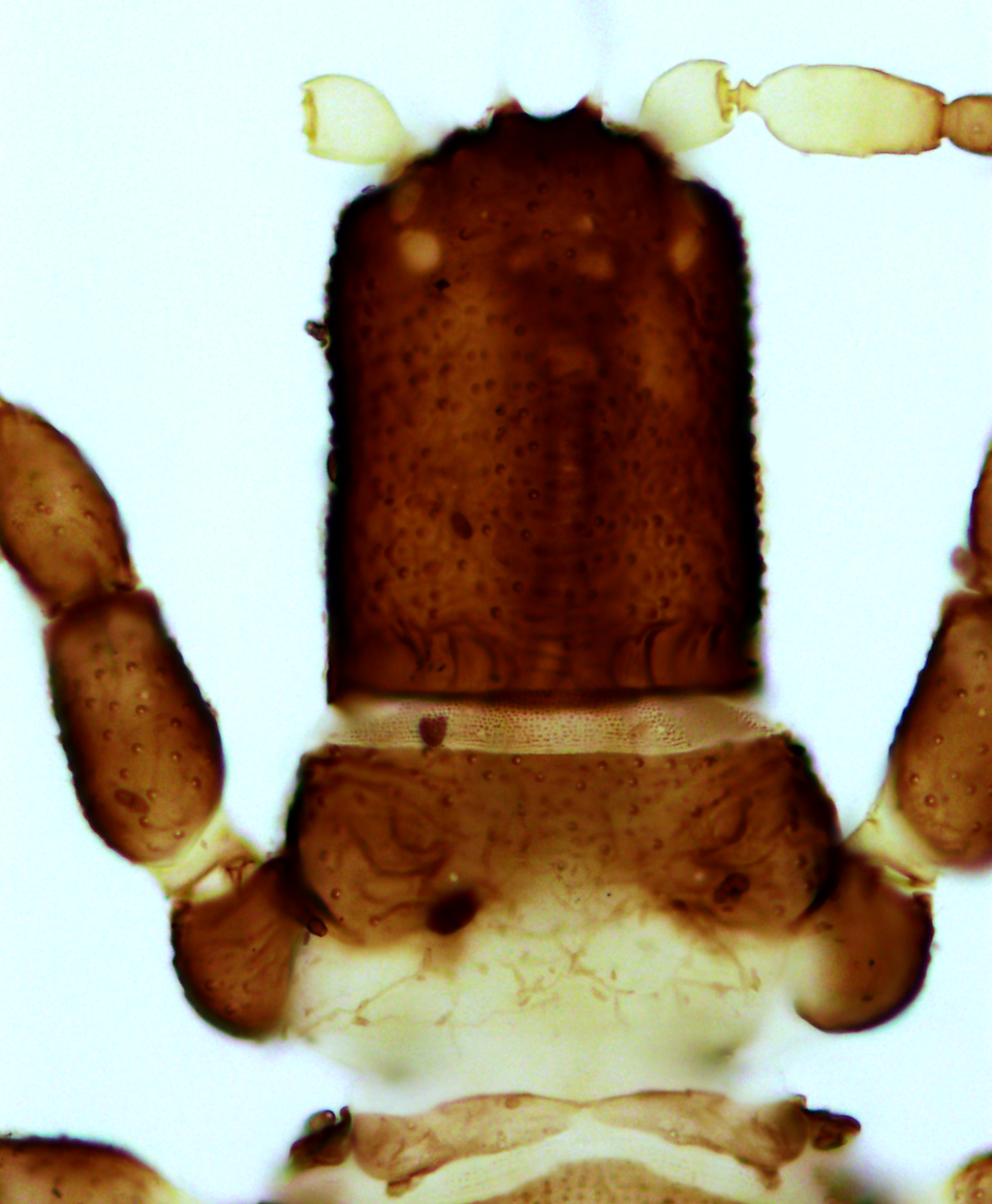
Female apterous; body color mainly brown, darker on head; posterior area of pronotum and tube yellow; trochanters, base of femora, apex of tibiae and all tarsi yellow; median antennal segments yellow. Antennae with 4 distinct units, antennomeres III–V completely fused into one unit, as well as antennomeres VI–VIII; antennomere III with 4 sense cones. Head longer than wide, dorsal surface covered by tubercles, anterior margin with two pairs of long, robust and capitate setae; eyes reduced to about 10 or less facets; maxillary stylets close together, extending towards compound eyes. Pronotum covered by tubercles with setae; one pair of well-developed epimeral setae; prosternum without basantra. Metanotum covered by tubercles. Abdomen covered by tubercles with setae, tergites III–VIII with a pair of thick and capitate setae on posterior angles; abdominal segment IX over two times longer than segment VIII, tube length similar or longer than head, with anal setae much longer than tube. All legs similar in appearance, covered by tubercles with setae, fore tarsi without a tooth or enlarged hamus, mid and hind tarsi one-segmented.
Male apterous; similar in appearance to female but smaller.
Intraspecific variation
Some specimens may have the legs and median area of the abdomen lighter than described above; abdominal segment IX may vary from brown to yellow.
Genus and similar species information
Stephanothrips is a genus with almost 50 species distributed worldwide, but only two of them are recorded in Brazil. They have a characteristic body, covered by tubercles; with abdominal tergite IX over two times longer than tergite VIII, and a very thin tube, usually as long or longer than head; multiple antennomeres are fused, making the antenna appear to have only 4 or 5 distinct units. Stephanothrips uvarovi is distinguished from the other species reported to Brazil, S. occidentalis, for not having a robust hamus and having the antennal segments VI–VIII completely fused, while in S. occidentalis antennomere VI is distinct.
Distribution around the world
Described from South Africa, and recently recorded from Brazil (Mound, Lima & O’Donnel 2023).