Habits and Habitats
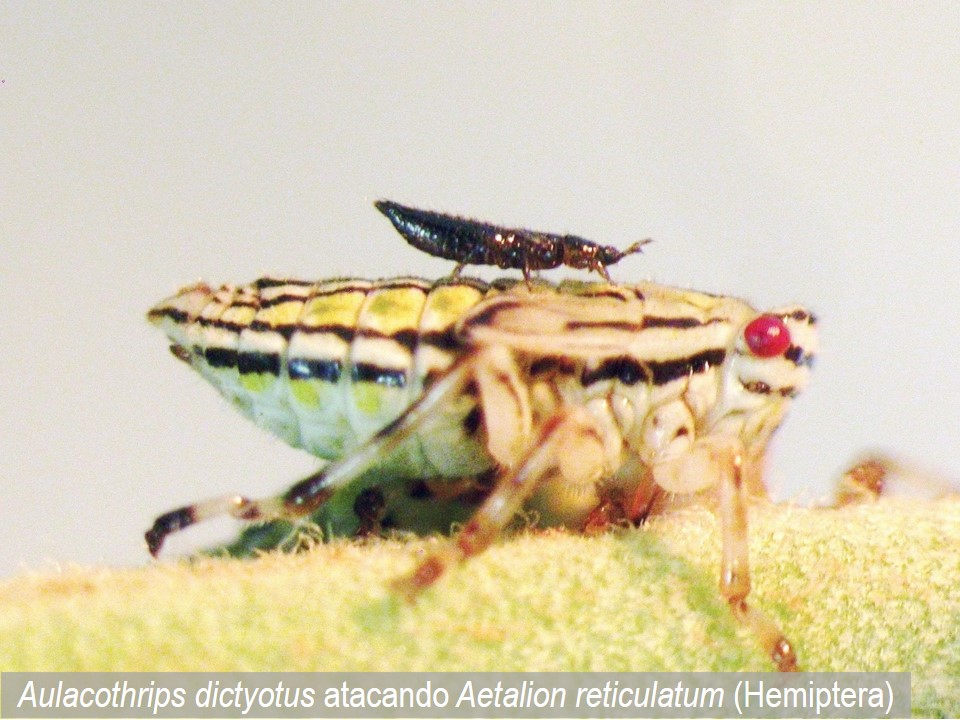
Thrips are mainly known as sap-sucking phytophagous insects, being commonly found in flowers and leaves of several plants. However, 50% of all species feed only on fungus, some predate small insects and mites, and others are ectoparasites on treehoppers (Mound 2005, Cavalleri et al. 2010). The mouth parts of thrips are of the piercing and sucking type, but it is incorrectly referred as ‘rasping’ in some older studies. Thysanopterans have a single mandible, which pierces the substrate (animal, plant or fungal tissues); and a pair of maxillary stylets, which are joined at the tip of mouth cone and conduct the food to the digestive system.
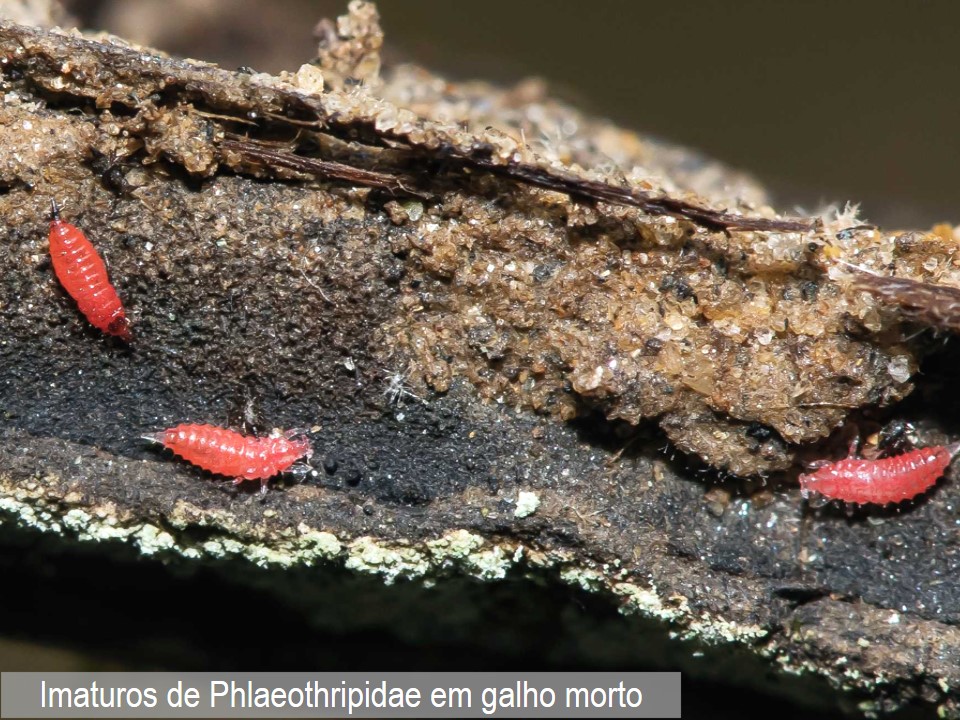
These insects occupy a variety of habitats, such as: flowers and leaves of several plant species, leaf litter, dead twigs, tree bark, and galls produced by these insects or by other organisms. Most of the species that live in leaf litter feed on fungal hyphae. This is true for some species of Merothripidae and Phlaeothripidae (mainly Phlaeothripinae), which are frequently collected in leaf litter. Thrips from subfamily Idolothripinae (Phlaeothripidae), which are among the largest insects of the order, are also fungivorous, but ingest whole fungal spores and mainly live in dead twigs and leaves hanging from plants.
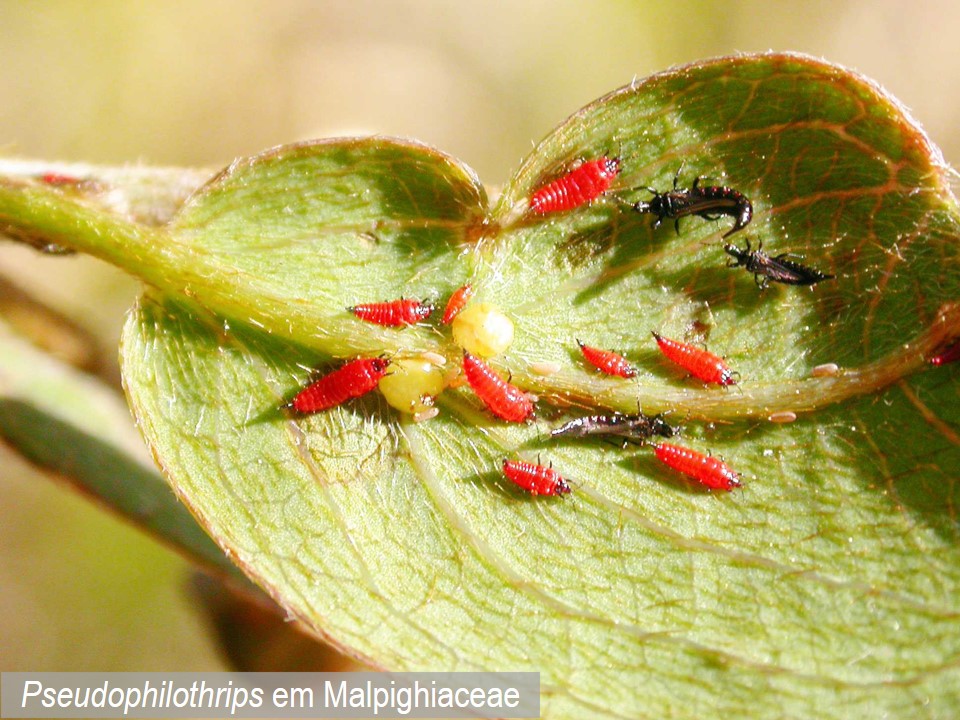
The phytophagous thrips have different levels of specificity with the plant species. A few species are recorded as monophagous, several are certainly polyphagous, but the majority is probably oligophagous, using plants of the same family or genus as hosts. These close relationships between thysanopterans and plants are common, such as the several Heterothrips (Heterothripidae) species that live in Malpighiaceae on Brazilian Cerrado, or Arorathrips (Thripidae) species which breed on grass flowers. Most of the pest species use a great variety of plants as hosts, especially the thrips belonging to the genera Frankliniella, Scirtothrips and Thrips.
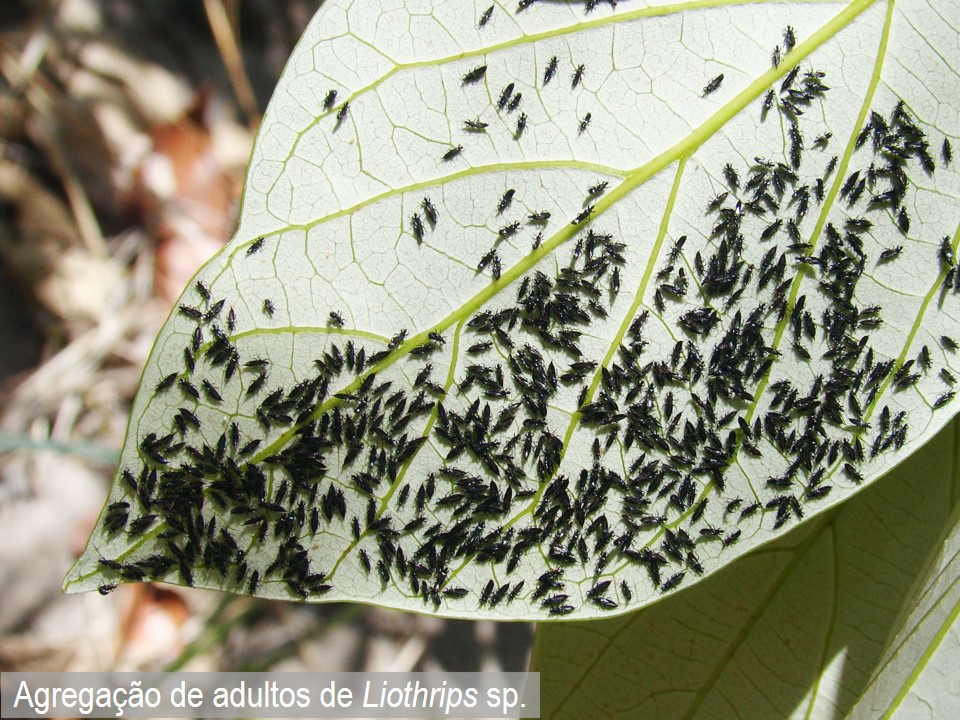
Recognizing the host plant on which the thrips species really breed is a basic requirement to understand ecological aspects of the species. Simply observing adults in a certain plant species does not mean that this is the host plant of the insect. In this situation, where the adults only feed or land on the plant, the correct is to refer to this as a “visited plant”. With phytophagous species, it is very common to observe flowers with hundreds of adult thrips, but without the presence of immature stages. To identify a plant as host, it must be observed egg laying and larval development on the plant.
Some Thysanoptera species have complex behaviors and a differentiated organized structure. Several Phlaeothripidae species induce galls, while some build domiciles to feed and breed. The competition for territory, resources, mates and the parental care are relatively common behaviors within Tubulifera (Kiester & Strates 1984, Crespi 1992, Crespi et al. 1997, Mound 2005). Some galling Phlaeothripidae species from Australia have eusociality, which is the highest level of social organization for animals (e. g. Kladothrips and Oncothrips spp.) In these cases, there are generation overlap, parental care and a clear division between castes, where the first generation develops into soldiers that protect the gall against intruders (Crespi et al. 1997).
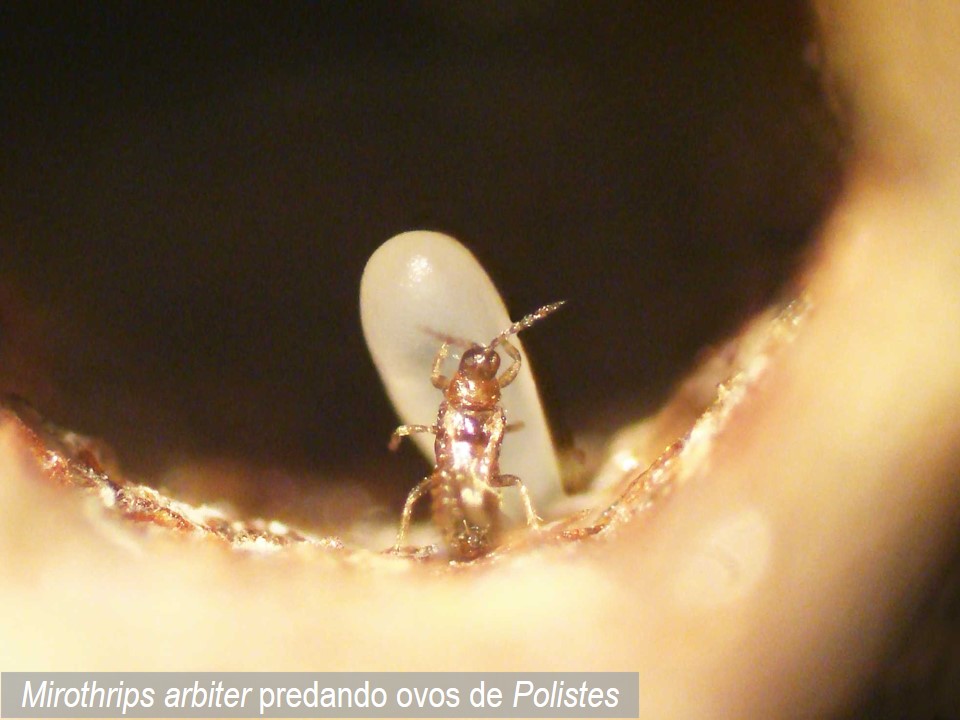
Other important factors in thrips behavior are their opportunism, tendency (and ability) to enter small places. This allows these insects to invade and occupy varied microhabitats, such as plant domatia, abandoned galls, nests of termites, ants and wasps. For example, two species of Mirothrips (Phlaeothripidae) are known to live only within the nests of Polistinae wasps in Brazil, feeding on the wasp’s immatures and benefitting from a microenvironment free of natural enemies.
Reproduction and life cycle
Reproduction in Thysanoptera is usually sexual, but parthenogenesis is also frequent, with males being extremely rare in several species or still uncollected for some others. Most thrips are oviparous, but some species are ovoviviparous or viviparous (Ananthakrishnan 1979). Most females from suborder Terebrantia pierce the plant tissue with the help of a serrated ovipositor, called terebra, and lay their eggs inside the plant. Some groups of Terebrantia have the ovipositor greatly reduced or atrophied, such as Merothripidae and some Thripidae (e. g. Arorathrips, Plesiothrips) species, and the eggs are laid externally. On the contrary, Tubulifera species do not possess an external ovipositor, and all females lay their eggs on the substrate surface, with the egg being covered by gelatinous substances, protecting it from predators and desiccation. The total number of eggs each female lays varies from 30 to 300, depending on species, the individual, and the amount and quality of the available food.
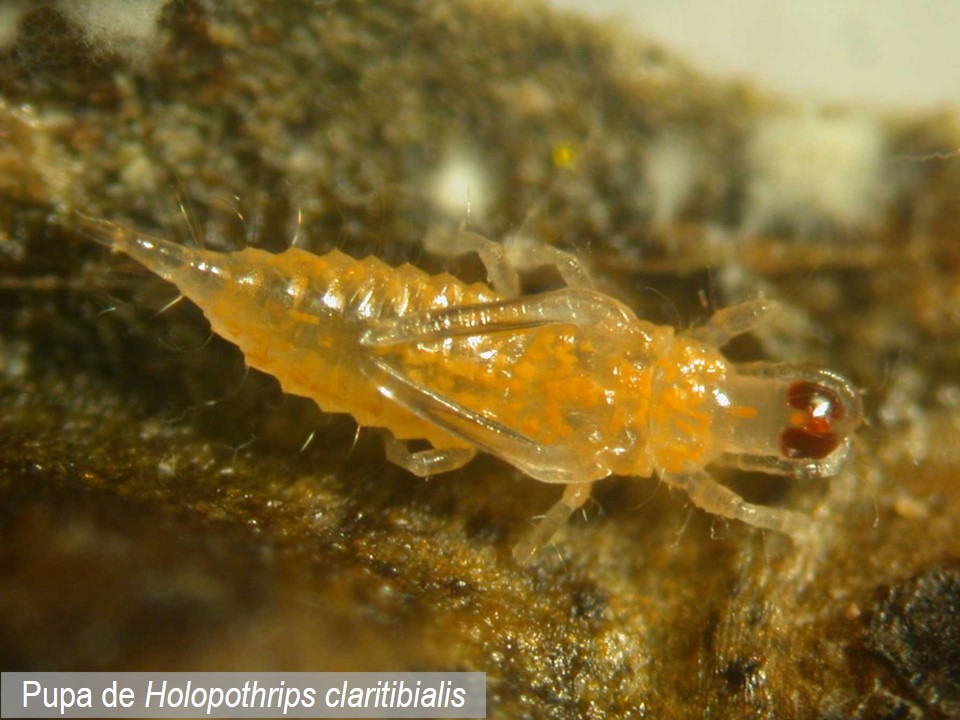
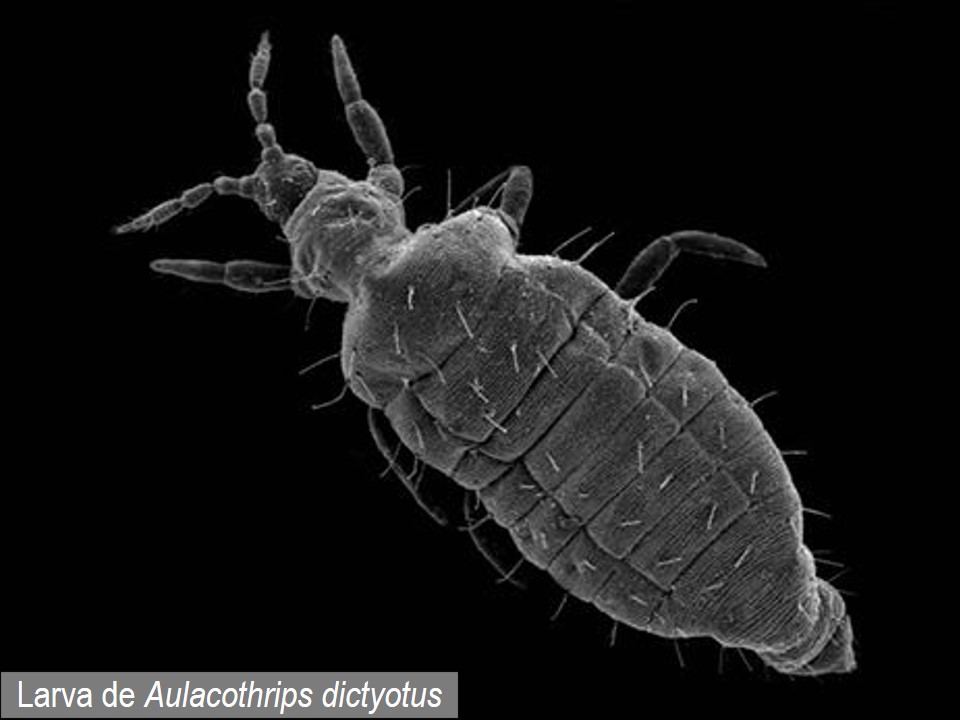
The thysanopterans are also remarkable for having an intermediate metamorphosis between simple and complete. After hatching from their eggs, thrips of suborder Terebrantia go through two larval stages and two inactive stages, when they do not feed (pupa and prepupa). For the suborder Tubulifera, besides the already mentioned stages, there are two more with pupal characteristics (Lewis 1973).
The life cycle of thrips vary significantly between species and environmental conditions. For example, Frankliniella schultzei (Thripidae) has a cycle of about 13 days in laboratory and room temperature (Pinent & Carvalho 1998), while for Selenothrips rubrocinctus (Thripidae) this value varies from 28 to 43 days (Lewis 1973). The minimum time needed for a complete life cycle is 10 days. Some species require almost a year, and others from 20 to 22 months.
Attendance
Brasil, Rio Grande do Sul, Rio Grande
Campus Carreiros: Av. Itália km 8
Bairro Carreiros
Thysanoptera © Todos Direitos Reservados 2026